Showing posts with label Philosophy of Home. Show all posts

Wednesday, October 26, 2011

Home


Home. Is it a house, suburb, city or country? Or is it a state of mind? Such thoughts have occurred to me many times during and since we returned from travelling as a family of five for five weeks.

For someone for whom the physical home is so important, I expected to miss my bed, my kitchen, my bath quite a bit. I hardly thought about them the whole time we were away.

Of course, there was the superficial fun of trying on different homes for size: the Wind and the Willows fantasy of living on the Thames riverbank; the canal house apartment in Amsterdam; the 17th century Cotswold cottage; and the Mansion flat in Knightsbridge, just around the corner from Harrods. All of them so very different, yet all of them feeling as much like home as the other.

Why? Because maybe I’m starting to realise that home now, for me, is the little family that Stuart and I have created. This tiny, insignificant group of five people in an overwhelmingly large universe is all I need. It wouldn’t matter where we were – even in row 60, 15 hours into a 24 hour flight – I still truly feel home with them.

This was such a different experience from the times of travelling alone when those interminable long-haul flights felt like limbo-land; life on hold waiting to reach someone else on the other side to take me home.

Homesickness also felt different. I missed people rather than places. You only need time away to realise how often you want to speak to close friends; to discover how closely they are stitched into the fabric of your daily life.

And family. There were times when I felt acutely homesick for the past. Watching my children’s eyes widen as they walked the streets of London for the first time reminded me of my sister and I many years ago. To go back there, to a time when my father was alive; when home was simply him, my mother, sister and I walking these same streets.

While staying with my uncle I found myself able to close my eyes and hear my father’s voice through my uncle as he talked about their childhoods and told stories about my grandparents. His mannerisms brought my father back to life for brief moments and for brief moments that feeling of homesickness was almost unbearable.

It wasn’t until we attended a wedding at the end of our trip that I fully understood how much my feelings about what represents home have changed.

It was a simple reading about love yet it resonated so deeply that I pocketed the order of service and carried it all the way home. Or was home actually travelling along with me all that time?

'Love is a temporary madness;
it erupts like volcanoes and then subsides.
And when it subsides you have to make a decision.
You have to work out whether your roots have so entwined together
that it is inconceivable that you should ever part.
Because this is what love is.

Love is not breathlessness, it is not excitement,
it is not the promulgation of eternal passion.
That is just being in love, which any fool can do.
Love itself is what is left over when being in love has burned away,
and this is both an art and a fortunate accident.
Those that truly love have roots that grow towards each other underground,
and when all the pretty blossoms have fallen from their branches,
they find that they are one tree and not two.'

An extract from Captain Corelli’s Mandolin by Louis de Bernieres

Tuesday, June 14, 2011

When Home is... not so secret


Have you ever reflected on your life thus far and not been surprised, as though there was a predestined plan you have actually known all along?

I know there are many times in life when you don’t want to be where you’re at – whether it’s your physical or emotional home – but there are other moments in life when everything just seems to fall into place; when you feel content and know that everything is as it should be.

I’ve been thinking about those moments a lot over the rainy long-weekend after reading a particularly insightful and eloquent post from author Rebecca Woolf on her blog Girl's Gone Child.

Rebecca began her blog in 2005 after the birth of her first child, Archer. Hers has been quite a journey to find home: falling pregnant and marrying her partner after only knowing each other for a matter of months meant adjusting to marriage and motherhood at the same time. There were many ups and downs, which she chronicles with humour, wisdom and insightfulness, before the birth of their second child, a daughter Fable.

Now she is pregnant with twin girls. A place she could hardly have imagined to be seven years ago. Or could she?
“...suddenly everything felt so completely right. Like overhearing a secret you already kind of knew, heard somewhere before.”

Have you ever ‘overheard a secret you already kind of knew’? While I have never thought of these moments in this way before, it expresses so perfectly such life changing moments you know deep down you’re meant to make.

There have been three such moments for me:

I was only 19 when I met Stuart. I know, ridiculously young, but anyway. We became friends first and while I didn’t know where our friendship would lead I had the strongest feeling that he would always be in my life. Not necessarily my life but somewhere on the periphery, always. It was the oddest sensation, one I have never had since, at a time when university friendships and flirtations came and went regularly.

Years later when we came to inspect this house, it felt like ours from the moment I walked inside. Even though, on paper, it wasn’t the house I was looking for. I was sure we had already found that house, around the corner.

Here I was, with the man who I thought would be an acquaintance forever, living in a house I loved but didn’t think I wanted, with a little girl and baby boy by my side. The two children I always imagined we would have living in a house the perfect size for the four of us.

The previous owners moved because they were having a third baby. Stuart laughed, ‘that will never be our problem’ he said to the real estate agent. So sure we were complete.

Then one day, a couple of years later I was driving along with Lily and Ned giggling in the backseat. A moment of contentment until a little voice in my head interrupted and spoke very loudly.

‘We’re not all here yet.’

Surely we were?

But those secrets you accidentally overhear do come true it seems. And when they do you truly know you’ve arrived home.


Click here to read more about Rebecca’s life at Girl's Gone Child.

Wednesday, April 27, 2011

When Home is... One You Once Lived In


I know we’ve talked about revisiting childhood homes and fantasy homes but we haven’t talked about revisiting a home you once lived in as an adult. This thought struck me yesterday as we accidentally revisited one such home and I was surprised by the emotions it conjured. Well, actually I was surprised by the lack of any emotions.

We took the kids to the Museum – a good rainy day solution for the end of a long weekend – and parked in a nearby side street. We parked about three doors up from a flat Stuart and I once rented before we were married but neither of us mentioned this as we got everyone out of the car. It was raining and the museum was in the opposite direction.

On the way back to the car we walked down the hill, passed this old flat, to get coffee.

‘Look kids’, I said pointing across the road, ‘see that tiny balcony near the top of that tree?’

‘Um yeah’, said Lily squinting slightly.

‘What tree?’ asked Ned looking in the opposite direction.

‘Banana bread’, said Louis pointing down the hill towards the cafe strip.

‘Well, mummy and daddy once lived there.’ I said, not quite believing it.

‘What’s with those purple curtains?’ asked Stuart as he turned to walk away.

Everyone walked on quietly. I wondered why I didn’t feel happy or nostalgic seeing that little Juliet balcony again. We only lived there for six months but a lot happened during that time: Stuart proposed, I found my first job in book publishing, we’d just returned from a big overseas trip and the future had really changed direction. It was a good time; fun to live in the middle of the city and work there too. Yet none of those memories came flooding back as we stood outside the building.

‘What number house was it?’ asked Lily as we got to the cafe.

‘Ummm. I have no idea,’ I said and looked at Stuart. He shrugged his shoulders.

As we walked back to the car, we stopped outside the building so Lily could see the number.

‘There you go, you lived at number 17,’ she smiled.

‘That must mean we were unit 6,’ said Stuart as he looked at the side door we used to enter through. Still, those numbers meant absolutely nothing to me.

‘Well, there you go,’ I said, ‘you guys weren’t even born when we lived here. Isn’t that strange?’

‘I’m glad I never lived here,’ replied Ned, ‘this hill is too steep for me. I can’t make it up to the car.’ He started whining.

Lily and Louis were already up at the car, ready for home. Their home, not this strange little balcony in this inner city street.

Perhaps while our homes shape us they also don’t become us. While they can be an external expression of who we were at a particular stage of our lives, we don’t need to recognise them in the same way we recognise old friends or distant relatives. We don’t need those buildings to remind us of the person we were then... and that, for some reason, surprises me.

Tuesday, April 19, 2011

When Home is... Full Bookshelves


This happens every year. The bookshelves are filled and no more books can be stacked sideways on top of others. It’s time to be ruthless and work out which are worthy to stay and which are on the way to Vinnies or the School Fete.

Usually I do this job alone and it doesn’t take too long to pick a pile of paperback fiction that I can live without but this year something different happened... Stuart. While innocently out having coffee, unbeknownst to me, he was busy making piles – ‘suggested’ piles – of books to give away. The suggested pile was chosen with common sense in mind but no emotion.

It was then that I realised books not only give a room its soul but they also act as markers of our history, they help shape the story of the people we become. They are yet another expression of making our homes truly ours.

Ok – I know I will never need to use my pregnancy books again or Robin Barker’s bible Baby Love but I still want to see the bent back spines of those books on the shelves, remembering how thumbed through they were. I like seeing the folded back pages in Baby Love reminding me that, yes, at three weeks old babies properly wake up and cry for substantial periods of time and that’s normal. It was hell at the time but now I fondly remember turning down the corner of that page at 2am one morning with three-week-old Lily screaming in one arm while I held the book in the other.

And as for fiction; I agree that my shelves filled with Virginia Andrews complete collection – and dare I mention Penny Vincenzi – may cause visitors to wonder how I became a book editor or why any magazine would ask me to write book reviews, but these books are such old friends. At least my Sweet Valley High collection is hidden under the bed...

I haven’t read Flowers in the Attic since I was 14 but it was within these pages I discovered the power of reading and the pleasure of escaping into another world. I like remembering that excitement and I don’t mind that it’s on display for all to see. They may take up nearly a whole shelf but they are staying.

So while Stuart’s ‘suggested’ pile went straight back on the shelves I still managed to get us back to full capacity rather than over capacity.

Interestingly, my ‘suggested’ pile for him also went back on the shelves. Funny how common sense goes when it’s about pulling apart your own story. I don’t think he’ll be reading Tuning a Racing Boat, Three Sheets to the Wind, They Ran with the Ball or The World’s Best Rugby Book Ever again but there they sit.

Tuesday, March 29, 2011

When Home is... the Dining Room


Recently I went to an open house with a friend; a grand old house out of both our price ranges. It was grand for many reasons – hugely proportioned rooms, wrap around veranda, a butler’s pantry – but it was perhaps the dining room with its table for 12that made the house feel most grown-up. People don’t really dine in ‘dining rooms’ anymore, do they? Formal rooms are rarely a selling point these days and while, for me, the most exciting part of our recent renovation was creating a ‘dining nook’ I never envisaged us dining in a separate room to the kitchen.

I didn’t really think much about these thoughts... until I read House Thinking by Winifred Gallagher today. This book is all about the psychology of home; how home not only ‘reflects but also affects who you are.’

So, I was interested to realise how conflicted I truly am. My dining nook says more about me as a person than I ever realised.
‘Today when we ask ourselves, “What kind of people are we, and what kind of home do we want?” our different answers are often reflected in our dining space. If we think of ourselves and homes along the lines of “practical, friendly and casual”, we may decide that it’s silly to waste space on a dining room when most meals are eaten informally in kitchens. If we see ourselves as the kind of people who do things the right way, we may prefer to eat in a handsome formal dining room gleaming with silver...’

Ok, I get that. I would like to be considered as ‘practical, friendly and casual’ AND my new nook reflects this too. BUT, then Gallagher writes:

‘The idea that we may be judged by our dining room or even our wineglasses, or that we care about such judgments, is discomfiting. Yet at mealtime, most of us take some trouble – setting the table, pouring wine, making conversation, lighting candles – to remind ourselves and others that if we’re not to the manor born, we weren’t born in a barn either.’

Hmmm. On Saturday night we had friends over on the spur of the moment. We cooked pasta to watch in front of the rugby; a practical, friendly and casual meal to reflect our practical, friendly and casual selves.

Except we didn’t sit on the lounge to eat or gather around the island bench in a practical, friendly and casual manner; we sat in our dining nook using the ‘good’ cutlery and the ‘good’ plates, drinking red wine out of – albeit Ikea – wineglasses and looking over and around the vase of flowers in the middle of the table to see the game on the television.

Oh, and the children also came downstairs a couple of times to complain that we were talking and laughing too loudly.

Confusion abounds and perhaps it’s time to stop reading books about house psychology.

Thursday, February 10, 2011

When Home is...Stuck in a Moment of Time


These past few weeks, while we have been living back in my childhood suburb, I have found myself spending a lot of time stuck in the past. We lived in three different houses here – the first house when I was seven and the third house I left when I was 19.

My entire family left at the same time, actually, and when my father died five years ago my parents had spent 11 years away from this suburb. So why has his death been haunting me during my stay here? We’re living in my grandfather’s house surrounded by my grandmother’s crockery, glasses, furniture and photographs yet it’s my father’s presence I feel most strongly.

Driving here late and alone the other night, I couldn’t help but take a detour towards the last house we lived in. To get there I had to pass another house once owned by close family friends, one of whom died the year after my father. They hadn’t lived in the suburb for years either, except their house looked just the same. A new family now live in their house and mine, yet it wouldn’t have surprised me to knock on the door that night and have these friends open it with welcoming arms. It also wouldn’t have surprised me to have seen my father sitting on the balcony of our old house, a glass of red in hand.

I was and am constantly surprised at how grief works; how it sits bubbling away just under the surface no matter how much time has passed. I am also surprised at how often I am now drawn to books that explore this most powerful of emotions.

Coincidentally, while staying here, I bought Kim Edwards’ latest book The Lake of Dreams. I enjoyed her first book, The Memory Keeper’s Daughter, immensely and bought the second without knowing anything about it.

I say coincidentally because it just happens to be a book about an adult daughter returning to her childhood home, haunted by the death of her father 10 years previously. The book is filled with clever observations about life, growing up in a family full of secrets, living in a small town but what resonated most deeply was Edwards’ descriptions of grief. More specifically, how their grief affected the home...

“I felt myself drawn back to the summer after my father’s death. We’d gone through our days doing our usual things, trying to create a fragile order. We made meals we hardly touched, and passed in the halls without speaking; my mother started sleeping in the spare room downstairs, and began to close the second floor down, room by room. Her grief was at the centre of the stillness in the house, and we all moved carefully, so quietly around it; if I allowed myself to weep or rage, everything might shatter, so I held still. Even now, when I went back to visit I always felt myself falling into those old patterns, the world circumscribed by loss.”


It amazes me that more homes don’t fall down under the weight of the emotions we leave imprinted on their walls.

Saturday, January 15, 2011

When Home is left... then returned to. An Interview with Author Kylie Ladd


Australian author Kylie Ladd published her first novel, After The Fall, two years ago. Focussed on the impact of an affair for two couples, her novel explores much of what ‘home’ means in the context of a marriage and how ‘homeless’ these characters feel once they are all, in their own way, betrayed.

When I approached Kylie to discuss her thoughts about home and relationships, she and her family had only just returned to Melbourne after being away for a year. For now, thoughts about home are closely tied to her personal experience of travel and very soon our conversation moved completely away from her fiction.

With her second novel out in June, we will have another opportunity to return to the world of make believe. For now, Kylie is firmly grounded in reality...

************************


Having lived in her home, located in the inner north-eastern suburbs of Melbourne, for the last 17 years, both Kylie and her husband Craig loved the house as soon as they saw it; ‘It’s an Edwardian/Federation mix, with lots of lovely Edwardian detail (eighteen foot ceilings, fretwork, leadlight) but also the odd quirky Federation touch, such as the art deco ceiling roses. I loved it at first sight.’


‘My then-boyfriend Craig and I had only been house hunting for six days when I saw it. Though it was out of our prescribed area and a whopping $40,000 over our price range - an enormous sum in 1994 - he agreed to look at it, did so without me, made a lower offer to the agent half in jest, and an hour later we owned it.’

I remember us lying in bed that night, unable to sleep – he hadn’t checked the stumps and I had no idea how I was going to cope with a laundry situated in the old stables at the rear (the trough was the one the horses used to drink from). But to our great relief the house was in fact sound, and has been a big part of our life together... Craig proposed to me on the day we moved in.’


Today it is also home to their two children, a son aged 11 and a daughter aged eight. Apart from a five year stint overseas when their children were babies, the family have happily lived in and loved this house. Until last year. With a desire to see more of Australia with his children before it got too difficult to pull them out of school, Craig suggested a move to Broome for a year.

As Kylie explains, ‘We’d been to Broome on holidays in 2006 as a couple and loved it, plus I knew he was restless... nonetheless it was a bit of a surprise in November 2009 when Craig emailed me from work to ask me if wanted to go live there for a stint, then two days later, after my tentative yes, sent me the link to the house he’d just bought in the town.’


Having already experienced leaving their home and Melbourne once before, Kylie wasn’t concerned about the move, ‘We love our home city, but we both knew that nothing much would change in our absence. I’m sure that earlier, longer stint made it easy to pack up and go. Lots of people couldn’t believe that we decided and left so relatively quickly, but the timing was right with work and school, and it just seemed a great opportunity for a little adventure.’

Their home in Broome was completely different to the one they had left behind. ‘It was an apartment/townhouse at a small resort in old Broome, near the famous Cable House (now the town’s courthouse). 'There were a lot of advantages to buying in a resort: our 2.5 bedroom apartment came fully furnished and well maintained (lucky, really, given we didn’t lay eyes on it until the day we moved in), and with access to a beautiful pool and gorgeous tropical gardens.’


At first it didn’t feel like home, but a long holiday. ‘It was so HOT for a start and we ate all our meals out of doors, under the fan on the balcony.’


‘The kids shared a room, which they’d never done, and took a while to adjust to this rather than just regarding it as a slumber party every night; Craig and I kept banging into each other in the kitchen (tiny compared to our one at home, which is built around a central Aga - an influence of our Edinburgh days) until we agreed he should just do all the cooking.’

For Kylie, once she started writing again, Broome finally felt like home, ‘I remember sitting down at my desk the first morning the kids had started at Broome Primary, hearing the birds and the geckos and the wind in the palm trees, feeling the sweat already on the back of my neck at 8am and wondering if I would ever be able to write in such a bright, busy environment. But I could, and once I knew that, Broome wasn’t just a holiday – it was where I lived.’

It was still hard being away from their Melbourne home, which Kylie describes as ‘a fifth member of the family’ but ironically, the novel she was working on meant she was never that far away, ‘I missed my books; we have a floor to ceiling wall of bookshelves in the study, and I never tire of feeling these watching over me as I write. In a strange way though, I still felt very connected to Melbourne as the novel I was working on is set there, around my home, and thus the area was always in my mind’s eye.’


When it came time to say goodbye, leaving was difficult for the whole family, ‘We always knew we’d return, and we do love Melbourne, but it was hard to leave the fabulous lifestyle and a year that had seen us enjoying lots of travel and the beach most days after school, which finishes at 2:10pm up there. My son in particular absolutely hated leaving all the wildlife and his pet geckos, my daughter hated leaving the surf club, where she’d had a great time at Nippers, and my husband just hated the idea of leaving and going back to work full stop.’

It wasn’t so much leaving the house behind but the relationships they had discovered and created during this year away, ‘We made some great friends in Broome, and we’d also become much closer as a family, having to rely on each other far more initially, and spending lots more time together. All that was as hard to leave behind as the place itself.’


Arriving home on an overcast summer’s evening was felt with mixed emotions, ‘The house had had someone else living in it, and while nothing was wrong it simply didn’t smell right to me; didn‘t smell like us. I couldn’t find anything in the kitchen, and the garden – after months of drought-breaking rain – was almost unrecognisable.’

‘I think my daughter summed it up best of all; after an hour, Cameron came to me in tears. “I’m glad to be home, but it all feels strange,” she wailed. “I can’t tell if I’m happy or sad.” I knew exactly how she felt: happy, sad and disoriented.’

The best aspects of returning to their long term home include ‘seeing friends and family, seeing Melbourne, being back in our beautiful house... being reunited with our toys, books, pictures and clothes is still a novelty- I’d completely forgotten I owned six pairs of boots. I only wore thongs in Broome.’


But, as Kylie says, ‘The hardest is harder to quantify – an ongoing sense of loss and dislocation, I guess. Craig and I have been through this before, and we know it passes, but while it lasts it’s a form of mourning. I wake up and am surprised to see roses through the window, not frangipani: I reach for the paper towel and suddenly realise no, that’s where it would be in my other kitchen. Every little jolt is a reminder that you have moved, that your head and your heart haven’t quite yet aligned.’

The experience of moving from one home and returning to it after a period of time away has changed what ‘home’ means to Kylie; ‘Years ago my sister was an exchange student to the USA. During her time there, the organisation who had arranged her stay put on a month-long tour of the country for all their current students. While they were away, she later told me, they devised nomenclature to refer to where they were staying: “home” was the hotel, motel or inn they were at that evening; “homehome” was where their host family was located, and “homehomehome” was where they had come from originally.’

‘I still think about that idea. Melbourne is homehomehome to me, but Broome and Edinburgh (where my son was born) are homehome; places in my heart, places that have been home and hearth to me for a significant time too, in terms of both months and experiences.’

‘Home is my family, of course. No matter how magnificent, nothing would be home without them. But home, I’ve found, is also my writing, that place inside my head where I am most myself, that I just can’t live without. And home, physically, is now mostly Melbourne, but we’ve kept our house in Broome and I know we’ll return there.’

‘Home is splintered for me at the moment, but that’s OK. It hurts a bit, but I’m much richer because of it.’


For more information about Kylie and her books, visit her website here or on Twitter here.

All photos © Kylie Ladd

Thursday, January 13, 2011

When Home is... Flooded


It's amazing how the physicality of 'home' in day-to-day life is so encompassing. We feel defined by our homes; they are the foundations of our personal worlds and represent so much more than just bricks and mortar.

Yet, when disaster strikes as it is at the moment in Queensland, homes really do just become bricks and mortar. Home becomes the family that is still altogether with perhaps just the clothes on their backs.

I imagine the feelings about ‘home’ for Queenslanders now would be their local community and the kindness and support of strangers. There have been endless news reports about strangers putting their own lives at risk to save others, people whose homes have swept away feeling lucky because they and their families survived.

But bricks and mortar are still necessary for us to survive. The Queensland Floods website has a page titled ‘Open Beds’ where people can offer their spare bedrooms to those who no longer have a bedroom to call their own. For more information, visit the website here.

I know some readers and followers of this blog live in Queensland and I hope you are all safe.

Photo © Sydney Morning Herald. Photographer: Dean Saffron

Wednesday, January 5, 2011

When Home is... Haunted


Have you ever walked into an old house and felt uncomfortable? Have the hairs on the back of your neck tingled as you have stood in a room? Or have you noticed cold spots in a room no matter how heated it is?

Conversely, have you walked into rooms of houses that feel happy and welcoming? How many times have you talked to others about a house having a ‘lovely feeling’ but being unable to explain why?

I’ve spent a lot of time thinking about house ‘feelings’ lately. While writing an article about the history of our house and learning about the families who lived here since the 1890s, I felt those families with me as I walked up and down our staircase; all of us connected through our love of this house. Despite the poverty of our suburb 100 years ago and the hardships all the families would have endured, I felt this building had been a happy home many times over.

‘Your house has such a welcoming, warm feeling’, said the magazine’s photographer as she took our photo on the staircase. And she wasn’t commenting on the interior decoration. It was the same feeling I had the moment we walked through the front door on the first open for inspection day.

A very different reaction to the one I had earlier this week as I walked into a B&B in the country. The B&B was part of an historic homestead, which once would have been majestic but today is very rundown. We were in a separate wing to the main house; the nursery wing which was built in 1920. Walking up a steep staircase we came to a series of attic bedrooms connected by a veranda with a bathroom at the end.

The bedrooms were charming: fireplaces, sloping ceilings, multi-paned windows looking over the back courtyard and all the original farm outbuildings, and the original beds, wardrobes and dressing tables from the 1920s. In true Victorian style, Lily’s bed was so high she had a little staircase to climb up into it at night.

The kids were beside themselves – it was like living in a dollhouse. Stuart thought it completely charming and spent the 24 hours there daydreaming about having enough money to buy it and bring it back to life. I couldn’t wait to leave.


I was surprised at my reaction; I love quirky houses, the older the better. And original furniture too! As for ghosts... well, The Ghost and Mrs Muir has been a favourite since I was a teenager. But there was a coldness to all the rooms. They felt sad and empty. Even down in the courtyard looking up to those attic windows I felt a sense of not being welcome.

I climbed into bed with trepidation. Neither of us slept well that night. We woke every time the house settled or the wind rattled the window. Stuart blamed the light from the veranda which we left on in case one of the kids needed the bathroom. I blamed the feeling inside the room. It didn’t want us there and we were gone by 9am the next morning.

As we drove down the farm road away from the homestead I wondered what stories that nursery wing had to tell. It seemed to be sagging under the burden of the past. It didn’t want to bear witness any longer but it wasn’t prepared to share either.

As we drove out the gates I felt a sense of relief. Until Ned spoke.

‘I loved that house. When can we stay here again?’

‘Yes, when?’ chimed in the other two.

So much for children having a sixth sense.

Wednesday, December 29, 2010

When Home is... Kevin McCloud’s Principles


What was a favourite present under the tree for you this year? One of mine would have to be the book by UK Grand Design’s presenter, Kevin McCloud’s 43 Principles of Home.

In his introduction he calls this book ‘something of a manifesto for how we can live’. There is a lot in here on eco-living and elements of modern living but the principle I relate to the most would have to be the one that is printed on the back cover:

“Choose the architecture, garden, decoration and furnishings around who you are, what you dream of and what has made you. The most interesting and enriching homes are those that are full of autobiography; those that are maybe a bit cluttered, feel lived in and are delightful for it; those that have a mix of new and old, borrowed and bought – and not those that resemble furniture showrooms.”


I’m looking forward to writing more about the ‘autobiographical clutter’ of other people’s homes in 2011.

Happy New Year!

Friday, November 19, 2010

When Home Has Its Own Story to Tell... an Interview with Author Kate Morton


"Have you ever wondered what the stretch of time smells like? I can’t say I had, not before I set foot inside Milderhurst Castle, but I certainly know now. Mould and ammonia, a pinch of lavender and a fair wack of dust, the mass disintegration of very old sheets of paper. And there’s something else, too, something underlying it all, something verging on rotten or stewed but not. It took me a while to work out what that smell was, but I think I know now. It’s the past. Thoughts and dreams, hopes and hurts, all brewed together, shifting in the stagnant air, unable ever to dissipate completely."


And so we enter the crumbling castle of Kate Morton’s third book, The Distant Hours. It’s a castle that feels so alive it’s a character itself. As a reader you feel the weight of its secrets, the burden of bearing witness, the consequences of acts occurring within its walls.


There is no greater joy than to be transported to another world through the pages of a book and in all Kate’s books that other world happens to be between the walls of a home. A grand house, a walled garden and little cottage, a castle: all remain as vivid as the characters who inhabit them.


Says Kate, ‘It’s one of my favourite parts of writing; creating the home in which my people move.’

‘For me, as a person, not just a writer, I adore old houses and buildings that feel like they bear the imprint of previous lives... the generations of people who have lived and loved and fought and worried and dreamed within their walls.’

Growing up in one of the original farmhouses on Tamborine Mountain in South East Queensland was a reminder to Kate they weren’t the only family ever to call this house home; ‘It was the sort of place where you’d open a built-in cupboard and find traces of people who’d been there before... an old to-do list, a single shoe.’

‘My mother is a second-hand dealer and she’d go to deceased estates to help families sort through belongings and work out what was valuable and not. I’d go with her sometimes and I felt I was seeing a house without its inhabitants but still wearing the clothing of the inhabitant, which was extremely poignant.’

‘We’d sort through old journals, letters, doctor’s reports, minutiae of someone’s daily life that’s not really valuable to anyone else but paints a picture of them. Even as a child I really got that and was moved by it.’

And now as a writer, Kate remains fascinated by such stories, ‘My favourite thing is the way the past and present touch one another. I’m not interested in the past without the present.’

In all three books, the past leaves an indelible print on the present and it is through the built environment that Kate so evocatively captures her characters’ journeys; ‘The atmosphere of the house pretty much parallels the atmosphere I want the book to have: the feeling it gives the characters when they are inside and the feeling it gives the readers when they inhabit it with the characters.’


The built environment, fully formed before Kate begins writing, also helps her get to know her cast; ‘I learn more about my characters as I watch them go inside and walk around the rooms, I see how they live and breathe there. It’s like a film inside my head, but a film where you can feel things and smell things. The atmosphere is so alive and I just write that down as I’m experiencing it.’

When reading The Distant Hours, it’s hard not to feel transported into a ‘whispering’ castle that ‘bore the unmistakeable signature of stillness... a depth of aloneness – loneliness almost – cloaking me’.

Or feel anxious; ‘the ominous creep beneath my skin? Perhaps it was only that a gust of autumn chill came then, seething beneath the door, angering the lock so that the key fell to the floor.’

When Edie, the young woman who comes to visit the castle, ends up having to stay the night Kate skilfully conveys the oppression and fear she feels; ‘Things are otherwise when the world is black. Insecurities and hurts, anxieties and fears grow teeth at night. Particularly when one is sleeping in a strange, old castle with a storm outside.’

But what about when one is sleeping in her own art-deco era home amongst the hills, antique shops, cafes and workers cottages of Paddington in Brisbane? ‘The atmosphere of my home is definitely created by sounds from outside’, says Kate. ‘The possums and turkeys on the roof, so clumsy and loud, the possums sneaking under the eaves and running under our ceilings, branches scratching against windows.’

‘But after a boiling hot, humid day, one of the best sounds is those big, fat raindrops starting to fall on the corrugated iron roof... and a vivid childhood memory would have to be the noise of the iron roof contracting under the really hot sun.’

Since becoming a mother, Kate feels she has been searching for ‘the house’; ‘The one where your children will look back and think “that’s where I grew up, that’s where I skinned my knee, those are the stairs we fell down, this is where we had Christmas”, all those markers of a human life. I don’t know that I have found that house yet. Maybe it doesn’t exist or maybe it’s a dream.’

Or perhaps she has already found it; ‘Home really comes to life with the sound of my husband playing the piano and my children making noise. Suddenly I’ll turn around to see a seven year old wearing rollerblades inside or I’ll hear the sound of little bottoms sliding down wooden stairs... All the people I love most are within its walls, making noise, being themselves and living their lives.’

Much the same as her characters really.


For more information about Kate Morton’s novels, visit her website here.
To read her journal, click
here.

Author image © Fiona Harding
Book cover images courtesy of Allen & Unwin

Monday, November 8, 2010

When Home is... an Australian in England


What happens when you move overseas only to feel more ‘at home’ than you do in the country of your birth?

Louise Craig moved to England at the age of 26 and from the moment she stepped off the plane, felt she was home. Here she writes about the experience of falling in love with another country...


‘It’s nearly 12 years since I left the place where I was born; six years since I left the country where I grew up. I’ve lived in four cities and 12 houses. Every move’s been for a good reason, another step along in life. But now I’m ready to stop for a while – not because I’m tired, but because I finally feel content.

The odd thing, or so my friends tell me, is that I feel content in a place that isn’t home. I’m an Australian living in London. I’m supposed to be here for a ‘working holiday’, experiencing life abroad before I go back home to settle down.

But what if I never get around to going home?

I grew up not so much feeling that I didn’t want to be in Australia, but rather that there was a wonderland out there, far, far away, called England, and that I was destined to be there. It was a place of good manners, proper tea and sturdy cakes, E-types and plummy accents, tweed and pinstripes and Liberty prints. It was green of hill and cool of weather, and as far from humid, big-country-town-like Brisbane, where I was born, as I could get.


The trouble was, I’d never actually been to England. But I couldn’t rest until I discovered whether my fantasy world was real. At 26, when I finally organised myself to travel there, it wasn’t for a holiday – it was to live. I left my job, sold what little I owned and banked heavily on the fact that I’d like what I found.

Friends and family wished me well, but also that I should find what I was looking for. What was that? Proof? A place to satisfy my Anglophilia? My spiritual home?

The proof came the moment I arrived. It was real – what a relief! And the satisfaction arrived very soon after. Every building, every street, every garden square transported me to other times in history and connected me with thousands of characters who once occupied the same space. Even now, with childlike wonder, I’ll break into a spontaneous smile as I walk along the street – I’m really here, really part of this other world.


I’ve fallen in love. In central London, where I live, I don’t get mad on the Tube or upset at the grime; I relish the cold and the grey; I’m at peace with the gaudy neon advertising signs that tower over Piccadilly Circus. Rather, as the Gallagher brothers would say, it’s the little things that make me so happy: the old-fashioned curve of a street lamp, the red of a pillar box, the whirr of an electric milk float early in the morning.


I make a game of picking out Margo Leadbetter types doing their weekly shop in Waitrose, and I’m the only person I know who, when it rains or snows, opens the window and pokes her head out to enjoy it.


Eventually I took my first holiday back to Australia – in the July two and half years after I left. Friends and colleagues in London gasped that I’d left it so long (not to mention remind me, in astonishment, that it was winter ‘down there’).

Naturally, friends and family in Australia asked when I would be home – for good, they meant. My instinctive reaction was to reply that I’d be going home at the end of this holiday. A perceptive aunt tut-tutted and reminded me that I meant I’d be going ‘back’ not ‘home’. Suddenly, I didn’t know what I meant.

She asked, too, whether I felt as if I’d been to England before. Gosh – yes. There is a chilling, yet reassuring, sense of familiarity about the place. But why? Is it because I spent the 26 years before arriving subconsciously swotting up, watching thousands of hours of BBC television and reading mountains of Tatler and British Vogue magazines?


Is it that my head has lived in England all my life, but the rest of me in Australia? It would certainly explain why I could explain what Quaglinos, an OAP and a double-yellow line were before I’d even stepped foot on English soil.


But during that holiday ‘home’, I watched an Australian travel program on television in which they provided advice on visiting London. Tellingly, a lump rose in my throat as I watched the images of where I now live and work and play. I missed it and felt homesick.


I couldn’t understand why because, in London, I had the same, more understandable, reaction when the ‘So where the bloody hell are you?’ advertisements for Australia appeared on television. It occurred to me, painfully, that I wasn’t at all sure where the bloody hell home was.

Arriving back in London at the end of that holiday, the plane’s wheels hit the tarmac at Heathrow and two things happened: a huge grin cracked across my face and a light bulb went on in my head. I was home again. I’d just given myself permission to have more than one.


Some might say I’m naïve to the realities of living on this expensive, overcrowded island. Whatever it seems, this England affords me an overwhelming feeling of contentment and a place to rest my spirit. I’m learning that home is wherever you choose it to be: where you are happy, where you feel an affinity, where you have people you love, where you’ve been for so long you can’t remember being anywhere else.

So, have I found what I’m looking for? It’s a question I hardly dare ask myself; except to say I don’t feel as if I’m living away from anywhere. I just feel at home.’


All images © Louise Craig

Monday, November 1, 2010

When Home is... Your Neighbourhood


A month or so ago, we suddenly got cold feet about renovating. The reality of three to four (or six?) months of living through it seemed a little overwhelming. One of the mothers at my daughter’s school told me that they used a camping shower in the backyard when their bathroom was renovated (for four whole weeks...), another told me that if we didn’t move out we would be lucky to finish the renovation still married. Obviously, both comments caused concern.

I’m not a camper and the thought of showering in our backyard which is bordered by three other houses and quite overlooked is not really the same as open-air showering at the beach or in the wilderness, is it?

And there is no way our budget is going to allow moving out. It will barely allow for the actual build, we’re discovering. There goes the marriage.

So, we decided to take a look around. But moving will mean leaving this suburb. A suburb we have grown to love. Yesterday we had lunch with friends around the corner and afternoon drinks with friends up the road. I go to the supermarket, bookshop, cafes and always bump into someone I know. The school is a five minute walk away and the preschool another five minutes. I realised how hard it would be to give those things up.

Now that I have children and spend my days walking around the neighbourhood rather than driving out of it to an office every day, I’ve realised for the first time since my own childhood that the neighbourhood has also become home.

I have a couple of friends who are thinking about moving and to get a bigger house or a larger block of land they will have to move further away. Their partners are fine with leaving the suburb – yes, the commute is greater but they will have more outdoor space for the kids – but my friends are not. It’s not their houses they are sad to leave, having definitely outgrown them, it’s their neighbourhoods and the lives they have made within them.

All the negatives about leaving centre around the neighbours, new friends made at the park around the corner, or the local playgroup or cafe. Their sense of home encompasses more than what lies behind the front gate during this stage of their lives.

And ours too, we’ve decided. We’ll have to take the chance on our marriage and living in disarray for possibly more weeks than I care to consider. We love this house, renovated or not, but more importantly we love where this house sits; in a spot we definitely want to sit for a while longer.

*******************

So while I sit, I have also been busy talking to some interesting people about home lately. Stay tuned for interviews with Pip Robb, owner of Armchair, Sara Kate Gillingham-Ryan founder of the amazing American food blog The Kitchn, Fiona Chandler from storage box company Fiona Kate and Isabel Gillies, author of the absorbing memoir Happens Every Day.

I am also about to interview international best-selling author Kate Morton on her thoughts of home and how she manages to create characters out of the houses she writes about in her books. I’m looking forward to hearing about her own 100-year-old house...

Monday, September 20, 2010

When Home is... creating a world for your family


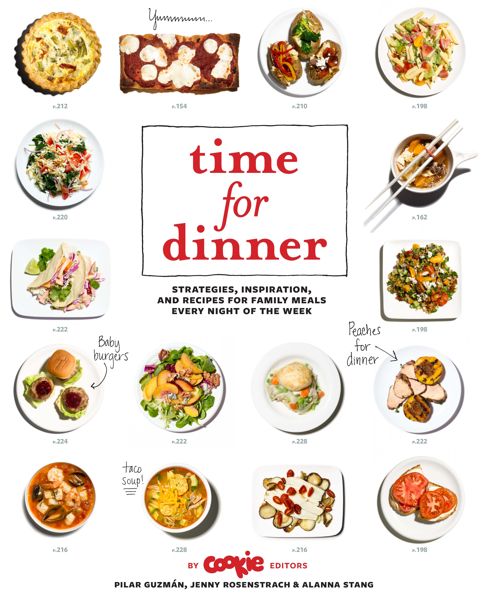
Magazine editor, writer and cookbook author Jenny Rosenstrach’s definition of home hasn’t changed since she was a child: ‘It's the place you go "where they have to take you in." And I realize I'm butchering Robert Frost there, but it's the place I can be my worst self, my best self (hopefully more of the latter) and I'll still be loved unconditionally.’

Jenny had been editing food and features on magazines Real Simple and Cookie until last year when she co-authored the upcoming cookbook Time For Dinner and began the website Dinner A Love Story. Working full-time with two young children led to Jenny making a deal with herself: ‘I would only continue to work full time if I was able to put a meal on the table for my family more often than not.’


And she did, splitting the dinner duties ‘down the middle’ with her husband Andy. How she and her husband continue to do this for their family is chronicled on the website.

So, why did the evening meal become the most important time of the day for this family? ‘The short answer: It's the only time ALL day when I actually sit down and look into my children's faces. And I think it's probably the only time all day long when THEY sit down and look at my face. We're focusing on each other. That's the biggest thing.’


‘Other nice dividends: they are willing to trying different foods because they are so used to us introducing new things, they share stories about their day they wouldn't otherwise, it's something so naturally part of the day that to not do it at this point would be weird. That's ultimately what I want it to be. So when they're teenagers their bodies will just be programmed to return to the dinner table at 6:30pm no matter how annoyed at me they are.’

The kitchen is very much the centre of the family’s lives. When Jenny thinks of ‘home’ it’s the ‘four square feet in the kitchen where all five of us (including our Boston Terrier) seem to be standing on top of each other. Sometimes I wonder why we even bother having other rooms in this house? Wait...I just answered my own question. For when they're teenagers.’

While working on lifestyle magazines didn’t change Jenny’s basic definition of ‘home’, it did change the aesthetic of it; ‘I feel certain I would be $2000 richer and not have marble countertops if I hadn't edited 8 trillion stories showing family kitchens with marble countertops at Cookie!’

Having children has probably contributed the most to decorating and home organisation decisions. A mantra Jenny learned at Real Simple is one she still follows today: ‘Control the controllable’. In the kitchen she has a desk and bulletin board, known amongst the family as ‘Command Central’ where all the organising and scheduling gets done.


‘I think this space is important to me because it gives me the illusion of control. I am powerless to control the leak in the ceiling, the dog getting sick, the recess drama – but I can at least make sure the class lists are somewhere I can always find them!’

All parents know that cooking dinner while hungry children wait is one of the hardest times of the day. To avoid more stress, when her children were younger, Jenny used the ‘Babysitter in a Box’: ‘a carefully curated container of kitchen gear and foods (think rice maracas made out of tupperware bowls) that kept them busy making a pretend meal while I made the real meal.’

Today, she has the ‘OK shelf’: ‘an easy-to-access shelf containing a bunch of kitchen-related bowls and pourers that my daughters don’t have to ask me to use. (The answer will always be “OK.”) Every item on the OK shelf is either non-breakable or so cheap (hello Ikea tea set!) that it matters little if they chip it.’


But Jenny’s hidden dollhouse idea is perhaps one of the most fun ways of keeping children entertained in a small space.

‘Last year, I found my six-year-old lying on her stomach in front of a row of my favorite magazines — all opened to stories about decorating. Her paper dolls were hopping from one “room” to the next, lounging on teak patio chairs, cooking on Viking stoves, and cooing with babies sleeping inside Netto cribs. In other words, Abby had constructed her own two-dimensional, temporary, composite dreamhouse.’


‘We set to work tearing out pictures of rooms from Ikea and CB2 catalogs and old issues of magazines. Once she had her favourites, I used blue painters tape to affix each “room” inside an accessible kitchen cabinet door. Then I used the tape to outline each room. Turns out Abby wants nothing to do with me while she gets lost in fantasy land, but I still love that she’s right there underfoot while I’m making dinner.’


And, as most parents would agree, the best thing about this dollhouse is: ‘When she’s done, I close the door. All gone.’


For me though, what really makes Jenny’s home a ‘home’ is her Recipe Cupboard Door.


‘This idea just came to me. Before I renovated my kitchen I used to put recipes on stickies inside the cabinet door because I hated hunching over a cookbook. A recipe door seemed to be just the right height for recipe referencing. When I pitched the idea for Cookie they let me pick an illustrator to execute the vision. I was lucky enough to get Gina Triplett, who is part of the incredible design team Gina and Matt.’

‘The only tricky part was figuring out which recipes were deserving of such an honour. Ultimately, to qualify for “cabinet door” treatment, we decided the recipe needed to be both steeped in family history and, of course, be delicious. The line-up: one recipe from each of our grandmothers; Rosa’s Mud Cake which my best friend’s mum served at every one of my best friend’s birthday parties when I was little; and a recipe made by Aunt Patty the first time I met my husband’s family in 1992.’


‘Now we have a private living memorial to those who have influenced me in the kitchen and my kids will grow up with a certain reverence for these dishes.’

There are some other ways Jenny and Andy keep the family connected. Originally buying a chalkboard for the kitchen wall because it looked pretty, Jenny now realises the family can’t live without it.


‘At first I used it as a way to remind my babysitter of playdates and activities, but now it’s more like my calendar and a reminder for the kids that screams, “Look how much fun you’re going to have this week!!!” When it’s not updated, I hear about it. I’m even expected to write up an itinerary for the weekend and, in the summer, include the weather report.’

Jenny and Andy also like to leave notes for the girls on napkins in their lunchboxes, although she has a warning to parents who have not yet started packing lunches. ‘Do not start with the napkin note – you are only setting yourself up for failure. And setting yourself up for disappointed kids when you can't think of anything cute or creative to say beyond "I have run out of things to say to you." Which I'm always tempted to do, yet somehow don't think they will appreciate the irony.’

Creating a sense of family through their home has evolved naturally for Jenny and Andy and will continue to do so as their daughters grow; ‘We never sat down and decided these things. Like everyone we borrow from people who have done it before us. Our friend Jay took each of his three kids on a one-on-one vacation after each one turned six. I didn't even have kids when I heard about that ritual and I thought that is something we're going to do. I just loved the idea.’

‘But the thing about kids is you don't have to make elaborate rituals for everyone to have fun. They are so naturally joyful about things that we just follow their cues. Once my husband forgot to bring home a present from a business trip for them, but he did have an unopened pack of gum. You would've thought we gave them Malibu Barbie. Now, it's the only thing we ever bring back as a souvenir!’


To visit Dinner A Love Story and for more information about Jenny’s book Time for Dinner, click here.

All photos © Jenny Rosenstrach

LinkWithin

Related Posts with Thumbnails