Showing posts with label kitchen. Show all posts

Tuesday, June 21, 2011

When Home is... Old Plates


It started when we dug up a broken piece of a plate in the back garden late last year. The pale blue floral pattern captivated me and I couldn’t help but wonder which owner it belonged to. It looked old, the pattern delicate, but surely it wasn’t a plate of John and Elizabeth Liddell’s?


Or was it? After all, they had seven children back in the 1890s so I imagine there were many broken plates over the many years they lived here. The kitchen/scullery would have been out the back, near where we dug up this piece of china, but who knows.

It could just as easily been from the owners who lived here in the 1990s and, from what I can work out from old plans, added the back living / kitchen room. After our recent renovation I have realised how many bits of rubbish – nails, screws, cigarette butts – can inadvertently end up buried under the rose bushes and gardenias... Yet, I like to think of this broken plate as a link from the present back to where it all began. The first family who called this house home.

When I found this bit of china I had already been thinking that we needed new dinner plates. Ours were all white and increasingly becoming chipped and crazed. I hadn’t been able to decide on the style of dinner set I wanted but now I knew.

While it was pure fantasy to try and find the exact match for this dug up piece of china, I knew I wanted old, English style plates and serving bowls.


It didn’t take long to start my new collection... finding a couple of blue and white china plates at the markets one weekend, some green ones at the same market another weekend. And once you start a collection it’s hard to stop really, isn’t it?

Collections run in our family and when my mother turned 40 she decided that for her party she would ask everyone to bring a plate. Not a plate of food but a plate. A plate of her friend’s choice, she would display on the lounge room wall. I think some of her friends were dubious, worried about whether they would find one she would like, one that would match the others but that wasn’t the point.

It had to be a plate her friend loved. Perhaps it was one they already owned or one they found at a garage sale or junk shop. That way it would become a plate representing that person. Instead of a wall of photos of her closest friends, she would have a wall of plates.

What none of us anticipated was how much those plates would come to act like photos. It’s amazing what a pattern, colour choice and age of a plate can tell you about someone’s personality. To this day I can stand in front of those plates and know the story behind each one.

It’s these stories behind objects that make them feel so precious. When I brought home a stack of old, slightly crazed, square dessert plates with a faded gold border and little green flowers painted around the sides a few months ago, I washed them and left them to dry on the side of the sink.

While talking to my sister on the phone, I noticed the children kept coming perilously close to them. Our conversation was punctuated with me shouting across the room ‘Watch those plates!’


My sister laughed, wondering how much I had paid for them to make me so nervous.But it wasn’t the fact they cost me $1.50 each (!) that made me nervous. It was the fact that I was already attaching myself to the story behind them; the morning spent fossicking at the market and finding them stacked unlovingly in a plastic tub was just the beginning of our life together. I was already imaging the future meals with friends and family when they would make their appearance. But what about the life they already had?


How did they end up as someone’s rubbish when once they would have looked quite grand? They may have been a part of someone’s wedding china. China only brought out for Christmas or birthdays for a family long, long ago.

A family like the family who first lived here.

And now a family like ours.

Thursday, March 31, 2011

When Home is... your Grandmother’s Kitchen. An interview with authors Laura Clarke & Claire Wallace


With Mother’s Day just around the corner many of us will be planning to spend time with our families; sharing a meal with our mothers at some point that weekend. But really, how often do we talk to our mothers – and if we’re lucky enough our grandmothers – about their lives and our families stories?

There may well be a favourite family dessert we have been enjoying all our lives but how many of us know the origins of that recipe? Why our mothers or grandmothers used to cook it, who gave the recipe to them and why it has become such a family favourite? We may never think of how these stories began. It’s just a fact that this is our family’s cheesecake recipe; or our family always glazes a ham at Christmas time.

Usually by the time we reach an age when we want to know more; when we’d appreciate the wisdom and seek the comfort of the older generation, our grandmothers aren’t here anymore to give it. It was this realisation that gave Laura Clarke and Claire Wallace the inspiration to record grandmothers stories from around the world. The result is the just published, beautiful recipe book My Grandmother’s Kitchen

.

Both women had recently met and both were at turning points in their lives when the conversation about this joint project began: ‘My grandparents brought me up’, says Laura who lived with them in England from the age of 11. ‘When my grandmother died she left me three things: her engagement ring which I wear every day, her kitchen table which we used on the cover of our book, and her recipe book filled with her handwritten sheets of recipes.’

'A couple of years ago, after my grandfather died, I missed them both horribly. I realised I was working in a job I wasn’t passionate about and thought what am I doing? They didn’t raise me to be unhappy so I quit my job and thought about collating my grandmother’s recipes during my time off work.’


‘It was around this time that we met,’ continues Claire, ‘My grandmother had died many years before Laura’s, when I was only 19. Laura and I were talking about our grandmothers and their cooking and I realised I didn’t have any of her recipes written down at all.’

The conversation moved on from their cooking to a desire for both women to talk to their grandmothers again; to ask their advice about all aspects of their lives. ‘It felt like we realised too late how much they had to teach us,’ says Claire.

‘They had lived such amazing lives already and we have so much to learn from them. I remember my grandmother saying just before she died that she still felt 19 and that it was only when she looked in the mirror she realised differently.’

The concept from the beginning was always to include other grandmothers in their book. ‘It was never to be just about our own grandmothers,’ says Laura, ‘We were both passionate about the importance of grandmothers in the home and how great an influence they can be.’


‘So much importance is placed on youth in today’s world and I remember my grandmother saying to me in her 80s that sometimes she felt invisible. We were inspired to find everyday grandmothers for the book who were inspirational because of the lives they have led bringing up their families.’

This book was always going to be much more than just a collection of recipes from around the world. ‘We wanted to fill the book with the kind of information we knew we’d want from our grandmothers if we’d had more time with them,’ begins Laura, ‘we wanted to share these women’s life stories, we wanted them to pass on their wisdom.’


Both women interviewed the 17 grandmothers and their families for up to four or five hours each. They spent numerous hours cooking with them, spending time with their children and grandchildren, calling them constantly to ask more questions and in all cases Claire and Laura cannot emphasise enough how welcomed they were into each household.

It was a hugely emotional journey for them. ‘These women were so positive,’ says Claire, ‘despite some of the stories they shared. It was a reminder of all the things you don’t ever know are behind a face. You don’t know what anyone has been through and you certainly can’t judge their life journey by looking at someone’s face.’


The most emotional part of this journey for Claire and Laura was the death of one of their grandmothers, Cherie Keetley. Cherie died nearly a year ago and while she didn’t live to see the book’s publication, she loved being a part of its creation.

‘Cooking, like love, should be undertaken with wild abandon’, was a piece of wisdom Cherie shared and after her death her family were so grateful as they realised that without this book they would never have written Cherie’s story down. ‘Her recipes were completely embedded in her head’, laughs Laura.

‘I have notes and notes from cooking with Cherie,’ continues Claire, ‘as she had no idea about measurements cooking purely from instinct. Of course, we needed measurements to write the recipes so there was much laughter and trial and error!’

‘This project was so fulfilling,’ continues Laura, ‘we had no idea of the journey this would take us on and we realised again through Cherie’s death how important it is to capture your own families stories.’

The end result is a beautiful tribute to grandmothers everywhere with a chapter at the end to capture your own family’s story.

‘We wanted every page to be unique,’ says Claire, ‘we wanted it to look like a real grandmother’s recipe book with fingerprints, remarks and drawings by kids, splotches of jam.’

And intertwined within it all: those longed for comforting and inspirational words gained from years of perspective, endurance and experience.

No matter what your age who doesn’t need to be reminded that ‘things seem worse in the moment’ or ‘do not always think about your problems: you will see one day they are not so important’ and, finally, ‘Friends are like elevators. They either take you up or take you down. Hold on to good friends and let go of the rest.’

Recipes not only for food but for lives lived well.

************************

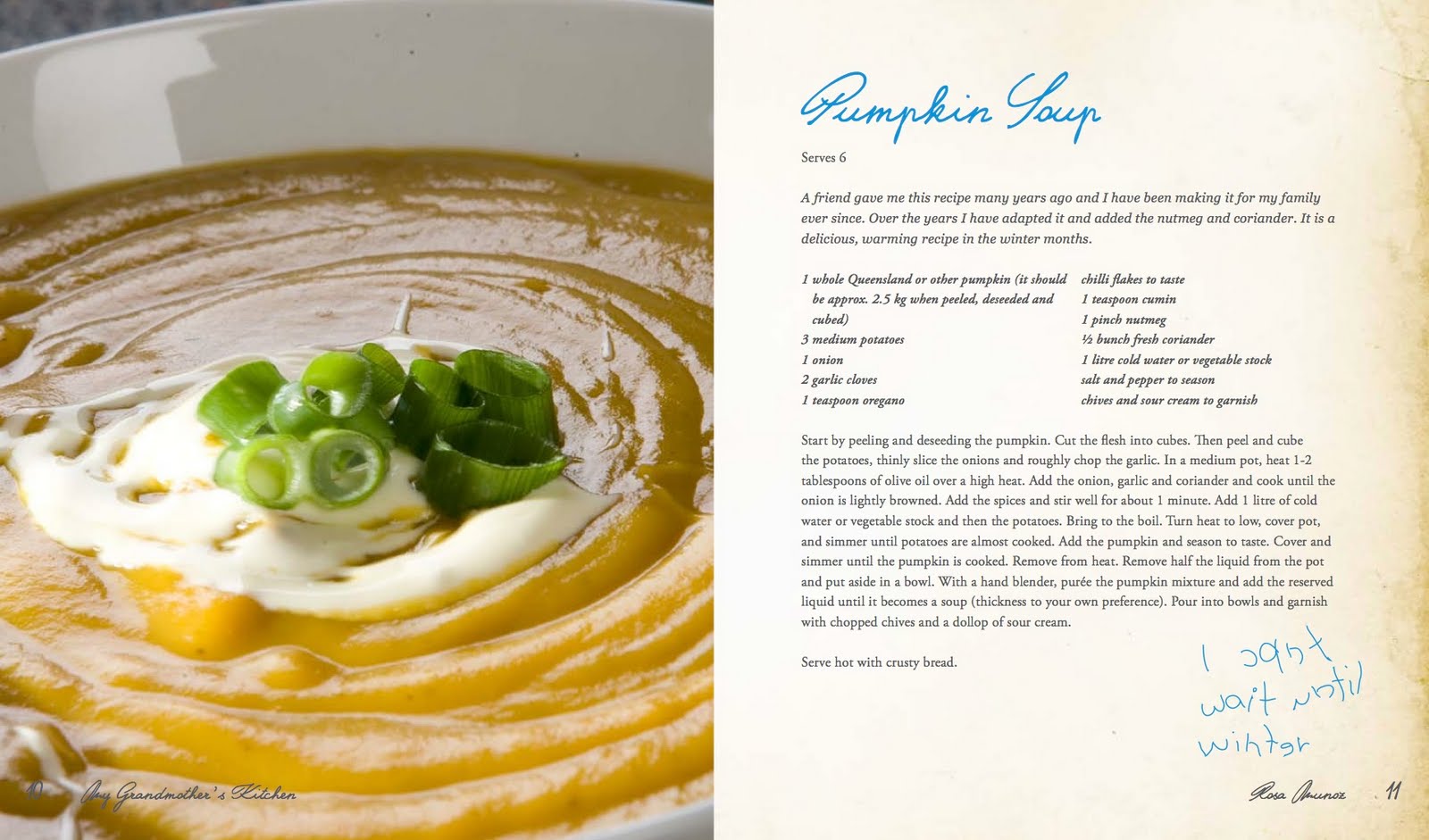
As the seasons in Sydney begin to turn and the weather is cooling down, Laura and Claire thought it would be fitting to share with us a wintry recipe from their book. And a drizzly, cool day like today is the perfect time to try it a warming pumpkin soup...

Rosa Munoz's Pumpkin Soup Serves 6
A friend gave me this recipe many years ago and I have been making it for my family ever since. Over the years I have adapted it and added the nutmeg and coriander. It is a delicious, warming recipe in the winter months.

Ingredients
1 whole Queensland or other pumpkin (it should be approx. 2.5 kg when peeled, deseeded and cubed)
3 medium potatoes
1 onion
2 garlic cloves
1 teaspoon oregano chilli flakes to taste
1 teaspoon cumin
1 pinch nutmeg
½ bunch fresh coriander
1 litre cold water or vegetable stock
salt and pepper to season
chives and sour cream to garnish

Start by peeling and deseeding the pumpkin. Cut the flesh into cubes. Then peel and cube the potatoes, thinly slice the onions and roughly chop the garlic. In a medium pot, heat 1-2 tablespoons of olive oil over a high heat. Add the onion, garlic and coriander and cook until the onion is lightly browned. Add the spices and stir well for about 1 minute. Add 1 litre of cold water or vegetable stock and then the potatoes. Bring to the boil. Turn heat to low, cover pot, and simmer until potatoes are almost cooked. Add the pumpkin and season to taste. Cover and simmer until the pumpkin is cooked. Remove from heat. Remove half the liquid from the pot and put aside in a bowl. With a hand blender, purée the pumpkin mixture and add the reserved liquid until it becomes a soup (thickness to your own preference). Pour into bowls and garnish with chopped chives and a dollop of sour cream.


For more information about Laura Clarke and Claire Wallace, or to buy a copy of the book visit http://www.mygrandmotherskitchen.net/

Their Facebook page also reports on the latest book news and gives you an opportunity to ask questions or contact Laura and Claire direct. Visit www.facebook.com/mygrandmotherskitchen

All photos © Laura Clarke and Claire Wallace

Tuesday, February 22, 2011

When Home is… A Mother’s Cooking. An interview with Food Blogger Jules Clancy


For Jules Clancy, food scientist, self-published cookbook author and creator of the minimalist home cooking blog Stonesoup, cooking has been a passion since childhood.

Little has changed during the intervening years; ‘It's how I relax and unwind but also how I earn my living these days. The thing is I never get sick of it. There are always so many new things to explore and perfect. Food and family are intimately linked for me. It's all about sharing. My boyfriend loves his food as well and we spend hours talking and planning what we're going to cook and eat.’

Growing up as the eldest of five children on a sheep farm, Jules says her mother was an ‘inspirational country cook’. ‘But it wasn’t until I went to boarding school and had to make do with convent food that I realised just how special my mum’s cooking was.’

Jules says that her mother was ‘a pretty classic country Australian cook’; one who created comforting, nurturing classics – roasts, steak, spaghetti bolognaise – that her family never tired of. ‘It was simple but she always used fresh, high quality ingredients. She was also a whizz when it came to cakes and sweet treats. She loved to spoil us!’

And it was ‘something sweet’, such as her pikelet or scone recipe, that Jules first learnt to cook as a small child.


When a little older and at boarding school, Jules and her mum had a ritual; ‘Mum would always make me a batch of lamingtons to take back to school with me after holidays. I used to help her. We'd sit at the kitchen bench and chat and just hang out. My contribution was rolling the lamingtons in the coconut. I still remember how good it tasted licking my chocolatey coconut fingers when we were done.’

Her mother’s kitchen was the centre of the family’s home. ‘It, like me, was a child of the 70s with green linoleum floors and bright yellow bench tops. It had big windows and was always where the action was happening. Everyone used to naturally gravitate to the kitchen. If someone popped in to visit we'd always sit in the kitchen drinking tea. It was rare that our formal lounge room got used.’

After Jules’ mother died suddenly in 2007, Jules decided to pull together a collection of her recipes for family and friends and with the help of her sisters she tested and photographed all the classic family dishes they had grown up with.

It was an easy task, says Jules; ‘My mum was very organised and kept her favourites in a little recipe book so they were all automatically included. It also helped that I have three sisters who also contributed their favourite things that mum had taught them - it was funny but we all remembered different things.’

Once finished, Jules realised she wanted to share her mother’s simple, no-fuss Australian recipes with a broader audience, so decided to self-publish the book to celebrate the ‘recipes that anyone can learn to cook and that everyone will love to eat.’

Titled and the love is free, the book has been well received. ‘I've had some really lovely emails and notes from people who used to eat the same things when they were kids. And some touching notes from people who have also lost their mums to cancer.’

So, was it cathartic to revist her mother’s kitchen without her mother? ‘It was super comforting and fun. I was especially happy when I followed the recipes exactly and they ended up tasting just like mum used to make.’

‘Normally I can’t help myself and tinker with a recipe so naturally things end up tasting different. I felt like mum was in the kitchen with me when I stuck to the recipe - a wonderful reward.’

For those times when Jules wants to feel closer to her mum, she simply cooks her mother’s tuna mornay. ‘We called it tuna dish and when I make it with processed cheese slices it makes me feel like mum made it especially for me.’

Cooking this meal always evokes strong memories such as; ‘Helping mum mash up the tuna with a fork. Sneaking bits of hot penne when mum wasn't looking and licking the bowl while we waited for it all to bake.’

While Jules has her eyes on her jam-making pot and the big ceramic mixing bowls her mother used for mixing the Christmas cake each year, she was lucky enough to inherit her sunbeam mix master. Originally belonging to her grandmother, it is stuck on high speed. ‘This is fine,’ says Jules, ‘because I mostly just use it for making pavlovas or whipping cream’.


As Jules writes in her book, ‘no family recipe book would be complete without a recipe for pavlova or ‘a pav’ as it was known in our house.’

So enjoy this classic Clancy family recipe, particularly as we near the end of summer…

‘The strawberries from Mum’s garden were always the fruit of choice when in season but mixed berries from the shop would also work when we didn’t have access to mum’s bursting-with-flavour fruit. In the height of summer sliced mango and passionfruit were also lovely.’

‘A word of warning. While it seems so easy to be able to leave the pav to cool and finish cooking in the oven, it can be dangerous. Especially if you have an electric oven like my Mum. I remember one time I’d made a pav and left it to cool and then came back a few hours later, completely forgetting what was in the oven and turned it on to preheat for dinner. Woops. Lets just say that burnt pavlova is not a pretty sight.’


2 egg whites
1 1/2C (330g or 12oz) caster sugar
pinch salt
dash vanilla extract
1t white vinegar
1t cornflour
3T boiling water
whipped cream, to serve
fresh fruit, to serve

Preheat oven to 150C (300F). Line a baking tray with baking paper and grease lightly in a circle about 20cm (8in) diameter. Place all ingredients in the bowl of an electric mixer and beat for 10 minutes or until the sugar has dissolved and the mixture is very stiff.

Spread mixture out on the tray to cover the greased circle. Place in the oven and decrease temperature to 120C (250F) and bake for 1 hour. Turn off oven and leave door ajar for pavlova to cool in the oven.

To serve, carefully peel foil from the base of the pavlova and place on a serving platter. Generously smother the top with cream and decorate prettily with fresh fruit.

The pavlova base will keep in an airtight container for a few days but once the cream has been added its best if served straight away.


To find out more about ‘And the love is free’, click here.
To read Jules’ blog, Stonesoup, click
here.

All photos © Jules Clancy

Tuesday, February 1, 2011

When Home is... an Apron


Do you wear an apron these days? Occasionally I remember to when I’m cooking but that’s usually after I’ve ended up with tomatoes splattering onto my white top or flour over a black top. It’s a bit like my reading glasses. They don’t help when I don’t use them.

There are quite a few elderly European women who live in my street and whenever I see them outside their houses – sweeping, chatting, gardening – they are always wearing an apron. I had never really thought much about why until I recently read this chain email about aprons. Or more specifically, the multifarious uses of aprons of another time...

“The principal use of Grandma's apron was to protect the dress underneath because she only had a few. It was also because it was easier to wash aprons than dresses and aprons used less material.

But along with that, it served as a potholder for removing hot pans from the oven.

It was wonderful for drying children's tears, and on occasion was even used for cleaning out dirty ears.


From the chicken coop, the apron was used for carrying eggs, fussy chicks, and sometimes half-hatched eggs to be finished in the warming oven.

When company came, those aprons were ideal hiding places for shy kids.

And when the weather was cold grandma wrapped it around her arms.


Those big old aprons wiped many a perspiring brow, bent over the hot wood stove.

Chips and kindling wood were brought into the kitchen in that apron.

From the garden, it carried all sorts of vegetables. After the peas had been shelled, it carried out the hulls.

In the fall, the apron was used to bring in apples that had fallen from the trees.

When unexpected company drove up the road, it was surprising how much furniture that old apron could dust in a matter of seconds.”


In those days – and for those women living in my street today – the apron represents nearly every facet of home: cooking, cleaning, caring for children, creating a welcoming environment. But what about aprons today?

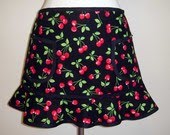
Elke Ricks, who designs and sews kitchen aprons for her label Wonderland Avenue, says ‘I love how aprons make you feel feminine when you have one on.’

As a stay-at-home mother of an 18-month-old son, Elke felt the need to do something creative. ‘I've always been into fashion and started sewing when I was nine. With a love of different fabrics, aprons were so easy; I could have just a few styles and a huge assortment of fabrics.


Elke wanted to create an apron that would both fit a woman’s figure and be flattering so her customers would feel good every time they wore it. ‘The first two aprons I made were the classic apron and the half-waisted apron with a frill on the bottom. I was giving one to my mum for Christmas and she wanted to pick the fabrics herself. She said she really wanted a full apron with a frill on the bottom so I decided to make a few more of them and now that style apron is my best seller!’


‘When I choose my fabrics I think of what would look good in a kitchen and the different tastes people have. Some people love the classy, sophisticated looks, so damask prints and classic colours like black, white and reds seem popular. Others like to have fun and wear the cupcakes or brightly coloured fruits. I like to have something for everyone.’


Unlike the aprons and housecoats of old, Elke is hoping her customers have ‘a bit of fun’ with their aprons; ‘It doesn't have to be all too serious. Put it on when you have some guests over, or surprise your husband one night. Even my three-year-old loves it when I wear an apron!’


But most of all, Elke loves it when customers buy and apron and say; ‘ "wow that is so Jenny" or "that is so Lizzy". It’s like the aprons resemble the personalities of people we know.’

And I think that is probably something those women from another time would agree with.

To see Elke’s range of aprons, visit her Etsy site here or her Made It site here.

Photos © Elke Ricks

Friday, January 28, 2011

When Home is the Kitchen... an Interview with Food Writer Sara Kate Gillingham-Ryan


Six-and-a-half years ago, Sara Kate Gillingham-Ryan’s husband Maxwell started a blog called Apartment Therapy. His mission is ‘helping people make their homes more beautiful, organised and healthy by connecting them to a wealth of resources, ideas and community online’.

When the blog began, Sara Kate was a food writer. She says, ‘We both believe that if you talk about the health and vitality and style of the home, you cannot ignore the kitchen and the cooking that goes on there.’

She began writing a weekly food column for Apartment Therapy. ‘When I had time, I wrote more. I was also doing freelance print writing. At a certain point we held our breath and took the leap for a dedicated cooking site. That was five years ago. We haven't looked back.’

And so began The Kitchn, an inspiring blog filled with food information, recipes and kitchen tours. With more than one million readers, it is obvious that many of us believe that a kitchen is central to our feelings about home.

For Sara Kate, her favourite kitchen is the one she cooks in now; ‘It's where I feed my family every day. It's not fancy. I have a pretty crappy 24" stove and a small refrigerator, one drawer, two upper and one lower cabinet all along one wall. Then a long Ikea butcher block for chopping and serving. But from it I sustain my daughter's life and her love of food, so for that reason, it wins.’

‘My least favourite kitchen was probably the one I had in a shared apartment before I was married. Roaches, ants, you name it. New York City shared living at its best.’

Having a small kitchen means that Sara Kate is forced to ‘pare down constantly. I don't have anything that I don't use.’

What she loves most about the kitchen is it’s ‘(tiny) skylight’. ‘I can watch the sun pass, sometimes a full moon, and pelting rain. I also love that the "bar" (butcher block) allows people to be in the kitchen with me without being in the way.’


Anytime is a good time to be in her kitchen; ‘Whenever something is cooking. Also, that time when the sun passes over the skylight. The light is magic.’

Although the family has a small, round dining table, they have most of their meals at ‘the bar’.

Since becoming a mother, Sara Kate’s feelings about her kitchen have not changed. ‘It has only reinforced my belief that cooking is one of the most important things we can do for our children.’

For Sara Kate, the kitchen will always be the heart of the home; ‘It feeds us. We need that to be alive, and we also get so much pleasure from it.’

As for a favourite meal to cook in her kitchen? It’s Sara Kate’s mother’s Italian Wedding Soup.
‘When it comes to soups, I can easily say I have a hands-down favorite. My vote for this soup is heavily influenced by nostalgia; it was one of the first real meals my mother fed me when I was a baby. The legend is that I'd slurp it loudly and the broth would dribble down my neck and into my clothes.

The recipe was handed down to my mother, and adapted at each stop, from a man named Fran, whose daughter was my first babyhood friend. I don't really remember Fran — he passed away when we were still tiny — but he lives within me every time I make this soup. Now I feed it to everyone — from my own little person, who also slurps and dribbles it, to Saturday night company, who usually use a napkin.

We always call it Italian Escarole Soup, but it's also known as zuppa di scarola, or Italian Wedding Soup because it is a traditional course at Italian nuptials. It is simple to prepare, but has enough flourishes — herby meatballs and a last-minute addition of cheesy egg ribbons — to make it special enough for guests.

Italian Wedding Soup is highly adaptable; try other greens like kale (as I did in the photo below) or chard, add grated lemon rind to the meatballs and some lemon juice to the broth for brightness, or consider spicing it up with some ground red pepper flakes added with the onions and garlic.’

Italian Wedding Soup

Serves 6-8

3/4 pound ground organic meat (chicken, turkey, pork or beef)
1/2 cup dry bread crumbs
3 large eggs
1/2 cup grated Romano cheese, divided
1/2 cup grated Parmesan cheese, divided
1 tablespoon chopped fresh oregano (or 1 teaspoon dried)
1 teaspoon salt
1/2 teaspoons freshly ground black pepper
3 tablespoons olive oil, divided
1 medium yellow onion, diced
4 cloves garlic, minced
8 cups chicken stock
1 bunch greens trimmed and torn into bite-sized pieces (about 6 lightly packed cups)

Combine the ground meat, bread crumbs, 1 egg, 1/4 cup of each cheese, oregano, salt and pepper in a bowl. Mix thoroughly, then form the mixture into 3/4-inch to 1 1/2-inch balls. You should have 20 to 30 meatballs, depending on how large you form them.

In large skillet, heat 2 tablespoons oil over medium high heat. Add the meatballs in batches, and cook, turning, until browned all over, 3 to 5 minutes. (If they are still a bit pink in the middle, don't worry, they will continue to cook in the broth.) Set them aside on paper towels to absorb excess oil.

In a 4 to 6 quart soup pot, heat the remaining 1 tablespoon oil over medium high heat. Add the onion and garlic and sauté until onions are tender and garlic is soft, but not browned, about 5 minutes. Add the stock and bring to a boil. Add the greens, reduce the heat to low, cover, and simmer for 10 minutes. Add the meatballs and cook another 5 minutes.

Meanwhile, combine remaining 2 eggs and remaining cheeses in small bowl and stir with a fork to blend. Slow pour the egg mixture into hot soup, stirring constantly. Cover and simmer just until egg bits are set, about 1 minute. Season to taste with salt and black pepper, maybe even a squirt of lemon juice, and serve immediately in a low bowl if possible so the meatballs are visible.

To re-heat, simmer gently over low heat.


To receive more of Sara Kate’s recipes, cooking tips and stories, subscribe to The Kitchn here.
To follow Sara Kate on twitter, click
here
To find out more about Apartment Therapy, click
here

Sara Kate also has a new recipe book coming out next week, February 1st. Good Food to Share is available here.

Photos of Sara Kate and her kitchen © Sara Kate Gillingham-Ryan
Photo of Italian Wedding Soup and recipe reprinted courtesy of The Kitchn

Tuesday, November 16, 2010

When Home is... Cookbook Author Tessa Kiros’ Kitchen


You can’t miss the child’s red shoes that adorn the cover of Tessa Kiros’ cookbook Apples for Jam. Her book stands out amongst the hundreds of other cookbooks appearing on the shelves in bookshops because those slightly scuffed, well-worn shoes suggest that behind this cover lies something more than lists of ingredients and cooking methods.


I recently showed a friend of mine who is an amazing cook this book... just as she was leaving after a cup of tea. She opened it up and within seconds closed it again.

‘Oh no, don’t do this to me’, she said as she stroked the cover – those shoes – ‘If I start now I’ll need to read the whole thing in one go!’

And she’s right. Another friend had loaned it to me and I lost a few hours of the afternoon inside its covers. And I keep dipping back. It’s not just for the food but the story Tessa weaves in and around the recipes. Here are those stories of life; universal memories of childhood, moments of motherhood, of creating a sense of family and the security of home through the meals you cook for those you love.

And to top it off, she lives in Tuscany.

Having worked as a chef in London, Sydney, Athens and Mexico and travelled the world, Tessa’s food is a rich blend of many different cultures. She is also the author of five other cookbooks, the most recent being Food From Many Greek Kitchens. While Apples For Jam is about the recipes she remembers from childhood and those she cooks for her own children, her latest book sees her visit the Greek kitchens of her friends and family.


But today we are visiting her kitchen; the one she shares with her husband and two daughters in the hills of Tuscany. And while we’re in the kitchen, why not start with what it’s like to cook there.

‘Italy, or at least where I live – in the countryside in Tuscany has wonderful ingredients. It is difficult not to notice what the earth is giving us all the way through the year. The slow and steady cycle of things here. The repetition each year. In that way for me it is different from living in an international city where almost everything is available.’

So what does Tessa enjoy cooking the most? ‘There are many meals depending on the time of year. In Summer we love barbecues; huge salads outside and ice cream and picnics in the garden. In Winter we’re inside around the fire; roasts, roasted vegetables, mashed potatoes, pies... I love pies for the family in winter, and warm crumbly kind of desserts with a splash of colour... yes that would cheer things up.’

The kitchen has always been the heart of the home for Tessa. And not just for cooking, ‘Whether it be to sit at a table with tea and biscuits and friends, or spend time in alone... The kitchen for me should flow into the rest of the home.’

After becoming a mother, she found that her thoughts about food and cooking changed, ‘Nourishing young ones is a grand responsibility and a wonderful opportunity. I shop mainly for organic produce these days and since being a mum I am far more aware and more careful about what I will serve. I see food now also as the building blocks and the fuel that we need to proceed. Not just the sheer enjoyment side of it. I try and twirl them together now.’

In Apples for Jam, Tessa likens feeding a family to ‘stitching all the bits together on a steady thread'. As she explains, ‘It’s about holding it altogether. If that is our job for now then let us do it well. Once our place is to prepare the meals we should splash them with love and any extras that we can and still do it elegantly. Nobody wants to know the other details. Just if you did it and if you did it well. A family has many needs. Varying dynamics. Sometimes we need to rise above and take in what we need to do instead of getting stuck in the stickiness of it all.’

What food memories does she hope to leave with her daughters? ‘I would like them to know about food, where it comes from and that what we put into it – our efforts, our beliefs are what will show up in our pots and on our plates. I would like them to remember tasting different ingredients, food from different cultures and above all to have their own lovely warm and aromatic memories of what they loved as children all the way through their adulthood – not that it was a drag and they had to eat zucchini.’

Not surprisingly, Tessa’s feelings about home have always been and will always be closely intertwined with food; ‘For me home is a cosy open place, where people join at meals especially or over tea. The family materialise out of their various corners for lunch or dinner and then often disappear again. Bringing them all together in this way has an almost magical quality to it.’

Her most favourite time of year in the kitchen? ‘Christmas at home I love.’

Luckily Christmas isn’t too far away so what better excuse than to include a festive recipe from Tessa’s latest cookbook, Food From Many Greek Kitchens.


KOURABIEDES BUTTERY ALMOND CAKES
These are icing sugary/buttery, and melt-in-your-mouth honest bundles enjoyed at Christmas.

Makes about 22
50 g (1¾ oz/1/3 cup)
almonds, skin on
250 g (9 oz) unsalted
butter, room temperature
2 tablespoons icing (confectioners’) sugar
1 egg yolk
1 teaspoon vanilla essence
1 tablespoon brandy
300 g (10½ oz/2 cups) plain (all-purpose) flour
1 teaspoon baking powder
about 250 g (9 oz/2 cups) icing (confectioners’) sugar, for dusting

Coarsely chop the almonds into small pieces. Toast in a dry frying pan over a low-ish heat until just coloured. Cool.

Whisk the butter in a bowl using electric beaters until it is very pale and thick, about 8 minutes.

Add the icing sugar and whisk it in well. Add the egg yolk, vanilla and brandy and whisk them in well too.

Sift in the flour and baking powder and beat them in until you have a smooth dough which is hard to keep mixing with the beaters. Add the almonds and mix them through with your hands.

Press the dough into a ball, cover with plastic wrap and refrigerate for 30 to 40 minutes.

Meanwhile, preheat the oven to180°c ( 350°f / gas 4 ) and line a baking tray with baking paper.

Break off pieces of dough, about 30 g ( 1¼ oz ) each, and roll them into balls, slightly flattening the tops.

Put them on the tray allowing a little space between each one. Bake until lightly golden, 20 to 25 minutes.

Remove from the oven and let cool on the tray for about 15 minutes.

Dust about half of the icing sugar onto a tray or large plate or your tin where you will store them.
Gently move the kourabiedes to sit in a single layer in this, then sprinkle the remaining icing sugar over their tops so that they look like they are snowed in. Will keep in a tin for many days.


Recipe and images from Tessa Kiros: Food From Many Greek Kitchens, published by Murdoch Books RRP $69.95

All other images courtesy of Murdoch Books

For more information about any of Tessa’s cookbooks, click here.

Monday, October 11, 2010

When Home is... your mother’s gravy recipe


Recently I was at my mother’s house for dinner along with my sister and my sister’s godparents from interstate. Mum had made a roast – albeit with mash potato rather than roast which was my first shock of the evening – and just as the meat was ready my mother asked my sister to help with the gravy.

My initial reaction was to wonder why she asked my sister when surely she knew as little about making gravy as me. But then as she deftly whisked away with a fork I realised that she knew exactly what she was doing.

‘How do you know how to make gravy?’ I asked accusingly as only a big sister can.

‘What are you talking about? Mum taught me of course.’ She looked at me curiously. ‘Didn’t she ever teach you?’ she said in a way that only a younger sister can.

‘I’m sure I’ve shown you how to make gravy’, my mother interrupted shaking her head at us.

Um, no. White sauce yes, gravy no.

How is this possible? As a lover of roast dinners how have I gone through adulthood without making a gravy?

It’s funny how there are some recipes that you learn from your family rather than a recipe book. And if you miss out before you leave home you may never master. What I love most about such recipes is that every family probably has a slightly different version thanks to generations of tinkering to please different palates.

I suspect the reason why I never learnt to make gravy was that it’s not my favourite part of a roast dinner anyway. I never liked the gravy seeping into my crispy roast potatoes and I still don’t. For me a roast dinner has always been about the potatoes.

But I think it’s time I grew up and at least had an idea about how gravy comes to appear on the table. After bringing up the gravy conversation again with mum (‘You should just know after watching me make it for all those years.’) I learnt that she makes it the same way my poppa does as my nanna always made it too thick, lumpy and pale. At least nanna’s way would mean that it wouldn’t leak into my potatoes.

So, finally I have our family’s gravy recipe. Whether I attempt it will be another question. After all, a family recipe always tastes better when it’s made by your mother, doesn’t it?

Mum’s Gravy

Sprinkle enough SIFTED plain flour (I just use a metal tea strainer) to cover the bottom of a hot frying pan (this can be done in a dry pan or otherwise the baking dish & juices once the meat is
resting).

Watch it carefully as it starts to brown without being tempted to move it around! As you see it change colour - not too dark, the safest way is to take it off the heat and add enough beef stock slowly, stirring all the time (or even using a whisk) to make sure it does not go lumpy (putting it back on the heat as you add more stock).

When it is the consistency you want & just at boiling point ... not too thick and not too thin, take it off the heat. When the beef is rested & carved, pour the juices from the carving tray back into the gravy & re-heat ready to serve in a 'gravy boat' of course!

I think I remember that Poppa's secret ingredient was adding a touch of Worcestershire sauce at the end.

Thursday, September 23, 2010

When Home is... the weekly shopping list


How do you write your shopping lists? On the back of an envelope, just a few key words to remind you of the most necessary ingredients; or on a sheet of paper with products listed in order of the aisles?

I have always enjoyed people-watching at the supermarket. Every Friday morning I see an elderly man at Coles, his walking stick in the trolley, always wearing a shirt and tie. He attaches a little wooden clipboard to the trolley handles. On it is a sheet of paper with a list typed out on a typewriter: red ink for the quantity and black ink for the product. Once he has collected his 2 X cartons of milk, he crosses it off his list with a biro. So precise. I doubt he ever forgets a key ingredient, such as the rice when you are making a curry... like I may have done last week.

And I have to admit to observing what other people put in their trolleys. You can make up a life story straight away based on brand choices alone. This game probably started during my teenage years working at the checkouts at Woolies but it’s still one way of making the boring weekly shop less monotonous. How can I not make up some romantic story when an attractive young man in a well-cut suit is buying olives, French cheese and stuffed peppers at the Deli counter while I wait for my sandwich ham to be sliced? Oh look, in his basket are strawberries, cream, fresh basil and tomatoes; is it a first date? Or maybe he is planning to propose? I wonder if he has the ring picked out...

So, I was pleased to bump into a passage about ‘trolley reading’ in a book by English chick-lit author Adele Parks a while ago. Turns out I’m not the only one; there are fictitious people who do it too!

In her book The Other Woman’s Shoes, two adult sisters do their grocery shop together. One sister, Eliza, is a free spirit living with her musician boyfriend while Martha has the perfect home, perfect marriage, perfect children... I’m sure you can see where all this is going to lead:

‘Eliza turned her attention to trolley-reading. That woman was bulimic: two apples, one carrot and a box of Milk Tray. This one was cooking dinner for a lover: salmon, a selection of florets on a microwave tray that cost an entire trust fund per pound, tubs of Häagen-Dazs. That couple was happy: mozzarella, tomatoes, avocados, fresh pasta and pesto sauce. That couple was waiting for payday: baked beans, sliced loaf, tinned fruit.’

‘... There were a number of low-fat, low-taste products for Martha. Eliza looked at Martha’s groceries and began to doubt her ability to read trolleys like books. Because Martha’s trolley said she was repressed and that she undervalued herself, which simply wasn’t true. Eliza knew Martha was a happily married woman with a fulfilled life. Martha was always saying as much.’


What’s on your list this week?!

Monday, September 20, 2010

When Home is... creating a world for your family


Magazine editor, writer and cookbook author Jenny Rosenstrach’s definition of home hasn’t changed since she was a child: ‘It's the place you go "where they have to take you in." And I realize I'm butchering Robert Frost there, but it's the place I can be my worst self, my best self (hopefully more of the latter) and I'll still be loved unconditionally.’

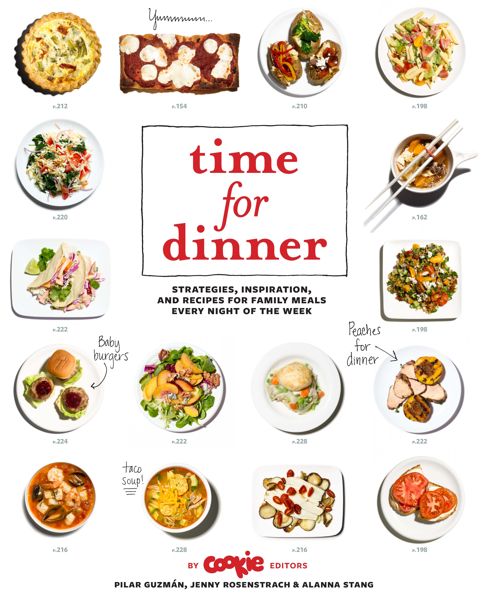
Jenny had been editing food and features on magazines Real Simple and Cookie until last year when she co-authored the upcoming cookbook Time For Dinner and began the website Dinner A Love Story. Working full-time with two young children led to Jenny making a deal with herself: ‘I would only continue to work full time if I was able to put a meal on the table for my family more often than not.’


And she did, splitting the dinner duties ‘down the middle’ with her husband Andy. How she and her husband continue to do this for their family is chronicled on the website.

So, why did the evening meal become the most important time of the day for this family? ‘The short answer: It's the only time ALL day when I actually sit down and look into my children's faces. And I think it's probably the only time all day long when THEY sit down and look at my face. We're focusing on each other. That's the biggest thing.’


‘Other nice dividends: they are willing to trying different foods because they are so used to us introducing new things, they share stories about their day they wouldn't otherwise, it's something so naturally part of the day that to not do it at this point would be weird. That's ultimately what I want it to be. So when they're teenagers their bodies will just be programmed to return to the dinner table at 6:30pm no matter how annoyed at me they are.’

The kitchen is very much the centre of the family’s lives. When Jenny thinks of ‘home’ it’s the ‘four square feet in the kitchen where all five of us (including our Boston Terrier) seem to be standing on top of each other. Sometimes I wonder why we even bother having other rooms in this house? Wait...I just answered my own question. For when they're teenagers.’

While working on lifestyle magazines didn’t change Jenny’s basic definition of ‘home’, it did change the aesthetic of it; ‘I feel certain I would be $2000 richer and not have marble countertops if I hadn't edited 8 trillion stories showing family kitchens with marble countertops at Cookie!’

Having children has probably contributed the most to decorating and home organisation decisions. A mantra Jenny learned at Real Simple is one she still follows today: ‘Control the controllable’. In the kitchen she has a desk and bulletin board, known amongst the family as ‘Command Central’ where all the organising and scheduling gets done.


‘I think this space is important to me because it gives me the illusion of control. I am powerless to control the leak in the ceiling, the dog getting sick, the recess drama – but I can at least make sure the class lists are somewhere I can always find them!’

All parents know that cooking dinner while hungry children wait is one of the hardest times of the day. To avoid more stress, when her children were younger, Jenny used the ‘Babysitter in a Box’: ‘a carefully curated container of kitchen gear and foods (think rice maracas made out of tupperware bowls) that kept them busy making a pretend meal while I made the real meal.’

Today, she has the ‘OK shelf’: ‘an easy-to-access shelf containing a bunch of kitchen-related bowls and pourers that my daughters don’t have to ask me to use. (The answer will always be “OK.”) Every item on the OK shelf is either non-breakable or so cheap (hello Ikea tea set!) that it matters little if they chip it.’


But Jenny’s hidden dollhouse idea is perhaps one of the most fun ways of keeping children entertained in a small space.

‘Last year, I found my six-year-old lying on her stomach in front of a row of my favorite magazines — all opened to stories about decorating. Her paper dolls were hopping from one “room” to the next, lounging on teak patio chairs, cooking on Viking stoves, and cooing with babies sleeping inside Netto cribs. In other words, Abby had constructed her own two-dimensional, temporary, composite dreamhouse.’


‘We set to work tearing out pictures of rooms from Ikea and CB2 catalogs and old issues of magazines. Once she had her favourites, I used blue painters tape to affix each “room” inside an accessible kitchen cabinet door. Then I used the tape to outline each room. Turns out Abby wants nothing to do with me while she gets lost in fantasy land, but I still love that she’s right there underfoot while I’m making dinner.’


And, as most parents would agree, the best thing about this dollhouse is: ‘When she’s done, I close the door. All gone.’


For me though, what really makes Jenny’s home a ‘home’ is her Recipe Cupboard Door.


‘This idea just came to me. Before I renovated my kitchen I used to put recipes on stickies inside the cabinet door because I hated hunching over a cookbook. A recipe door seemed to be just the right height for recipe referencing. When I pitched the idea for Cookie they let me pick an illustrator to execute the vision. I was lucky enough to get Gina Triplett, who is part of the incredible design team Gina and Matt.’

‘The only tricky part was figuring out which recipes were deserving of such an honour. Ultimately, to qualify for “cabinet door” treatment, we decided the recipe needed to be both steeped in family history and, of course, be delicious. The line-up: one recipe from each of our grandmothers; Rosa’s Mud Cake which my best friend’s mum served at every one of my best friend’s birthday parties when I was little; and a recipe made by Aunt Patty the first time I met my husband’s family in 1992.’


‘Now we have a private living memorial to those who have influenced me in the kitchen and my kids will grow up with a certain reverence for these dishes.’

There are some other ways Jenny and Andy keep the family connected. Originally buying a chalkboard for the kitchen wall because it looked pretty, Jenny now realises the family can’t live without it.


‘At first I used it as a way to remind my babysitter of playdates and activities, but now it’s more like my calendar and a reminder for the kids that screams, “Look how much fun you’re going to have this week!!!” When it’s not updated, I hear about it. I’m even expected to write up an itinerary for the weekend and, in the summer, include the weather report.’

Jenny and Andy also like to leave notes for the girls on napkins in their lunchboxes, although she has a warning to parents who have not yet started packing lunches. ‘Do not start with the napkin note – you are only setting yourself up for failure. And setting yourself up for disappointed kids when you can't think of anything cute or creative to say beyond "I have run out of things to say to you." Which I'm always tempted to do, yet somehow don't think they will appreciate the irony.’

Creating a sense of family through their home has evolved naturally for Jenny and Andy and will continue to do so as their daughters grow; ‘We never sat down and decided these things. Like everyone we borrow from people who have done it before us. Our friend Jay took each of his three kids on a one-on-one vacation after each one turned six. I didn't even have kids when I heard about that ritual and I thought that is something we're going to do. I just loved the idea.’

‘But the thing about kids is you don't have to make elaborate rituals for everyone to have fun. They are so naturally joyful about things that we just follow their cues. Once my husband forgot to bring home a present from a business trip for them, but he did have an unopened pack of gum. You would've thought we gave them Malibu Barbie. Now, it's the only thing we ever bring back as a souvenir!’


To visit Dinner A Love Story and for more information about Jenny’s book Time for Dinner, click here.

All photos © Jenny Rosenstrach

Wednesday, June 9, 2010

Renovation flashbacks


Last week I wrote about how we recently lodged plans for a major renovation with the Council. I also wrote that I was crazy to want to renovate again given I was only just over the kitchen renovation we undertook three years ago.

Well, after the kitchen experience I wrote a piece that was published in the Sydney Morning Herald (posted below).Reading it a few years later brings it all back to me. What am I doing?!

When life goes to hell in a misplaced colander, Essential (SMH) 19 June 2008
‘The kitchen is where the heart is, after all’ a wise friend emailed me today and as soon as I read her words it all made sense. My heart has gone out in the skip, along with the cream chipboard cupboards, ugly blue/grey laminate bench top, the dishwasher that hasn’t worked all year and the ancient, tiny upright oven with the door that wouldn’t close properly, a broken light and deeply stained cook top.

In its place have arrived the brand new glossy white, no handle cabinets, the large stainless steel upright cooker and the integrated dishwasher. But my heart is yet to return for it’s still not a kitchen. A kitchen carcass does not a kitchen make, it seems. For now, we remain in limbo while we wait for the stone bench top to be fitted. Only then can the plumber and electrician return to fit all our appliances before the tiler and painter make the finishing touches.

I had no idea I would feel so glum during our first foray into renovating our first family home. After all, I was a renovation veteran thanks to a mother who insisted on renovating every home we lived in (there were seven) including one major undertaking of adding a bedroom and bathroom during my HSC year. This is a woman who, aged almost 60, is currently rebuilding a warehouse apartment from scratch.

I had expected my husband would be more unsettled by the chaos than I was. After all, he had never known another bedroom, let alone house, until he moved out of home at the age of 21. It appears I was wrong. He saunters home happily on the weekend having collected ingredients to grace the only cooking surface available to us for the week – the barbecue. He is still cheerful as he rolls up his sleeves to wash dishes in the laundry tub, leaving them to dry, neatly arranged on top of the washing machine. In fact, the only time he has been snappy during this whole process was when he could not find the corkscrew and I refused to help search through the dozen or so boxes that hold the contents of our old kitchen and are piled precariously in the dining room.

Even the children appear unfazed about having the heart ripped out of their home. My two-year-old has not noticed that his change table now houses the toaster and kettle, while my four-year-old has found the empty kitchen drawers the most useful spot for hiding her jewellery from her brother. The extra floor space means they have a new play area for their cars, trains and doll’s pram. They do not see the bare walls, rendered but not yet sanded or painted, or the white dust that seems to magically reappear on the floor every time I sweep or mop.

And rationally, at least, I know I should not notice either. I should just be excited about the future, about how much more we will be able to enjoy our home once the work is completed. We have saved up long enough to do this. After all, what are two or three (or four, five or six) weeks of discomfort when the end result will be a brand new kitchen we will certainly enjoy for at least the next five years?

And, it’s not like we haven’t renovated before. My husband and I remodelled a bathroom in the first apartment we owned soon after getting married. I have no memories of the stress, only of the excitement of choosing tiles, sinks and towel rails. It seemed such an adventure then; such a grown up task to be undertaking. But that was before children, before I was working from home — in a tiny space shared with the laundry and make-shift kitchen — before I had to prepare five small meals a day.

Perhaps I am only just beginning to learn that I really do like order, that I feel a sense of calm when everything and everyone is in its rightful place, that my heart does actually lie in my (to be) cosy kitchen with my family all around me and not a builder in sight.

A close friend, who has already weathered a kitchen renovation and more this year, tells me I will be fine; that they did well with the barbecue, camp stove and takeaway. The alarm bells should have rung loudly. I have never been one for camping.


Thursday, June 3, 2010

When Home is... a Shop


When my sister, Justine Joffe, opened her vintage, retro and handmade store Retrospections a year ago she had no idea about the feelings the space would evoke amongst her customers. After years of working in a highly pressured environment, she was burnt out, desperate for balance and looking for a complete lifestyle change.

Her dream was to open a shop filled with collections of her favourite things: vintage ‘kitchenalia’; retro furniture; handmade toys, accessories and jewellery; and second-hand and new books. She stumbled upon a corner shopfront, full of windows and complete with vintage black-tiled walls in the Sydney suburb of Cammeray and immediately signed the lease.


She expected to love the shop like a second home; what she didn’t expect was that her customers would feel the same way.

‘The lovely thing is that most days at least one customer tells me how much they love the shop. Often they say they “get it”, it's all their favourite things in one place (which of course it is for me!).’

But for Justine one of the best compliments of all was when a lady walked in and said 'it's just like coming home'.


It’s not only the feel of the shop and the objects living inside its walls that has surprised Justine. It’s also the conversations that occur even between customers, ‘More often than not we are all virtual strangers, but there's something about the space and the objects in it that triggers memories, stories and feelings ... and people seem to just open up.’

Justine feels she learns pieces of wisdom and humility each day, ‘I have heard more unique stories of strength, courage, tragedy and love in this shop over the last 12 months than I did working in the publishing industry for a decade - and that includes all the fiction blurbs I used to write!’


On any given day she will have a story about making someone feel at home inside the shop’s walls. It might be the day she had a customer say she had been to the dentist for a horrible procedure and wanted to visit the shop on her way home because she knew just being there would make her feel better.


Or the day when a lady came in to have a browse and asked Justine why she had started the shop. After sharing her story the customer replied 'I think I was meant to come in here today, I am at a crossroads in my life right now and I think I needed to be here for some reason. Thank you.'

Customers continually come in and share very touching or sad stories. A regular customer’s husband is terminally ill and undergoing treatment so she pops in for a break from her current carer's life. Another customer came in directly after she had attended the funeral of a close friend and purchased a beautiful vintage crocheted blanket in her friend's memory.


‘When things like that happen it reminds me that everyday this place and these objects can have a lasting effect on people - more than I could have ever imagined.’

Retrospections is open Tuesday – Friday 10am-5pm; Saturday 9am – 3pm
498a Miller St
Cammeray
Sydney

LinkWithin

Related Posts with Thumbnails