Showing posts with label home. Show all posts

Friday, February 25, 2011

When Home is... well, Home


We’re home.

And it’s not a building site; it’s home again.

Only a better version now: with a pristine bathroom and a glorious bay window. A window seat none of us can stop sitting on. We’ve hardly sat on the lounge since returning. Everyone is drawn to the window and table.

It’s been an interesting week to return, coinciding with the publication of an article I wrote about the history of this house for the (sydney) magazine. Stepping out to the driveway in my pjs at 6am yesterday to collect the rolled up newspaper took on a whole new significance.

It continued to be a very unusual morning at home. At 7am the electrician arrived to finish off something electrical in the bathroom, Stuart and Louis left to take the car for a service, I took Lily to school at 8am for String Group and then back home again with Ned.

At 8.30am, the electrician switched off the power.

‘Umm, how long will the power be off?’ I asked, slightly embarrassed.

‘Not long,’ he answered with a shrug of his shoulders. ‘Why? What do you need to do?’

I wasn’t quite sure what to say. It sounded ridiculous but at 9am a radio station was going to call and interview me about the article.

‘I have an interview on the phone at 9am’, I said quickly.

He raised his eyebrows, ‘Oh. Don’t worry the power will be back on in 10 minutes.’

He turned back to his jumble of wires.

So, now it was just waiting for Ned to be collected by a friend for school at 8.55am and a hope the electrician wouldn’t be hanging around in the background needing to ask me a question while I was in the middle of the interview.

Ned’s lift arrived at 8.52am. One down.

The electrician was behind the bathroom door. I cleared my throat and knocked. He stuck his head out, eyebrows raised again.

‘Umm, will you need me for anything else? You know, any questions?’

‘Nope. No worries,’ he answered.

‘Oh good, it’s just I don’t know how long I’ll be on the phone for and it’s on the radio so I won’t be able to speak to you.’

He smiled. Or was it a smirk? I felt a bit stupid.

‘I think I’m going to need to come back anyway. I need to get some transformers so can I come back tomorrow morning?’

‘Tomorrow morning is perfect. Our mornings aren’t quite usually so chaotic,’ I started saying as I walked him to the front of the house. It was 8.58am.

I closed the door and the phone rang.

By 9.20am it was all over and the house felt like home again.

The electrician hasn’t been heard from since though...

Friday, February 4, 2011

When Home is... the Playground


It’s that time of the year again over here... when home for little people stops being the backyard and becomes the school playground. When the kindy teachers represent maternal figures, their classrooms become second homes and their classmates family.

It’s Ned’s first week of school and my second time as a kindy mum. You would think it would be easier this time around – for me – yet it feels just as hard. His world is opening up and will not revolve around home in the same way it has for the last five years.

He will no longer be my constant companion who enjoys helping with the shopping and the cooking; who likes to play with his jungle animals in the garden while I hang washing on the line. I won’t overhear him say during breakfast when asked by his father what he’ll do today: ‘Oh, we’ll probably need to buy some food and then mummy, Louis and I like to go for a coffee’.

Instead of eating our lunch together at the kitchen table or in the garden, he’ll be opening his spaceship lunchbox along with the 100 other kindy kids at his school.

Despite his ‘heart beating too fast’ and trying to push tears back into his eyes with little fists on his first day, and a concern that he’ll fall over in his new sneakers, it won’t be long before school starts to feel like home. He has his sister and his best friend from up the street in the playground, as well as other preschool friends starting with him.

And as for me? ‘It’s funny’, he told me after his first day, ‘but when it’s just you and your teacher, you don’t feel like you need your mummy around as much.’

So it seems that for another one of my children, our home will no longer represent their entire world. Now starts their journey into a world of many ‘homes’, friendships, relationships and new places of belonging.

A journey that continues for all of us, no matter what our age.

Thursday, January 13, 2011

When Home is... Flooded


It's amazing how the physicality of 'home' in day-to-day life is so encompassing. We feel defined by our homes; they are the foundations of our personal worlds and represent so much more than just bricks and mortar.

Yet, when disaster strikes as it is at the moment in Queensland, homes really do just become bricks and mortar. Home becomes the family that is still altogether with perhaps just the clothes on their backs.

I imagine the feelings about ‘home’ for Queenslanders now would be their local community and the kindness and support of strangers. There have been endless news reports about strangers putting their own lives at risk to save others, people whose homes have swept away feeling lucky because they and their families survived.

But bricks and mortar are still necessary for us to survive. The Queensland Floods website has a page titled ‘Open Beds’ where people can offer their spare bedrooms to those who no longer have a bedroom to call their own. For more information, visit the website here.

I know some readers and followers of this blog live in Queensland and I hope you are all safe.

Photo © Sydney Morning Herald. Photographer: Dean Saffron

Monday, November 8, 2010

When Home is... an Australian in England


What happens when you move overseas only to feel more ‘at home’ than you do in the country of your birth?

Louise Craig moved to England at the age of 26 and from the moment she stepped off the plane, felt she was home. Here she writes about the experience of falling in love with another country...


‘It’s nearly 12 years since I left the place where I was born; six years since I left the country where I grew up. I’ve lived in four cities and 12 houses. Every move’s been for a good reason, another step along in life. But now I’m ready to stop for a while – not because I’m tired, but because I finally feel content.

The odd thing, or so my friends tell me, is that I feel content in a place that isn’t home. I’m an Australian living in London. I’m supposed to be here for a ‘working holiday’, experiencing life abroad before I go back home to settle down.

But what if I never get around to going home?

I grew up not so much feeling that I didn’t want to be in Australia, but rather that there was a wonderland out there, far, far away, called England, and that I was destined to be there. It was a place of good manners, proper tea and sturdy cakes, E-types and plummy accents, tweed and pinstripes and Liberty prints. It was green of hill and cool of weather, and as far from humid, big-country-town-like Brisbane, where I was born, as I could get.


The trouble was, I’d never actually been to England. But I couldn’t rest until I discovered whether my fantasy world was real. At 26, when I finally organised myself to travel there, it wasn’t for a holiday – it was to live. I left my job, sold what little I owned and banked heavily on the fact that I’d like what I found.

Friends and family wished me well, but also that I should find what I was looking for. What was that? Proof? A place to satisfy my Anglophilia? My spiritual home?

The proof came the moment I arrived. It was real – what a relief! And the satisfaction arrived very soon after. Every building, every street, every garden square transported me to other times in history and connected me with thousands of characters who once occupied the same space. Even now, with childlike wonder, I’ll break into a spontaneous smile as I walk along the street – I’m really here, really part of this other world.


I’ve fallen in love. In central London, where I live, I don’t get mad on the Tube or upset at the grime; I relish the cold and the grey; I’m at peace with the gaudy neon advertising signs that tower over Piccadilly Circus. Rather, as the Gallagher brothers would say, it’s the little things that make me so happy: the old-fashioned curve of a street lamp, the red of a pillar box, the whirr of an electric milk float early in the morning.


I make a game of picking out Margo Leadbetter types doing their weekly shop in Waitrose, and I’m the only person I know who, when it rains or snows, opens the window and pokes her head out to enjoy it.


Eventually I took my first holiday back to Australia – in the July two and half years after I left. Friends and colleagues in London gasped that I’d left it so long (not to mention remind me, in astonishment, that it was winter ‘down there’).

Naturally, friends and family in Australia asked when I would be home – for good, they meant. My instinctive reaction was to reply that I’d be going home at the end of this holiday. A perceptive aunt tut-tutted and reminded me that I meant I’d be going ‘back’ not ‘home’. Suddenly, I didn’t know what I meant.

She asked, too, whether I felt as if I’d been to England before. Gosh – yes. There is a chilling, yet reassuring, sense of familiarity about the place. But why? Is it because I spent the 26 years before arriving subconsciously swotting up, watching thousands of hours of BBC television and reading mountains of Tatler and British Vogue magazines?


Is it that my head has lived in England all my life, but the rest of me in Australia? It would certainly explain why I could explain what Quaglinos, an OAP and a double-yellow line were before I’d even stepped foot on English soil.


But during that holiday ‘home’, I watched an Australian travel program on television in which they provided advice on visiting London. Tellingly, a lump rose in my throat as I watched the images of where I now live and work and play. I missed it and felt homesick.


I couldn’t understand why because, in London, I had the same, more understandable, reaction when the ‘So where the bloody hell are you?’ advertisements for Australia appeared on television. It occurred to me, painfully, that I wasn’t at all sure where the bloody hell home was.

Arriving back in London at the end of that holiday, the plane’s wheels hit the tarmac at Heathrow and two things happened: a huge grin cracked across my face and a light bulb went on in my head. I was home again. I’d just given myself permission to have more than one.


Some might say I’m naïve to the realities of living on this expensive, overcrowded island. Whatever it seems, this England affords me an overwhelming feeling of contentment and a place to rest my spirit. I’m learning that home is wherever you choose it to be: where you are happy, where you feel an affinity, where you have people you love, where you’ve been for so long you can’t remember being anywhere else.

So, have I found what I’m looking for? It’s a question I hardly dare ask myself; except to say I don’t feel as if I’m living away from anywhere. I just feel at home.’


All images © Louise Craig

Saturday, November 6, 2010

When Home is... a piece of furniture


After talking to owner of Armchair, Pip Robb, about the personalities of her many armchairs it made me think more about furniture and how strongly it can relate to home.

Is there a piece of furniture you would rush to save in a fire? Or if you were moving overseas would there be a piece of furniture that would have to go with you to make you feel at home?

Have you inherited special pieces from your family or your partner’s family? Have you invested in a special piece that you plan to have in your home forever (and perhaps hand down to your children?) Or is your most precious piece of furniture something you’ve kept from your childhood home or something you found on the side of the road and restored yourself?

Ok, I’ll go first.

For me, and not because I am copying Pip (!), the piece of furniture I can’t imagine ever being without is an armchair. Favourite because of its history and the story it now has to tell.

When I was pregnant with my first child, like many mothers, I loved the idea of having an armchair in the nursery. My grandparents lounge set, which they had owned throughout my lifetime at least, had an armchair which in recent years my grandfather had stopped using. Its fabric had worn out, one of the legs was bent, it was now squeaky and uncomfortable.

He happily gave it to me and we had it reupholstered and restored. Not knowing what this baby was, I decided to go for a red fabric and knew also that it would be a fabric that could move beyond the baby stage easily.

It was perfect for feeding and then as my daughter grew older, perfect for reading bedtime stories. As each child came along, the chair moved in with the baby. Now that there are no babies, the chair has become the reading chair. Often I will find any of the children sitting on it while looking at books and sometimes all three there together.

It’s a piece of furniture that will always remind me of our early years together learning to become a family.

Wednesday, October 27, 2010

Saying Goodbye to your Family Home


It was a rambling, old wooden cottage with a huge established garden filled with rhododendrons over 100 years old, daffodils and jonquils in Spring, bushes of hydrangeas, climbing roses and a row of waratahs surrounding a fishpond filled with waterlilies. It was also our family home.


Today, it is still all those things except it no longer belongs to us.

Nearly a year ago, I drove out of the gates for the last time, the car filled with freshly cut hydrangea flowers, and it felt right it was no longer ours, despite my parents, sister and I thinking it would be a house that would never leave the family.

Bought as a weekender in the Blue Mountains nearly 20 years ago, my parents quickly realised they had stumbled onto something more significant, a house they could make the family home. One that could contain our history while anchoring us in the present. Furniture my parents had bought when they first married, the low coffee table my sister and I used to coast around when learning to walk, the piano I was forced to practice on numerous times a week, our childhood twin beds, family photos going back a couple of generations, my grandmother’s crockery and tea cups... all of it now finally out and displayed under one roof.

The house also witnessed our milestones and rites of passage: my father’s 50th birthday picnic in the garden, my wedding ceremony by the fishpond and reception in the neighbour’s paddock, numerous Christmases and Easters and many lunches farewelling or welcoming us all from overseas at different times.

But perhaps the most exciting milestone of all, was the arrival of the first grandchild. Extra bedrooms were added to enable all three generations to sleep under its roof at once. Highchairs were bought, my old teddies and toys appeared and a bookcase filled with our childhood library stood waiting patiently.

My parents talked about retiring there, my sister talked of having her own wedding there and then my father got sick.


During his illness, the house became a refuge. After chemo rounds and oncologist appointments, my parents would flee to this house; an escape from their unplanned reality. After his funeral, my mother and sister, along with me and my two children also fled here to be alone together. I insisted we plant a tree in his memory and all of us, including my two-year-old daughter, dug the hole. We could never sell this house, we all agreed, it would always be in the family.


Yet, life rarely goes to plan and the house stopped being a refuge. Instead, for all of us at different times to different degrees, it was a reminder of what we had lost. My mother was lonely there; married to a ghost she felt. When we visited, my children’s laughter would fill the rooms and every chair at the kitchen table was occupied but this only haunted me: my children inhabit a world my father doesn’t.

Eventually the decision was made; it was time to let go. It sold quickly and a weight lifted. So there we were – my husband, our three children, my mother and sister – a couple of weeks into the New Year, all of us ready for a new beginning.

The house was kind to us that last weekend. The sun shone, allowing us time for morning coffee and evening glasses of wine on the veranda in between trips to the tip, Vinnie’s and the Salvation Army. During one afternoon, my mother found my sister and I sorting our childhood books into piles for charity, another for the bin and ones for us to take home. She couldn’t watch, feeling we were throwing away pieces of our childhoods. In a sense we were, many of those books and toys while evoking wonderful memories belonged in the past.


‘I feel like I’m at my own wake’, my mother commented as we sorted through the contents of a dresser drawer. Dismantling this house was dismantling her life as a mother and wife. Her house in Sydney was post-husband and children. All remnants of our family life were kept in this house and now it was time to let it all go.

Before leaving the house I walked around the garden one last time chatting to my mother as we cut flowers. I watched my son on the old swing, my daughter leaving birdseed in the bird feeders and my youngest giggling as he crawled through the grass and I didn’t feel sad.


It was time for another family to love this house, another daughter to marry in this garden, another grandchild to squeal with delight on that old swing. We don’t need a house for us all to be together. We just are.

Photos © Justine Joffe

Thursday, October 14, 2010

When Home is...leaving the city for the country


Have you ever considered swapping city living for a rural life? I know I have and I often wonder what the reality of such a lifestyle change would be like. Writer Hilary Burden made this move five years ago when she left an apartment in London for an old weatherboard house in Tasmania. For Hilary it was more than just a physical change of space; this move has also changed her sense of ‘home’.


‘Home was never about the place I lived - it was about me. Now my home is totally connected to place - in all senses of that word; ie town, region, community, seasons, livelihood - my life is local.’

Hilary had been looking for a significant change and had reached a point in her life where she felt it would be possible; ‘I decided my time living in a city was over. I wanted fresh air, fresh produce, fewer people, less congestion. And I no longer needed a traditional career or professional status. Being independent and child free, I realised I could live anywhere which was a tremendously liberating feeling.’

She was looking for a home on the east coast of Tasmania and had put in an offer on a rundown farmhouse which fell through; ‘I was pretty despondent. Then I saw the home I'm in now in the local paper. The ad was headed "Character & Space". It was just a classic old weatherboard house that needed some TLC. I arranged to visit and, like they say, knew instantly this was the one. I visited in August when the front paddock was full of daffodils. Maybe that helped too.’


Hilary’s only expectation about living in the country was that she wanted to live a balanced life at a slower pace. ‘This was a very conscious decision, and at times I've had to be quite ruthless about what I let in and out. This is what I love. That what I aspired to is unfolding around me and making me happy. Observing the seasons has been key to achieving this I think.


Observing the seasons has also been key to how Hilary’s sense of home has changed; ‘Home was the door to my flat being closed behind me. Noise, crowds and pavements shut out. I lived where I worked which made it home. Now I live where I live and work comes second. And I leave the doors open when I'm home.’


Her garden is one of the things she loves most about her home now – ‘this is a reflection of the doors always being open’ – and an outdoor lifestyle has also led her into a new business venture. Hilary, along with her partner Barney run ‘Hilbarn’: a fresh fruit and vegetable box delivery service bringing seasonal produce to Launceston. They collect seasonal produce from across the state, including buying from roadside stalls, organic farmers and people who sell only by word of mouth.


And now, instead of ‘seeking favourite things to do in the day rather than reflecting on the day itself’ as she once did when living in the city, Hilary loves ‘opening the doors and windows on the day. Hearing the birds wake with song. And making sure I'm not chasing the day.’

For more information about Hilbarn or to read Hilary’s blog, click here.

All photos © Hilary Burden

Tuesday, September 28, 2010

At Home with... Real Living’s Natalie Walton


Back in the 1930s, the American author on etiquette Emily Post wrote in her book Personality of a House that ‘if the house expresses the architect or the decorator and not the owner, then its personality is a song out of tune.’ For Natalie Walton, deputy editor of Real Living magazine (and author of the Daily Imprint blog and the new Frontliners website) the best thing about her job is discovering such different and in-tune ‘personalities’.

‘Because of the magazine I work on, I tend to see certain types of homes. They are generally ones that have been created with thought, care and love. They are not all about spending a bucket-load of money on high-end furniture. They tend to be more about expressing personality and being resourceful.’

For Natalie, a person’s home is the best place to learn about them. ‘Homes tell stories. You get a glimpse into someone’s personality, their likes and dislikes, their passions and interests. There’s perhaps no other place that does that. It’s a real insight into people and society in general. They are incredibly personal spaces and I love seeing how people chose to live.’

As a little girl Natalie would rearrange her room and ask to paint her walls certain colours. ‘With a little hindsight I can see that the world of interiors has always been a part of my life... But my family was sensible and so I never thought I could turn this interest into a career. Instead I focussed on my love of words and studied an English literature degree then completed a Masters in Journalism. Meanwhile, I worked as a finance reporter on a news wire service and later on a medical newspaper. While I enjoyed interviewing people and writing news stories and features, I wasn’t passionate about the subject matter.’

It took the opportunity to join Real Living magazine to remind her of this childhood interest. ‘I jumped at the chance and haven’t looked back. I love the craft of creating a magazine, and more recently have taken the plunge to style interiors. I’m still learning, still writing, and choosing paint colours – so I guess you could say while a lot has changed in my life, much hasn’t too.’


Has working for an interiors magazine changed the way Natalie thinks about her own home? ‘In some ways I’ve learnt so much about design, scale, form, function and all the other principles of interior design, yet my home is inherently the same. I still love pre-loved items with character. I still cherish trinkets and treasures bought on my travels. And my home is still basically a repository for my books!’


‘When I first started working for Real Living I used to think it was boring when people (usually artists/stylists/designers) would say that they loved all-white homes because it cleansed their mind after being surrounded by colour all day. Now that I’ve started styling too, I can completely understand this. I seek calming interiors more than I ever have. Where I once embraced bolder colours, I now crave the serenity of chalky whites and warm greys.’

Recently, Natalie has taken the idea of home and family to another level, launching the website ‘Frontliners’ with photographer Kata Varga. This site, ‘showing a variety of families, how they live their lives and exploring how the parents find the balance to pursue what their passionate about’ began while Natalie was writing a book about motherhood.

‘I interviewed Kata Varga for Real Living when we featured her apartment in the magazine. She lives close to my home and we have sons that are similar ages, and so we quickly became friends. We got talking about working on a project together. I love collaborating with people, and learning from them.’

‘I was working on a book about motherhood and thought that it would be interesting to bring some of the ideas behind that to life in a more visual way. I feel strongly about the reality of being a mother versus the way it is represented in the media, as well as the way people discuss it in general. It’s a huge life-changing event. And it’s not all kisses and cuddles, or post-natal depression either. It’s a contradictory, intense and yet an amazing experience. At the same time, since becoming a mother, I’m often blown away when I meet women who I admire and learn that they have children. The journalist as well as the mother in me wants to know how they deal with the pull of opposing forces that can be motherhood and creativity/passion.’


How has this process been different to working on a magazine? ‘It’s a lot of fun on the shoot day and rewarding to create something that’s purely our vision. Shooting for the web means that we don’t have some of the most basic editorial constraints that I usually deal with. We don’t have to shoot in a portrait format for a start. We don’t have to illustrate how the rooms connect or shoot every single space. And we can indulge ourselves with details just because they’re beautiful.’

But overall what Natalie and Kata have enjoyed most is meeting their subjects. ‘We’ve been blown away by how generous people have been not only with opening the doors to their homes, but also discussing some of the ideas behind the project.’

Aside from working some very late nights – ‘everything we do we do is in our “spare” time as we both have young sons, and families, and work full-time.’ – perhaps for Natalie the only other downside to being surrounded by so many different homes is trying to keep up with an ever-evolving dream house fantasy.


‘I often have between five and 10 dream homes. They include a loft in NYC, a farm in Italy where my son can run barefoot, a beach cottage on Sydney’s Pittwater, a large apartment or house in Bondi, a fisherman’s shack on the Hawkesbury, a hideaway in Bellingen or Byron Bay, a converted warehouse in Surry Hills and/or Melbourne’s Fitzroy... And that’s just what I’m thinking about today.’

Typewriter & desk photo by Kata Varga
Close-up photo of bookshelves by Natalie Walton
All other photos originally appeared in Real Living magazine. Photography: Amanda Prior Styling: Megan Morton

Wednesday, September 8, 2010

When Home is... Emily Post


This past week I have come across a couple of references to the early 1900s American author of etiquette, Emily Post, in disparate books: Joan Didion’s The Year of Magical Thinking and Marjorie Garber’s Sex and Real Estate. I had never heard of her before and it got me thinking. Who was Emily Post and what was her house like?

Well, thanks to Google, she was a leading authority on socially correct behaviour for decades in America. After her Etiquette—The Blue Book of Social Usage, first published in 1922, became a bestseller, she also became a newspaper columnist (answering etiquette questions that appeared in 150 newspapers) and had her own radio program for eight years. Oh, and her summer house at Martha’s Vineyard looked pretty good too...


So anyway – enough house envy – how did this etiquette book come about? Firstly, Emily was born into a wealthy family, the daughter of an architect, in 1873. She was home-schooled before attending a finishing school in New York. Marrying a banker in 1892, they had two sons before his philandering ended their union 13 years later.

BUT, because she married such a man, Emily found herself a career. To support herself and her sons (her husband lost nearly everything in a stock market crash) Emily began writing short stories and novels, all successfully published. Her publisher then suggested she write a book on etiquette (given her social standing) and this book remains today what she is most famous for.

Emily originally wrote the book for ‘the newly rich who wanted to live, entertain, and speak like the wealthy’, according to the website notablebiographies.com. This website goes on to say that the later editions of the book focussed on ‘the character of "Mrs. Three-In-One," a wonder woman who acted as cook, waitress, and charming hostess at small dinner parties.’

Her book was obviously well-received as it is apparently ‘second only to the Bible as the book most often stolen from libraries’.

Emily spent much of her later life at her summer house in Martha's Vineyard, Massachusetts. Here she wrote the book The Personality of a House (1930), supposedly based on her experiences of rebuilding and remodeling it. She was happy here, according to Vogue magazine in 1933 where she described it as ‘the haven of delectable tranquility that all my life I have been searching for.’

She was quirky too, it seems. Living until the age of 86 she would always wake early although never make ‘her first appearance of the day until lunch, which was served promptly at one o'clock.’

She also loved red shoes and liked wallpapering her bedroom walls in ‘dark crimson damask’. Yet, she couldn’t stand seeing a red flower in her garden. 'I am drawn to a window – and there is a red flower standing out like a gash! Then out I go and pull it up', quotes Laura Claridge in her biography Emily Post.

I think it's hard not to like a woman who loved red shoes.

Image of Emily Post taken from notablebiographies.com
Image of Emily Post's garden taken from
Martha's Vineyard Magazine

Monday, August 23, 2010

Author Maggie O’Farrell’s Kitchen Table


Are you the type of reader who likes to imagine their favourite author typing away their favourite books? I am. I find that if I really love a book I feel a connection to the person who wrote it. And when you feel a connection to someone you want to know what their house looks like, don’t you?

I have loved British author Maggie O’Farrell’s writing since she published her first book, After You’d Gone, back in 2000. Since then she has written five novels, her latest The Hand that First Held Mine, published earlier this year.

Luckily for me, Maggie O’Farrell has also been a regular contributor to The Guardian and Observer newspapers for many years and has written about aspects of her home several times. I think this one is my favourite though. In the following article taken from The Observer on Sunday August 15 2004, she wrote about a piece of furniture in a house; both of which have played a key role in her writing...

“The three books I've written have all been worked on in very disparate locations: a borrowed desk in an unheated flat, my parents' dining-room, on my lap in a damp bedsit, various trains, a shed in Yorkshire, a bench overlooking an Italian forest, an alarming bus ride in Bolivia. The one place they have in common is a kitchen table in Invernesshire.

It is a squarish, pine table, somewhat rickety and smelling slightly of all the dinners that have been eaten at it. With each book, I've found it easier to concentrate if I've moved the table to a different place in the room. For my first book, it was next to the fire but that corner seemed too crowded with those characters when I came back to work on the second, so I had to move it near the doorway. For the third, I turned it round and sat by the window.

The table is in a small, wooden house on the banks of Loch Insh, in the village of Kincraig. Behind the house, the East Coast line rattles on north to Inverness; in front of it, the Spey begins to pull itself together from the depths of the loch, re-forming as a river. If you swim out from the bank below the house, stepping carefully over the sharp stones into the brackish water, you can feel the drag of the river, its urgency to get back to itself. The water is icy, cold enough to compress your lungs, but you get used to it.

What's overwhelming about this place is the hugeness of the sky and the absolute quiet. I've never found silence like it anywhere else in the world: it's a spellbound, almost animate hush. When a city-bound boyfriend came up north to meet me there once, he found it too much. He couldn't sleep, he said, because of the nothingness of the night. The unbroken dark (no noise, no streetlights and, on a cloudy night, no moon or stars) was too much for him: 'I can't tell if my eyes are open or closed,' he panicked, during one of his sleepless nights.

I've been going there for almost 20 years, initially with my family on summer holidays. In those days, we stayed in a stone villa, a hundred yards or so from the place I rent now. It is, possibly, the most perfect house in the world: on an incline beside a bridge, it overlooks the loch and the valley, with a sweep of garden down to the water.

My parents are of the generation that finds it acceptable, not to say requisite, to talk to whomever they choose. We were staying somewhere else in the area - I forget where - when we drove past this perfect house. My parents turned round and drove past it again, and then again, much to the horror of their embarrassment- sensitive daughters in the backseat. My mother then got out, opened the gate, walked up the path, knocked on the door and asked the rather startled person who answered if we could come and stay there. Amazingly, they said yes.

Its remoteness is part of its attraction. It's a devil of a place to get to without a car. You have to catch the train to Aviemore or Kingussie then track down a taxi-driver willing to take you the extra distance, or hitchhike and hope for the best. There's a tiny post office that will sell you milk, bread and other staples and newspapers, of course, but I never buy them when I'm there as it goes against the grain of a retreat. And once you are there, it's not that easy to leave. Local bus timetables tend to be erratic and indecipherable, so the only way to get yourself anywhere is to walk or cycle. Mobile phone signals flicker and vanish, days pass, night comes, the loch goes on filling and emptying.

I think I always knew I would write about it. It would be impossible to be so enmeshed with a place for it not to make an appearance in your fiction. When I began my third novel, about two people who exit their lives for a place so remote that no one can find them, I knew it would have to be set in Kincraig.

I found, though, that I had to write those scenes while I wasn't there, that those parts of the book were the only things I've been unable to write there. You need to be elsewhere in order to recreate a place, you need distance for imagination. The last thing you want is reality getting in the way.”

Wednesday, July 14, 2010

Housekeeping


I am reading an interesting memoir at the moment: The Last Supper, by Rachel Cusk. A successful writer living in Bristol with her family, Rachel becomes frightened by the monotonous routine of life so they decide to sell up and head to Italy for a summer. I fantasise about this kind of adventure regularly; the need for new experiences and perspectives wrestling with the lure of home and ‘its shady labyrinth of memory and emotion’ as Rachel so elegantly writes. But more on that later.

What struck me today was a passage about home: ‘I often felt our life lacked beauty... I would put peonies in a vase, wash the floors, tidy up; but I never found much art in daily things. There was always too much reality, churning just ahead, mixing everything together into a grey, agitated mass.’

‘Reality churning just ahead’ – is there a more apt description of a home with small children?! Every evening when Lily and Ned were toddlers, I would put away all traces of toys and books to make the lounge room feel like adult space again. Now we are outnumbered and Louis is still a toddler, I find myself wondering whether there is any point in arguing with the children about tidying up when the room is only going to become as messy the next day. After growing up in a house where there was ‘art in daily things’ and wanting that for my own home I now wonder if I’m too tired to create it. Like Rachel, at the moment I think need to look for art ‘in the world itself’ or in reading books such as this.

***************************

Onto blog housekeeping matters, I have finally worked out how to allow comments more easily. Now you can make a comment without needing to sign in or be a registered user. Hopefully!

And, stay tuned for more interviews including interior decorator, author and media personality Shannon Fricke; author of The Young Widow’s Book of Home Improvement Virginia Lloyd; actor, singer and entertainer John Waters; illustrator Mandy Sutcliffe of Belle & Boo; and designer Marnie Goding of Elk Accessories. All with their own unique take on what ‘home’ is. I can’t wait to write about them.

Picture taken from Australian Women's Complete Household Guide Illustrated, Colorgravure Publications

Wednesday, July 7, 2010

When home is... a sense


The last few days I have overheard or been a part of conversations where ‘home’ is mentioned. It’s funny how when you’re focused on a subject you suddenly start hearing or seeing it everywhere. A bit like when you’re pregnant or trying to get pregnant and the world seems full of pregnant bellies, babies and prams in a way it never was before. Anyway, what has been interesting about these conversations is that people haven’t been referring to ‘home’ as a physical place but rather as a feeling, a sense, or a moment.

In the Sydney Morning Herald this morning I was reading about the new movie about to be released, The Waiting City. It’s an Australian movie, written, directed and produced by Claire McCarthy but shot entirely in India. When asked how she felt about taking on such a big project relatively early in her career, Claire answered ‘I felt very safe in a way – I just feel so at home in Calcutta’.

Last week my friend’s four-year-old daughter had been up all night with an awful cough. In between coughing and tears she told my friend, her mother, ‘I just want to go home. Take me home.’

‘But you are home’, my friend answered before fully understanding what she was really saying.

The week before I overheard someone describing falling in love, ‘I knew it, as soon as I put my head on his chest. It felt like... well, just like home’.

It’s interesting to think of home as a euphemism for safety and security. It’s one thing for the physical space of home to be a refuge, a way of cocooning or hibernating from the outside world but it’s another to feel that ‘home’ is a state of mind.

When has home represented a state of mind for you? For me it would be every time I have smelt my nanna’s perfume in the 20 years after her death. Walking past someone wearing that perfume is the quickest way to send me back into her arms or to hear her chuckle. It reminds me of feeling safe with her as a child. My sister admitted recently that when she is feeling down she sometimes takes the lid off the old compact container that used to hold nanna’s face powder and smells it to feel better.

Whenever I’m overseas and I smell someone wearing my mother’s perfume I feel the same way. When I was in my early 20s I was in London staying with family friends and became ill with a virus.

‘You just want your mum when you feel sick’, said this family friend reading my thoughts of complete homesickness at this moment. ‘I still want my mum when I’m sick’, she continued; this woman who was aged in her mid-50s with a husband and adult children and had lost her mum 35 years before. But was it our mothers we wanted or the feelings of complete safety and protectiveness they give us throughout our lives?

We took our three children to America last year and over the three weeks we were away, my four-year-old took to muttering to himself quite a bit when something went wrong. ‘I knew I shouldn’t have come to America’, he would say if he fell over or the ravioli he ordered was round rather than square, ‘I just want to be home. NOW!’

It wasn’t the physical space he craved, it was the reassurance that all was right in a world he understood.

When my father died I had a four-week-old baby. Home for me then was most definitely that baby in my arms – as often as possible. The feelings of loss in a world I couldn’t imagine and didn’t understand were only countered by my arms being full of that new life.

What is it about the word ‘home’ that is so emotive? And isn’t it endlessly fascinating that at different times in our lives or even on different days of the week that little, seemingly harmless four-letter-word can conjure such disparate feelings.

Sunday, July 4, 2010

When Home is... the Comfort of Food


Before even meeting Natalie and Simon Thomas, owners of The Sydney Picnic Company, it is obvious how friendly and comfortable their home will feel: ‘I will have the kettle on for you’, Nat emails when confirming the time for our interview.

And so it is as I walk into their lovely, tiny, weatherboard workers’ cottage located on a narrow lane hidden behind the main streets of the Sydney suburb of Woollahra. The house is impossibly cute with its white timber walls; bedroom overlooking the lounge area, the brick chimney and fireplace; the dining nook surrounded by windows looking across to the huge old camellia tree in the courtyard; and the long, narrow kitchen running alongside it.


‘We loved this little house as soon as we walked in. It was so cute with so much personality’, says Nat as we sit down at the dining table. Simon adds, ‘Everyone said how English it looked and joked that we came to the other side of the world to find England again.’

It does feel very English – even the name of the lane sounds like it should belong in an English village – and Nat and Simon have always loved old houses. ‘We need our home to have character and soul and I think you often find that in the older houses’, says Simon.


Nat adds, ‘We’re so used to the weather being crap in the UK that we have always felt home had to be a refuge and that feeling hasn’t changed.’

It was food rather than architecture that brought the couple to Australia in 2002. Arriving in Sydney for the first time while on their honeymoon, they ate out every night. ‘We had booked the restaurants before leaving the UK and people gave us money for our meals as wedding presents. It was great, we’d send them photos of us in a restaurant saying “this is the meal you gave us!”’ says Nat.

They both found the Sydney lifestyle to be very refreshing, loving the mix of city and beach and decided to move here soon after. Simon took the opportunity to leave his career in finance behind and move into the food industry, ‘My parents owned a wine bar / bistro so I grew up around food and it was my first job out of school for a few years. Being a family business I didn’t really appreciate what my parents were offering me though and just wanted to hang out with my mates.’

He feels he has come full circle now, ‘Food was always a passion; almost an obsession. Anything outside of work was always geared around food.’

They moved all their furniture from their home in Brighton, England into storage and shipped only eight boxes to Sydney. ‘Luckily we didn’t bring much with us as we hardly have room for furniture here,’ quips Nat. But what they did bring were the essential items needed to make sure they felt at home straight away: ‘We just shipped all our cookery books, Si’s knives and saucepans, any kitchen related stuff and all our bedding. That was enough to make any place feel like ours.’


Indeed it was also food that helped build the foundations of Nat and Simon’s relationship, ‘We were students when we met and during that time my mum had cancer’, says Nat, ‘I moved back in with my parents while mum was undergoing aggressive chemo. Her taste buds were all over the place and Si would come over to visit and we’d say to her “what do you fancy for dinner tonight?” She’d say something creamy or something spicy and we’d go off to the supermarket and cook for her together.'

Both of them still feel the way of showing someone that you love or care for them is best done through cooking, ‘I think food is the nicest gift anyone can give you. So much time goes into thinking about what to cook, then shopping for it, cooking it, clearing it away’, says Nat.

‘How people prepare food is a reflection of their personalities,’ adds Simon, ‘it means a lot when you go around to someone’s house and it’s obvious they have spent a lot of time preparing the meal.’


The couple agree that their favourite past time is having friends over for dinner, ‘When a friend is feeling down, this is where they come. We’ve looked after a lot of broken hearts and there have been a lot of tears on that sofa.’
What do they cook for a broken heart? ‘Definitely a roast’, answers Nat, ‘because when you walk into a house with the smell of meat and potatoes roasting it feels like home. As Nigel Slater says, “one of the best smells in the world is a chicken roasting”.’

Nat’s father passed away recently and on their return to Australia after his funeral friends would ask if she wanted to be on her own. ‘It was the last thing I wanted. I was saying “no, come over for dinner” or we’d go there for dinner. Food and eating with friends has been a massive comfort and I think it helps. In other cultures you feast when someone dies and I like that idea.’

Food is always at the heart of this couple’s life and home, ‘The most money we’ve spent in this house is on the dining chairs’, says Nat, ‘we spend most of our time around this table eating, talking, being together so we knew we’d need really comfortable chairs. We were both brought up in houses where you sat down to eat as a family every night and I still think that is so important. Sitting here we take the time to talk about what we’ve been doing and what we’re cooking.’

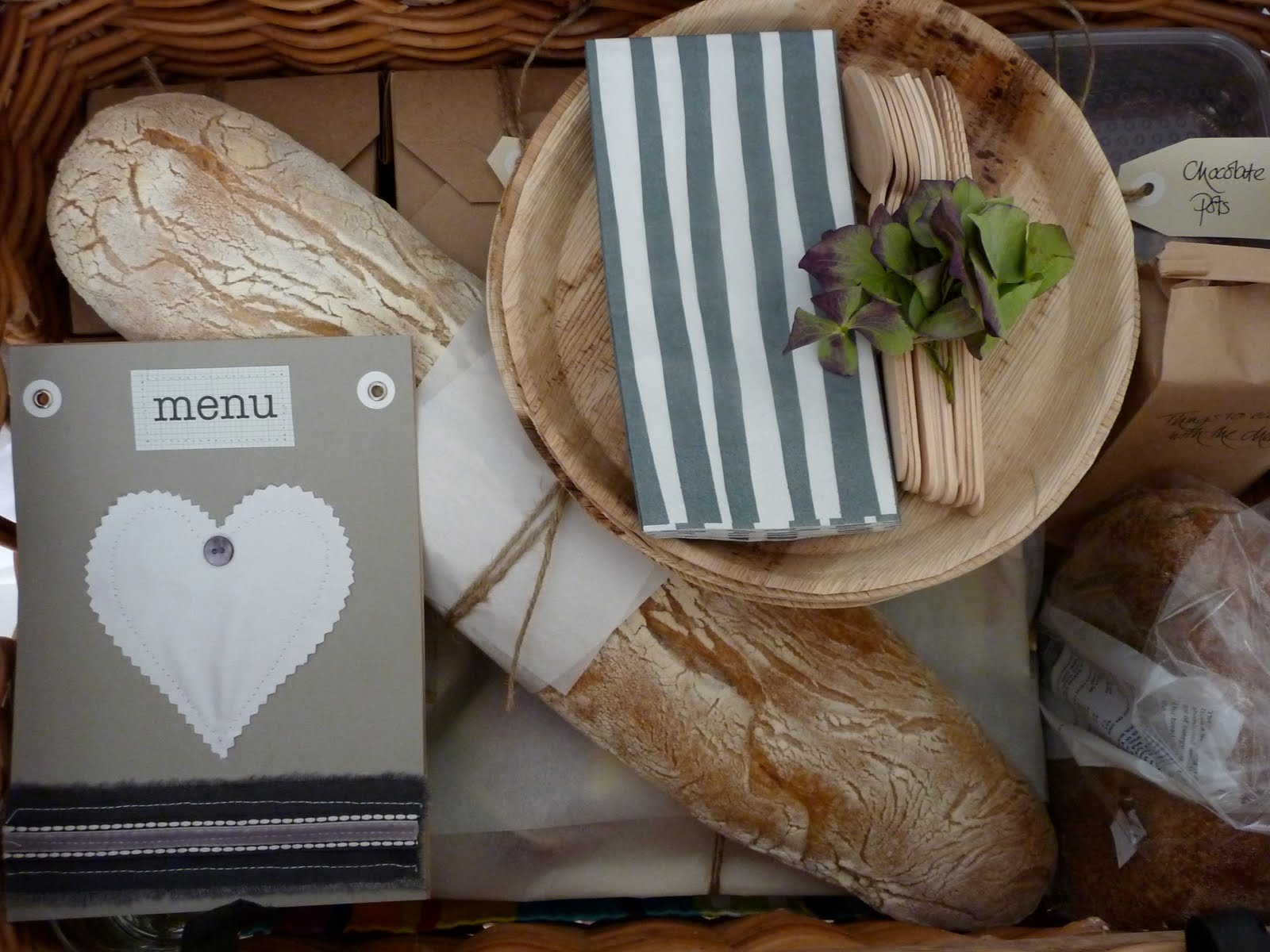
And now it has become their shared career too, starting a picnic catering business nearly two years ago. ‘We love having picnics in Sydney because when we arrived with not much money we would get a baguette, some cheese and a bottle of wine, find a spot by the harbour and eat looking at the amazing views feeling so lucky.’


A couple of friends asked Simon to create surprise picnics for them. Nat stitched personalised menus and looked after the presentation while Simon made the food. Their friends were amazed with the result. As Simon says, ‘Their enthusiasm rubbed off and made us think we could give it a go. It was something we could do that combined my love of food and Nat’s love of design.’


At the time Nat was stressed and unhappy working in the design field and they decided it was a now or never time to try working for themselves. It was a gamble that has paid off with the business continuing to grow steadily. They love being a part of other people’s special occasions and receive many emails and photos of their customers enjoying the picnics, so happy they are with the result.

Working together from home has not caused much of a problem either; Nat believes it was tricky at first: ‘a few times we had to say, “I’m just going for a long drive” and a few times we felt like killing each other’ but this is all said in jest and
Simon is quick to add that the transition was in fact quite easy.

What was hard was switching off from thinking about the business at the end of each day. ‘We had to make sure that at 6pm we tidied everything away and switched back to us. At the beginning we couldn’t stop thinking about work and the house stopped feeling like home which was a bit strange’, says Nat.

To rectify this, they converted their front entrance room into an office. ‘We really needed to separate the two spaces. I love doing the stitching and sewing of the menus and now feel I can make a huge mess whereas before it was all over the dining table. Without that separate space our lives became blurred.’


For Nat and Simon, home and food will always define them. ‘Home is such a sacred place,’ says Nat. ‘Every time I walk in here I think how much I love this house even though it’s tiny.’ As she walks me to the front door, she laughs, ‘but if we were somewhere larger I’d really miss not being able to talk to Si while he’s in the kitchen cooking and I’m in the bath a metre away.’

* All photos © Natalie & Simon Thomas

Friday, June 25, 2010

How Property Writing & Home mix


When you spend your days writing about other people’s homes, how does that change your own thoughts about ‘home’? Lucy Macken is a property writer for the Sydney Morning Herald and here she tells us how her feelings about ‘home’ have changed:

‘My idea of home has varied over the years, from where ever the majority of my clothes were at any given time in my early 20s (I moved from share house to share house regularly and often in a taxi), to something far more cumbersome in my late 20s and 30s.

Prior to property writing though, the only pre-requisite was it had to be in walking distance from either Newtown or Darlinghurst with a great TV. Views became a must-have briefly, but that was ditched in favour of a backyard in my early 30s. Now that I had kids and I couldn't afford Sydney real estate that managed both.

Home is far more of an investment for us now, which is often a headache when I look up from my desk. After looking at all the images of minimalist, whiter-than-white living areas with sparkling and stark stone bench space, I often forget that that is a fanciful way to live when you're housing three kids, husband, dog and the odd school bag.

That said, I am constantly assessing our needs from a home within the context of the wider real estate market. So we recently decided, for example, not to renovate not because we don't love our house, our street, the parks around us and the schools, but because we would be over-capitalising. So sad, but true.

What defines our home has become increasingly related to our immediate neighbourhood rather than our own house, but that is more due to the kids than writing about real estate.

I finally get what they mean when they say location is everything. It's not just the name of the suburb, but how close are we to transport? How close are the parks or water? Is it a quiet street or a risk to life every time we run outside? What are the neighbours like?

Living in the inner west, the proximity of the neighbours makes it more important than ever before to get on with them. You don't communicate by lawyer but more over the back fence, asking for the ball to be kicked back or to apologise when it lands in someone's dinner.’


Monday, May 31, 2010

Welcome


I have always been a homebody and in many ways (particularly today with the rain falling in Sydney and a mug of tea beside me) I still am. But I have been home for a while now. Three young children and a freelance writing career have meant that home is now more central to my life than it ever was before.


Some days that feels liberating and other days it feels stifling. What I have noticed over the last six years as my family has steadily grown is that my feelings about home -- emotional, physical, spiritual -- are constantly evolving and changing.


In this space I want to explore what 'home' means in today's society. I want to write about how other people feel about their homes and the journeys they took to find their way there.


Also, as we embark on renovating an 1890s terrace, I'm growing even more curious about the historical aspects of home. How different is the family that first lived in my house to my family today?


Just think about all the secrets the walls in your house hold. Or are houses simply bricks and mortar? I'm looking forward to finding out and I hope you are too.

LinkWithin

Related Posts with Thumbnails