Monday, October 11, 2010

When Home is... your mother’s gravy recipe


Recently I was at my mother’s house for dinner along with my sister and my sister’s godparents from interstate. Mum had made a roast – albeit with mash potato rather than roast which was my first shock of the evening – and just as the meat was ready my mother asked my sister to help with the gravy.

My initial reaction was to wonder why she asked my sister when surely she knew as little about making gravy as me. But then as she deftly whisked away with a fork I realised that she knew exactly what she was doing.

‘How do you know how to make gravy?’ I asked accusingly as only a big sister can.

‘What are you talking about? Mum taught me of course.’ She looked at me curiously. ‘Didn’t she ever teach you?’ she said in a way that only a younger sister can.

‘I’m sure I’ve shown you how to make gravy’, my mother interrupted shaking her head at us.

Um, no. White sauce yes, gravy no.

How is this possible? As a lover of roast dinners how have I gone through adulthood without making a gravy?

It’s funny how there are some recipes that you learn from your family rather than a recipe book. And if you miss out before you leave home you may never master. What I love most about such recipes is that every family probably has a slightly different version thanks to generations of tinkering to please different palates.

I suspect the reason why I never learnt to make gravy was that it’s not my favourite part of a roast dinner anyway. I never liked the gravy seeping into my crispy roast potatoes and I still don’t. For me a roast dinner has always been about the potatoes.

But I think it’s time I grew up and at least had an idea about how gravy comes to appear on the table. After bringing up the gravy conversation again with mum (‘You should just know after watching me make it for all those years.’) I learnt that she makes it the same way my poppa does as my nanna always made it too thick, lumpy and pale. At least nanna’s way would mean that it wouldn’t leak into my potatoes.

So, finally I have our family’s gravy recipe. Whether I attempt it will be another question. After all, a family recipe always tastes better when it’s made by your mother, doesn’t it?

Mum’s Gravy

Sprinkle enough SIFTED plain flour (I just use a metal tea strainer) to cover the bottom of a hot frying pan (this can be done in a dry pan or otherwise the baking dish & juices once the meat is
resting).

Watch it carefully as it starts to brown without being tempted to move it around! As you see it change colour - not too dark, the safest way is to take it off the heat and add enough beef stock slowly, stirring all the time (or even using a whisk) to make sure it does not go lumpy (putting it back on the heat as you add more stock).

When it is the consistency you want & just at boiling point ... not too thick and not too thin, take it off the heat. When the beef is rested & carved, pour the juices from the carving tray back into the gravy & re-heat ready to serve in a 'gravy boat' of course!

I think I remember that Poppa's secret ingredient was adding a touch of Worcestershire sauce at the end.

Thursday, October 7, 2010

When Home is... a Candle in a Teacup


Only recently I was writing about my love of bacon and the smell of it sizzling in the frypan but what I didn’t mention was not really loving the smell that lingers in the house well after breakfast has ended.

Just the other week we cooked sausages for dinner (well to be honest we have sausages every week thanks to certain limited palates in our house) and one of us – perhaps it was me – forgot to wipe down the stovetop afterwards. The next day the house smelled of old sausages and grease. Even after cleaning the stove the smell unpleasantly lingered.

It was time to burn my scented candle. I’d been avoiding using it though, as it’s a candle made in a very old sundae glass and looked almost too good to use. Jen, who I interviewed recently about her handmade vintage handbags, also makes candles in old vessels – glasses, vases, teacups, ramekins – and happens to sell them at my sister’s shop Retrospections.


I love the idea of finding another way to use old objects that were once part of a set and are now lost or alone. They get another chance of life in another home.

Perhaps no one will drink champagne or tea out of them anymore but they will still make people happy.

Jen originally came up with the idea of making candles in teacups because of her obsession with collecting them. She says; ‘I needed to start coming up with different ways to use them around my house as there are only so many cups you can justify keeping for the purpose of tea drinking alone!’


‘I had seen people using teacups for growing herbs and flowers which got me thinking about different ways they could be used for display around the house. I have always loved candles so it hit me that they would be the perfect vessel for candles.’

She chose the vanilla scent because of the ‘homely’ feeling it creates. ‘Vanilla reminds me of baking which I find very comforting.’

It’s certainly a lot more comforting than the smell of bacon or sausage fat the day after, I have to say.


Photos © Jennie Smith

Monday, October 4, 2010

When Home is... a Tent


Are campers born or made?

I find myself asking this question more and more the older I get. My family were not campers. It was never a question when I was younger. We had friends who camped and friends who didn’t. I never wondered whether we would become a camping family; after a few bad experiences with school camps I was really glad we weren’t one.

My husband did come from a camping family yet felt that his years of highschool cadet camps killed any desire of carrying on the tradition with our children. Again, I never questioned it. I was still of the opinion that campers were definitely born.

But lately a lot of our friends have begun camping with their children. Most are from camping families (in keeping with my theory of campers being born) but some are new to camping as adults.

‘You should try it!’ they have enthused. ‘The kids will love it!’ they continue. ‘Yeah, it would be great to see Germaine camping!’ the men say and I don’t think it’s because they think I will love it.

But lately I have been thinking about it. Not about staying in a camping ground or caravan park but about pitching a tent in the middle of nowhere. With small children and living in a busy city there is something quite intoxicating about the thought of getting away from everyone and everything. Sitting around a campfire with my family and seeing only the stars, listening to the sounds of the birds, hearing the twigs snap and leaves crackling as you walk, being able to shut the outside world away.

Recently Maxwell Gillingham-Ryan wrote about camping with his daughter on his website Apartment Therapy and what he said resonated:

‘When you step out of your carefully constructed home, you can meet the world in a fresh way. And it all depends on mastering the humblest of activities: setting up a tent, cooking a meal, sleeping on the ground.’


But a big part of me still wonders if it’s too late; that campers really are born and definitely not made.


Photo from Country Living via Apartment Therapy

Friday, October 1, 2010

When Home is... a Guestbook


In my experience guestbooks left inside holiday houses, B&Bs and guesthouses have held little appeal. The majority only leave enough space for one sentence, which for most entries is usually about the weather. You glean little information about the people who had visited before you, what their lives are like and what brought them to the same holiday house you happen to have chosen.

So, when we opened the front door of a cute, wooden two-bedroom cottage in the tiny seaside town of Jenner, Northern California last year and I noticed the guestbook on the kitchen table I gave it little thought.

Instead we unloaded the bags and took the kids down to the beach. The coastline had already captured my imagination: rough seas, rocky cliffs, grey sand and driftwood. Not far away, around the next headland in fact, was Bodega Bay where Hitchcock filmed The Birds. Little has changed; the seagulls are still the size of rabbits and the coastline is both haunting and romantic. I didn’t want to leave.


We ate dinner in a little seafood restaurant that evening with multi-paned windows overlooking the ocean. We could hear the wind howl through the door cracks and see the swell of the sea. It looked like rain so we huddled together and ran up the hill back to our cottage, quite early. All I needed now was the ghost of the sea captain from The Ghost and Mrs Muir to appear and my love affair with this landscape would be complete.


After the kids were in bed, we settled on the sofa and poured another glass of wine. I spied the guestbook again and decided to flip through while waiting for Stuart to find the corkscrew.

Here it was; the guestbook I’d been waiting for all my life. Entries that went on for 10 pages: the soldier back from fighting in Iraq who couldn’t get over the quietness here, who could still hear gunfire and bombs in his head but who found the beach and the ocean healing; the couple who had come to try and save their marriage, who had managed to find the time and space in this little cottage to actually see each other properly for the first time in years; or the man who brought his girlfriend here to cook her a romantic dinner of pasta and strawberries and chocolate and who joyfully left at the end of the weekend with a fiancée.

Then there was the family with teenage children and an old Labrador who had been holidaying here for years and had recently discovered their beloved dog was dying of cancer. This weekend was the last holiday for this old dog and the family delighted in watching him run along the beach he had always loved and playing in the long grasses surrounding the cottage.


But I think the story that caught me the most, the one I kept rereading throughout our stay, was written by a woman on her honeymoon. Only a couple of days before, she and her now-husband ‘got all dressed-up in new party clothes’. With the kids they ran down to the San Francisco registry office, had lunch at a very ‘swanky’ restaurant with their families and close friends, all stayed the night at ‘an even swankier’ hotel before piling the kids and dog into the car and driving to this little cottage.

Their days had been spent relaxing and enjoying becoming a family: ‘all of us here together, my wonderful new husband, his two young sons, my little girl, and the new baby we recently discovered has started growing inside me.’

It was the ‘new’ baby, this symbol of lifelong love and hope that still has me thinking of this family and that guestbook.

A family I have never seen and never will see but a family who lived in the same space we did for a short while during a momentous time in their lives; a family who by now will have grown to six with a baby who today must be a preschooler.

A family I will always think about whenever I think of our time in that tiny Californian town.

Tuesday, September 28, 2010

At Home with... Real Living’s Natalie Walton


Back in the 1930s, the American author on etiquette Emily Post wrote in her book Personality of a House that ‘if the house expresses the architect or the decorator and not the owner, then its personality is a song out of tune.’ For Natalie Walton, deputy editor of Real Living magazine (and author of the Daily Imprint blog and the new Frontliners website) the best thing about her job is discovering such different and in-tune ‘personalities’.

‘Because of the magazine I work on, I tend to see certain types of homes. They are generally ones that have been created with thought, care and love. They are not all about spending a bucket-load of money on high-end furniture. They tend to be more about expressing personality and being resourceful.’

For Natalie, a person’s home is the best place to learn about them. ‘Homes tell stories. You get a glimpse into someone’s personality, their likes and dislikes, their passions and interests. There’s perhaps no other place that does that. It’s a real insight into people and society in general. They are incredibly personal spaces and I love seeing how people chose to live.’

As a little girl Natalie would rearrange her room and ask to paint her walls certain colours. ‘With a little hindsight I can see that the world of interiors has always been a part of my life... But my family was sensible and so I never thought I could turn this interest into a career. Instead I focussed on my love of words and studied an English literature degree then completed a Masters in Journalism. Meanwhile, I worked as a finance reporter on a news wire service and later on a medical newspaper. While I enjoyed interviewing people and writing news stories and features, I wasn’t passionate about the subject matter.’

It took the opportunity to join Real Living magazine to remind her of this childhood interest. ‘I jumped at the chance and haven’t looked back. I love the craft of creating a magazine, and more recently have taken the plunge to style interiors. I’m still learning, still writing, and choosing paint colours – so I guess you could say while a lot has changed in my life, much hasn’t too.’


Has working for an interiors magazine changed the way Natalie thinks about her own home? ‘In some ways I’ve learnt so much about design, scale, form, function and all the other principles of interior design, yet my home is inherently the same. I still love pre-loved items with character. I still cherish trinkets and treasures bought on my travels. And my home is still basically a repository for my books!’


‘When I first started working for Real Living I used to think it was boring when people (usually artists/stylists/designers) would say that they loved all-white homes because it cleansed their mind after being surrounded by colour all day. Now that I’ve started styling too, I can completely understand this. I seek calming interiors more than I ever have. Where I once embraced bolder colours, I now crave the serenity of chalky whites and warm greys.’

Recently, Natalie has taken the idea of home and family to another level, launching the website ‘Frontliners’ with photographer Kata Varga. This site, ‘showing a variety of families, how they live their lives and exploring how the parents find the balance to pursue what their passionate about’ began while Natalie was writing a book about motherhood.

‘I interviewed Kata Varga for Real Living when we featured her apartment in the magazine. She lives close to my home and we have sons that are similar ages, and so we quickly became friends. We got talking about working on a project together. I love collaborating with people, and learning from them.’

‘I was working on a book about motherhood and thought that it would be interesting to bring some of the ideas behind that to life in a more visual way. I feel strongly about the reality of being a mother versus the way it is represented in the media, as well as the way people discuss it in general. It’s a huge life-changing event. And it’s not all kisses and cuddles, or post-natal depression either. It’s a contradictory, intense and yet an amazing experience. At the same time, since becoming a mother, I’m often blown away when I meet women who I admire and learn that they have children. The journalist as well as the mother in me wants to know how they deal with the pull of opposing forces that can be motherhood and creativity/passion.’


How has this process been different to working on a magazine? ‘It’s a lot of fun on the shoot day and rewarding to create something that’s purely our vision. Shooting for the web means that we don’t have some of the most basic editorial constraints that I usually deal with. We don’t have to shoot in a portrait format for a start. We don’t have to illustrate how the rooms connect or shoot every single space. And we can indulge ourselves with details just because they’re beautiful.’

But overall what Natalie and Kata have enjoyed most is meeting their subjects. ‘We’ve been blown away by how generous people have been not only with opening the doors to their homes, but also discussing some of the ideas behind the project.’

Aside from working some very late nights – ‘everything we do we do is in our “spare” time as we both have young sons, and families, and work full-time.’ – perhaps for Natalie the only other downside to being surrounded by so many different homes is trying to keep up with an ever-evolving dream house fantasy.


‘I often have between five and 10 dream homes. They include a loft in NYC, a farm in Italy where my son can run barefoot, a beach cottage on Sydney’s Pittwater, a large apartment or house in Bondi, a fisherman’s shack on the Hawkesbury, a hideaway in Bellingen or Byron Bay, a converted warehouse in Surry Hills and/or Melbourne’s Fitzroy... And that’s just what I’m thinking about today.’

Typewriter & desk photo by Kata Varga
Close-up photo of bookshelves by Natalie Walton
All other photos originally appeared in Real Living magazine. Photography: Amanda Prior Styling: Megan Morton

Thursday, September 23, 2010

When Home is... the weekly shopping list


How do you write your shopping lists? On the back of an envelope, just a few key words to remind you of the most necessary ingredients; or on a sheet of paper with products listed in order of the aisles?

I have always enjoyed people-watching at the supermarket. Every Friday morning I see an elderly man at Coles, his walking stick in the trolley, always wearing a shirt and tie. He attaches a little wooden clipboard to the trolley handles. On it is a sheet of paper with a list typed out on a typewriter: red ink for the quantity and black ink for the product. Once he has collected his 2 X cartons of milk, he crosses it off his list with a biro. So precise. I doubt he ever forgets a key ingredient, such as the rice when you are making a curry... like I may have done last week.

And I have to admit to observing what other people put in their trolleys. You can make up a life story straight away based on brand choices alone. This game probably started during my teenage years working at the checkouts at Woolies but it’s still one way of making the boring weekly shop less monotonous. How can I not make up some romantic story when an attractive young man in a well-cut suit is buying olives, French cheese and stuffed peppers at the Deli counter while I wait for my sandwich ham to be sliced? Oh look, in his basket are strawberries, cream, fresh basil and tomatoes; is it a first date? Or maybe he is planning to propose? I wonder if he has the ring picked out...

So, I was pleased to bump into a passage about ‘trolley reading’ in a book by English chick-lit author Adele Parks a while ago. Turns out I’m not the only one; there are fictitious people who do it too!

In her book The Other Woman’s Shoes, two adult sisters do their grocery shop together. One sister, Eliza, is a free spirit living with her musician boyfriend while Martha has the perfect home, perfect marriage, perfect children... I’m sure you can see where all this is going to lead:

‘Eliza turned her attention to trolley-reading. That woman was bulimic: two apples, one carrot and a box of Milk Tray. This one was cooking dinner for a lover: salmon, a selection of florets on a microwave tray that cost an entire trust fund per pound, tubs of Häagen-Dazs. That couple was happy: mozzarella, tomatoes, avocados, fresh pasta and pesto sauce. That couple was waiting for payday: baked beans, sliced loaf, tinned fruit.’

‘... There were a number of low-fat, low-taste products for Martha. Eliza looked at Martha’s groceries and began to doubt her ability to read trolleys like books. Because Martha’s trolley said she was repressed and that she undervalued herself, which simply wasn’t true. Eliza knew Martha was a happily married woman with a fulfilled life. Martha was always saying as much.’


What’s on your list this week?!

Monday, September 20, 2010

When Home is... creating a world for your family


Magazine editor, writer and cookbook author Jenny Rosenstrach’s definition of home hasn’t changed since she was a child: ‘It's the place you go "where they have to take you in." And I realize I'm butchering Robert Frost there, but it's the place I can be my worst self, my best self (hopefully more of the latter) and I'll still be loved unconditionally.’

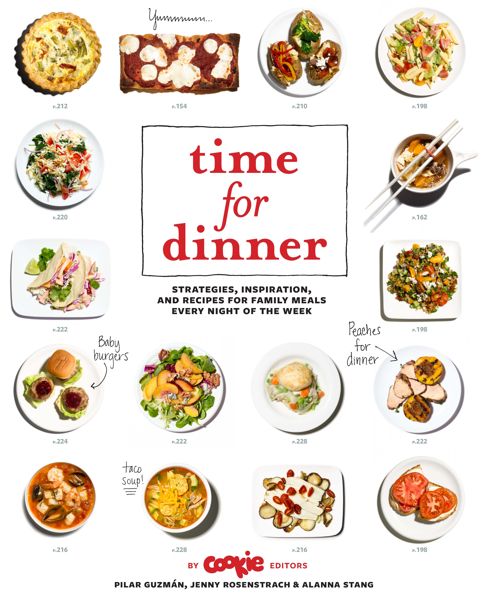
Jenny had been editing food and features on magazines Real Simple and Cookie until last year when she co-authored the upcoming cookbook Time For Dinner and began the website Dinner A Love Story. Working full-time with two young children led to Jenny making a deal with herself: ‘I would only continue to work full time if I was able to put a meal on the table for my family more often than not.’


And she did, splitting the dinner duties ‘down the middle’ with her husband Andy. How she and her husband continue to do this for their family is chronicled on the website.

So, why did the evening meal become the most important time of the day for this family? ‘The short answer: It's the only time ALL day when I actually sit down and look into my children's faces. And I think it's probably the only time all day long when THEY sit down and look at my face. We're focusing on each other. That's the biggest thing.’


‘Other nice dividends: they are willing to trying different foods because they are so used to us introducing new things, they share stories about their day they wouldn't otherwise, it's something so naturally part of the day that to not do it at this point would be weird. That's ultimately what I want it to be. So when they're teenagers their bodies will just be programmed to return to the dinner table at 6:30pm no matter how annoyed at me they are.’

The kitchen is very much the centre of the family’s lives. When Jenny thinks of ‘home’ it’s the ‘four square feet in the kitchen where all five of us (including our Boston Terrier) seem to be standing on top of each other. Sometimes I wonder why we even bother having other rooms in this house? Wait...I just answered my own question. For when they're teenagers.’

While working on lifestyle magazines didn’t change Jenny’s basic definition of ‘home’, it did change the aesthetic of it; ‘I feel certain I would be $2000 richer and not have marble countertops if I hadn't edited 8 trillion stories showing family kitchens with marble countertops at Cookie!’

Having children has probably contributed the most to decorating and home organisation decisions. A mantra Jenny learned at Real Simple is one she still follows today: ‘Control the controllable’. In the kitchen she has a desk and bulletin board, known amongst the family as ‘Command Central’ where all the organising and scheduling gets done.


‘I think this space is important to me because it gives me the illusion of control. I am powerless to control the leak in the ceiling, the dog getting sick, the recess drama – but I can at least make sure the class lists are somewhere I can always find them!’

All parents know that cooking dinner while hungry children wait is one of the hardest times of the day. To avoid more stress, when her children were younger, Jenny used the ‘Babysitter in a Box’: ‘a carefully curated container of kitchen gear and foods (think rice maracas made out of tupperware bowls) that kept them busy making a pretend meal while I made the real meal.’

Today, she has the ‘OK shelf’: ‘an easy-to-access shelf containing a bunch of kitchen-related bowls and pourers that my daughters don’t have to ask me to use. (The answer will always be “OK.”) Every item on the OK shelf is either non-breakable or so cheap (hello Ikea tea set!) that it matters little if they chip it.’


But Jenny’s hidden dollhouse idea is perhaps one of the most fun ways of keeping children entertained in a small space.

‘Last year, I found my six-year-old lying on her stomach in front of a row of my favorite magazines — all opened to stories about decorating. Her paper dolls were hopping from one “room” to the next, lounging on teak patio chairs, cooking on Viking stoves, and cooing with babies sleeping inside Netto cribs. In other words, Abby had constructed her own two-dimensional, temporary, composite dreamhouse.’


‘We set to work tearing out pictures of rooms from Ikea and CB2 catalogs and old issues of magazines. Once she had her favourites, I used blue painters tape to affix each “room” inside an accessible kitchen cabinet door. Then I used the tape to outline each room. Turns out Abby wants nothing to do with me while she gets lost in fantasy land, but I still love that she’s right there underfoot while I’m making dinner.’


And, as most parents would agree, the best thing about this dollhouse is: ‘When she’s done, I close the door. All gone.’


For me though, what really makes Jenny’s home a ‘home’ is her Recipe Cupboard Door.


‘This idea just came to me. Before I renovated my kitchen I used to put recipes on stickies inside the cabinet door because I hated hunching over a cookbook. A recipe door seemed to be just the right height for recipe referencing. When I pitched the idea for Cookie they let me pick an illustrator to execute the vision. I was lucky enough to get Gina Triplett, who is part of the incredible design team Gina and Matt.’

‘The only tricky part was figuring out which recipes were deserving of such an honour. Ultimately, to qualify for “cabinet door” treatment, we decided the recipe needed to be both steeped in family history and, of course, be delicious. The line-up: one recipe from each of our grandmothers; Rosa’s Mud Cake which my best friend’s mum served at every one of my best friend’s birthday parties when I was little; and a recipe made by Aunt Patty the first time I met my husband’s family in 1992.’


‘Now we have a private living memorial to those who have influenced me in the kitchen and my kids will grow up with a certain reverence for these dishes.’

There are some other ways Jenny and Andy keep the family connected. Originally buying a chalkboard for the kitchen wall because it looked pretty, Jenny now realises the family can’t live without it.


‘At first I used it as a way to remind my babysitter of playdates and activities, but now it’s more like my calendar and a reminder for the kids that screams, “Look how much fun you’re going to have this week!!!” When it’s not updated, I hear about it. I’m even expected to write up an itinerary for the weekend and, in the summer, include the weather report.’

Jenny and Andy also like to leave notes for the girls on napkins in their lunchboxes, although she has a warning to parents who have not yet started packing lunches. ‘Do not start with the napkin note – you are only setting yourself up for failure. And setting yourself up for disappointed kids when you can't think of anything cute or creative to say beyond "I have run out of things to say to you." Which I'm always tempted to do, yet somehow don't think they will appreciate the irony.’

Creating a sense of family through their home has evolved naturally for Jenny and Andy and will continue to do so as their daughters grow; ‘We never sat down and decided these things. Like everyone we borrow from people who have done it before us. Our friend Jay took each of his three kids on a one-on-one vacation after each one turned six. I didn't even have kids when I heard about that ritual and I thought that is something we're going to do. I just loved the idea.’

‘But the thing about kids is you don't have to make elaborate rituals for everyone to have fun. They are so naturally joyful about things that we just follow their cues. Once my husband forgot to bring home a present from a business trip for them, but he did have an unopened pack of gum. You would've thought we gave them Malibu Barbie. Now, it's the only thing we ever bring back as a souvenir!’


To visit Dinner A Love Story and for more information about Jenny’s book Time for Dinner, click here.

All photos © Jenny Rosenstrach

LinkWithin

Related Posts with Thumbnails