Thursday, July 15, 2010

At home with... Interior Decorator Shannon Fricke


Home can have a powerful effect on our lives and for Shannon Fricke her feelings about a particular house changed the direction of her career.

I was in my early 20s when I first encountered Shannon’s house. It was a fisherman’s cottage near the harbour in the Sydney suburb of Watson’s Bay and she had written an article for a magazine about renovating this beautiful old home. It was an article I cut out and kept, imagining the day – yet to arrive – when I too was living in a double-fronted cottage and slowly doing it up.

At the time she worked in the fashion magazine world, a childhood dream realised. ‘As a young girl my first love was fashion magazines. I discovered magazines at around the age of 12 and spent my teenage years buried in Dolly, Glamour, Seventeen and later, Cleo. I was completely enthralled by all of the visual elements that make up a magazine and after school, some overseas travel and university I landed a job on Dolly magazine, which was a dream come true.’

So how did she move from writing about fashion to writing about home? ‘It wasn't until I bought my first house with my husband that my interest really shifted from fashion to interiors.’

Being a creative person, it was no surprise that this move was an opportunity to express her creativity differently. ‘This house gave me a creative canvas that I hadn't had access to before and I took to this new medium with gusto. As with all forms of creativity, decorating a home is an opportunity to express oneself or – if you're part of a family – the greater needs of the group in a unique way. And it was this challenge that really appealed to me.’


And with this passion came the new career direction: ‘I took to researching and learning about design and decoration until it became the obsession that it is today.’

Despite this, Shannon’s design philosophy has actually not strayed far from her childhood experiences with ‘a mother obsessed with decorating.’

‘My decorating point of view has been largely shaped by watching my mother decorate and her belief that your home should be a representation of the life and loves of the people who live there. A belief that has become my decorating credo.’

It was only a few years after I cut out Shannon’s original article about renovating her first home that she appeared as a presenter on the Foxtel Lifestyle channel production Home. And not long again before she published a series of books Sense of Style about using colour and space to create a home that reflects who you are. By now, Shannon was well regarded as an interiors expert and it’s amazing to think that this unassuming cottage – her home – set her on such a different life course.


‘It was our first house as a couple, the place we were living when we had our children, my blank canvas where I really began to build my sense of style. I had hoped to live in this house forever. But things change, people grow and what fitted the bill at one stage doesn't necessarily work for another.’

This journey towards finding their new home landed Shannon and her family in the far-north NSW town of Byron Bay. She likens both homes to her children, ‘I'm attached to them all on a very deep, completely non-rational way! We are so lucky to have found this rambling old house in the hinterland behind Byron Bay. It's not perfect. It has been compromised in many, many ways from its original heritage. Even still, I love it.’


The family’s new home is evolving and growing as they do. ‘I love that we've only made small changes to the house to shape it into the type of home that we, as a family, love to live in. Not precious. Comfortable. Easy. But beautiful. We spend a lot of time being together in this house. It's large enough to be comfortable but not too large to lose your way. It's also very easy to keep clean, which is a bonus!’

Shannon’s decorating philosophy remains the same whether she is decorating a client’s home or her own. ‘First and foremost I try to create a home that is an extension of my client’s journey through life. One that is comfortable, that is a perfect fit. One that isn't so much dictated by fashion but is a representation of who they are on a grass roots level.’

There is one difference, ‘For a client you are working to a time frame. For my own home I can take as long as I like and at the rate I'm going it could be forever!’

But Shannon and her family are in no rush to move, for living away from the city has also created a lifestyle change, ‘Our house is on 88 acres of beautiful Byron Bay farmland and forest with views across rolling green hills. We have little creeks down in the rainforest which also gives us endless fun on a sunny weekend... a lovely way to spend one's days.’

Despite how much life has changed for Shannon since her childhood love affair with magazines began, her feelings about home have not. ‘I've always loved being at home. Even as a small child there was nothing that I loved more than hanging out at home and in the garden, playing with the ladybugs. And today, there's nothing more satisfying for me than a day at home hanging out in the garden. The only difference now? Age!’


To read Shannon's blog, visit http://shannonfricke.blogspot.com/

All pictures © Shannon Fricke

Wednesday, July 14, 2010

Housekeeping


I am reading an interesting memoir at the moment: The Last Supper, by Rachel Cusk. A successful writer living in Bristol with her family, Rachel becomes frightened by the monotonous routine of life so they decide to sell up and head to Italy for a summer. I fantasise about this kind of adventure regularly; the need for new experiences and perspectives wrestling with the lure of home and ‘its shady labyrinth of memory and emotion’ as Rachel so elegantly writes. But more on that later.

What struck me today was a passage about home: ‘I often felt our life lacked beauty... I would put peonies in a vase, wash the floors, tidy up; but I never found much art in daily things. There was always too much reality, churning just ahead, mixing everything together into a grey, agitated mass.’

‘Reality churning just ahead’ – is there a more apt description of a home with small children?! Every evening when Lily and Ned were toddlers, I would put away all traces of toys and books to make the lounge room feel like adult space again. Now we are outnumbered and Louis is still a toddler, I find myself wondering whether there is any point in arguing with the children about tidying up when the room is only going to become as messy the next day. After growing up in a house where there was ‘art in daily things’ and wanting that for my own home I now wonder if I’m too tired to create it. Like Rachel, at the moment I think need to look for art ‘in the world itself’ or in reading books such as this.

***************************

Onto blog housekeeping matters, I have finally worked out how to allow comments more easily. Now you can make a comment without needing to sign in or be a registered user. Hopefully!

And, stay tuned for more interviews including interior decorator, author and media personality Shannon Fricke; author of The Young Widow’s Book of Home Improvement Virginia Lloyd; actor, singer and entertainer John Waters; illustrator Mandy Sutcliffe of Belle & Boo; and designer Marnie Goding of Elk Accessories. All with their own unique take on what ‘home’ is. I can’t wait to write about them.

Picture taken from Australian Women's Complete Household Guide Illustrated, Colorgravure Publications

Monday, July 12, 2010

When Home is... a Lighthouse


We recently stayed in a lighthouse. Well, an Assistant Lighthouse Keeper’s Cottage to be exact. And it was like no where we have ever stayed before: perched on a cliff top with views of immense ocean in every direction made us feel a million miles away from Sydney, work and school.


And did I mention the whales? One morning we counted eight stretching out to sea.

The cottage was, like all lighthouse keepers’ cottages in Australia, built around Federation: large stone walls, ceilings perhaps 14 ft high, huge thick wooden doors, fireplaces in every room and wide dark floorboards. I was a bit surprised at how substantial the cottage felt. For this lighthouse, there were two Assistant Lighthouse Keepers’ Cottages and one Head Lighthouse Keeper’s Cottage. The word ‘cottage’ seemed much too small and cosy to properly describe such houses.


It wasn’t until I started reading about the lighthouse families that lived here from 1875 that I understood why the housing was so important. What was a lovely, isolated, escape from the city for us was a very tough and lonely life to live full time; even before thinking of the responsibility of keeping that light beaming 40km out to sea every night.

To be a lighthouse keeper, you had to be a married man. Wives were responsible for creating a ‘nurturing family unit’ which supported the stressful and physically taxing work of keeping that light shining. It was because of this awareness that a light was only as reliable as it’s keeper that such spacious family houses were built here. A comfortable family home would be a happy one, it was thought.

The three keepers shared four hour shifts between dusk and dawn every night and during the day would be busy bookkeeping, maintaining the light and lantern housing, practising signalling by morse lamp or flags by hand or on mast.


While we relished the thought of being cut off from the rest of the world for 48 hours – arriving with a boot full of food, wine, warm clothes, board games, books and magazines – living here in the 1880s would have been quite different. The families then needed to be self-sufficient or get provisions off passing ships (which would mean rowing out through the rocks and rough sea to receive them).


The family who first lived in this cottage had 13 children (!) and the visitor’s book of the time apparently comments on the excellent housekeeping and hospitality from them. It seems wives have forever been judged on their ability to keep a home and to entertain. How would this be possible with 13 children, is all I can think; although, maybe with a family of this size your job would simply be to delegate?

With this many children living on an isolated cliff-top it’s amazing to think that no lives were lost from falls. Unfortunately though, one of the children did fall ill and needed to get to hospital. She was seven-years-old and her father signalled for a ship to stop, take her aboard and get her to a doctor in Sydney. He rowed his sick daughter out to the ship and would have had to leave her and get back to the lighthouse. She never made it to Sydney, dying on board. In the documents I read it sounds like she was alone on that ship: her mother had all those other children and babies to look after and her father had to get back to his job.

I watch my daughter, also aged seven, healthy and glowing, running around this cottage garden, delighting in the fresh air and sense of adventure that living on a cliff top brings and feel such sadness for that mother of another era. For staying here now is to be isolated out of choice; it’s a treat and a luxurious option for a weekend away.


Our only reminder that we are cut off from the rest of the world is a note taped to a laundry bucket: in case of storms we should make sure the kitchen lantern is charged, the bucket is filled with water for flushing the toilet and the kettle is filled with filtered water for drinking. We did have some heavy rain both nights but the only sign of that was a dodgy digital television reception and no mobile phone coverage. How times have changed.

Friday, July 9, 2010

At Home... with Philosopher Damon Young


My last post about ‘home’ as a state of mind has me intrigued about exploring the philosophy of home and how our own philosophies of what home symbolises shape our lives completely. And, what better way to start this exploration of philosophy than with a philosopher.

Damon Young holds a PhD in philosophy and is a writer and commentator. He is the author of the book, Distraction, about how to creatively craft one’s own life, and has another book, The Mystery of the Garden, out next year. He has been published in Australia, America and the UK. He has also written many opinion pieces for The Sydney Morning Herald and The Age.

So, what is home for Damon?

‘Home is a varied thing: part sanctuary, part nursery, part kitchen and vegetable garden, part office. If I were to give a word to what unites it all, I wouldn't say bricks and mortgage. I'd say 'rhythm'.

‘Home combines all sorts of rhythms: eating and sleeping, outings and returns, work and play, and the cadence within each. For example, the rhythm of chopping parsnip and carrot for mackerel soup is very different to the rhythm of writing a newspaper column. Yet home throbs with all of this. It has to be maintained daily, in countless routines and rites. Then there are the longer rhythms of days - the rituals of breakfast, lunch, dinner - or seasons: summer's roses dying back, and the camellia arriving in April.’

For Damon it’s a mix of rhythms that create the truest sense of home, but the rhythm of writing is at the heart of it. ‘And I don't just mean the structure of form of writing - I mean the physical act of putting pen to paper. It's the quiet glide of a fountain pen, as it loops into words, sentences, paragraphs, and pages. It is a cadence of creative meditation.’

These rhythms, Damon believes, are crucial for a creative life. ‘Not simply the time or quiet – as vital as these are – but the juggling act itself: I'm not just a writer, I'm also a husband and father. I'm not just a pensmith, I'm also nappy changer, cook, cleaner and massager. All of this adds to my experience; it enriches what I bring to the pen and paper.’

Fatherhood has changed the rhythms of Damon’s home in many ways, ‘The pulse of home has been more intricate, entangled. My sleeping is inextricable from the snores and cries of my son and daughter. My meals are no longer as meditative, or punctuated by quiet conversation. My work is often interrupted by firm requests for cheese, or for me to pry apart Lego blocks.’

Yet these extra rhythms have brought with them more focus, ‘It's disciplining: I write more quickly and boldly and concisely as a father than I did when I was younger.’

While Damon writes that combining fatherhood and work has been exhausting and frustrating, he has also found it enriching, ‘My psyche now includes the rhythms of these new lives, and their quirks. It's challenging, but it adds to my feeling of life's solidity and vitality.

Damon has written articles about combining work and parenthood and while he says that it wasn’t ‘a pre-planned blueprint’ it did come naturally. ‘I never wanted to be a distant father or husband. I know why this happens: couples have bills to pay, debt to service, and the separation of labour can be efficient. But it makes too many sacrifices for me: of relationships with kids, and one another. I wanted to share the precious, precarious rhythms of domestic life: nappies, night feeds, kindergarten runs, weekend doctor dashes, Lego and walks to the cafe. It's also a recognition of equality: that both my wife and I deserve to cultivate ourselves diversely, in work, parenting, and intimacy. This is an investment of sorts: in a more lasting bond with my wife, our kids, and our own ideals.’

Damon also feels that the physical house and neighbourhood are important for making a home, ‘Our neighbourhood is friendly, quiet, slow: the city's busy indifference can be exciting, but also draining. We have a big garden, so the kids can get fresh air, and we can garden together - a way to get exercise, common rhythms, discipline and food, all at once. And we rent, which means we're not always chasing a mortgage. We can put our time into other things, like our creative work, and one another. The house is warm in winter, cool in summer, so the kids have slept better (so we all have). And then there's the interior design itself. We've not put enough time and effort into this, but we try: the built environment - its colours, shapes, smells - certainly plays a part in the mind's adventures. It can objectify ideals and tastes, and provide an encouraging or stimulating atmosphere.’

Overall for Damon and his family, the philosophy of home can be summed up as a question of value, ‘We value time together more than we value wealth. We sacrifice income and status, so we don't have to sacrifice familial bonds, or creative independence. It's about not being distracted from what's worthwhile in life.’


If you would like more information on Damon’s book or to read any of his published newspaper articles, visit www.damonyoung.com.au

Photos © Damon Young

Wednesday, July 7, 2010

When home is... a sense


The last few days I have overheard or been a part of conversations where ‘home’ is mentioned. It’s funny how when you’re focused on a subject you suddenly start hearing or seeing it everywhere. A bit like when you’re pregnant or trying to get pregnant and the world seems full of pregnant bellies, babies and prams in a way it never was before. Anyway, what has been interesting about these conversations is that people haven’t been referring to ‘home’ as a physical place but rather as a feeling, a sense, or a moment.

In the Sydney Morning Herald this morning I was reading about the new movie about to be released, The Waiting City. It’s an Australian movie, written, directed and produced by Claire McCarthy but shot entirely in India. When asked how she felt about taking on such a big project relatively early in her career, Claire answered ‘I felt very safe in a way – I just feel so at home in Calcutta’.

Last week my friend’s four-year-old daughter had been up all night with an awful cough. In between coughing and tears she told my friend, her mother, ‘I just want to go home. Take me home.’

‘But you are home’, my friend answered before fully understanding what she was really saying.

The week before I overheard someone describing falling in love, ‘I knew it, as soon as I put my head on his chest. It felt like... well, just like home’.

It’s interesting to think of home as a euphemism for safety and security. It’s one thing for the physical space of home to be a refuge, a way of cocooning or hibernating from the outside world but it’s another to feel that ‘home’ is a state of mind.

When has home represented a state of mind for you? For me it would be every time I have smelt my nanna’s perfume in the 20 years after her death. Walking past someone wearing that perfume is the quickest way to send me back into her arms or to hear her chuckle. It reminds me of feeling safe with her as a child. My sister admitted recently that when she is feeling down she sometimes takes the lid off the old compact container that used to hold nanna’s face powder and smells it to feel better.

Whenever I’m overseas and I smell someone wearing my mother’s perfume I feel the same way. When I was in my early 20s I was in London staying with family friends and became ill with a virus.

‘You just want your mum when you feel sick’, said this family friend reading my thoughts of complete homesickness at this moment. ‘I still want my mum when I’m sick’, she continued; this woman who was aged in her mid-50s with a husband and adult children and had lost her mum 35 years before. But was it our mothers we wanted or the feelings of complete safety and protectiveness they give us throughout our lives?

We took our three children to America last year and over the three weeks we were away, my four-year-old took to muttering to himself quite a bit when something went wrong. ‘I knew I shouldn’t have come to America’, he would say if he fell over or the ravioli he ordered was round rather than square, ‘I just want to be home. NOW!’

It wasn’t the physical space he craved, it was the reassurance that all was right in a world he understood.

When my father died I had a four-week-old baby. Home for me then was most definitely that baby in my arms – as often as possible. The feelings of loss in a world I couldn’t imagine and didn’t understand were only countered by my arms being full of that new life.

What is it about the word ‘home’ that is so emotive? And isn’t it endlessly fascinating that at different times in our lives or even on different days of the week that little, seemingly harmless four-letter-word can conjure such disparate feelings.

Sunday, July 4, 2010

When Home is... the Comfort of Food


Before even meeting Natalie and Simon Thomas, owners of The Sydney Picnic Company, it is obvious how friendly and comfortable their home will feel: ‘I will have the kettle on for you’, Nat emails when confirming the time for our interview.

And so it is as I walk into their lovely, tiny, weatherboard workers’ cottage located on a narrow lane hidden behind the main streets of the Sydney suburb of Woollahra. The house is impossibly cute with its white timber walls; bedroom overlooking the lounge area, the brick chimney and fireplace; the dining nook surrounded by windows looking across to the huge old camellia tree in the courtyard; and the long, narrow kitchen running alongside it.


‘We loved this little house as soon as we walked in. It was so cute with so much personality’, says Nat as we sit down at the dining table. Simon adds, ‘Everyone said how English it looked and joked that we came to the other side of the world to find England again.’

It does feel very English – even the name of the lane sounds like it should belong in an English village – and Nat and Simon have always loved old houses. ‘We need our home to have character and soul and I think you often find that in the older houses’, says Simon.


Nat adds, ‘We’re so used to the weather being crap in the UK that we have always felt home had to be a refuge and that feeling hasn’t changed.’

It was food rather than architecture that brought the couple to Australia in 2002. Arriving in Sydney for the first time while on their honeymoon, they ate out every night. ‘We had booked the restaurants before leaving the UK and people gave us money for our meals as wedding presents. It was great, we’d send them photos of us in a restaurant saying “this is the meal you gave us!”’ says Nat.

They both found the Sydney lifestyle to be very refreshing, loving the mix of city and beach and decided to move here soon after. Simon took the opportunity to leave his career in finance behind and move into the food industry, ‘My parents owned a wine bar / bistro so I grew up around food and it was my first job out of school for a few years. Being a family business I didn’t really appreciate what my parents were offering me though and just wanted to hang out with my mates.’

He feels he has come full circle now, ‘Food was always a passion; almost an obsession. Anything outside of work was always geared around food.’

They moved all their furniture from their home in Brighton, England into storage and shipped only eight boxes to Sydney. ‘Luckily we didn’t bring much with us as we hardly have room for furniture here,’ quips Nat. But what they did bring were the essential items needed to make sure they felt at home straight away: ‘We just shipped all our cookery books, Si’s knives and saucepans, any kitchen related stuff and all our bedding. That was enough to make any place feel like ours.’


Indeed it was also food that helped build the foundations of Nat and Simon’s relationship, ‘We were students when we met and during that time my mum had cancer’, says Nat, ‘I moved back in with my parents while mum was undergoing aggressive chemo. Her taste buds were all over the place and Si would come over to visit and we’d say to her “what do you fancy for dinner tonight?” She’d say something creamy or something spicy and we’d go off to the supermarket and cook for her together.'

Both of them still feel the way of showing someone that you love or care for them is best done through cooking, ‘I think food is the nicest gift anyone can give you. So much time goes into thinking about what to cook, then shopping for it, cooking it, clearing it away’, says Nat.

‘How people prepare food is a reflection of their personalities,’ adds Simon, ‘it means a lot when you go around to someone’s house and it’s obvious they have spent a lot of time preparing the meal.’


The couple agree that their favourite past time is having friends over for dinner, ‘When a friend is feeling down, this is where they come. We’ve looked after a lot of broken hearts and there have been a lot of tears on that sofa.’
What do they cook for a broken heart? ‘Definitely a roast’, answers Nat, ‘because when you walk into a house with the smell of meat and potatoes roasting it feels like home. As Nigel Slater says, “one of the best smells in the world is a chicken roasting”.’

Nat’s father passed away recently and on their return to Australia after his funeral friends would ask if she wanted to be on her own. ‘It was the last thing I wanted. I was saying “no, come over for dinner” or we’d go there for dinner. Food and eating with friends has been a massive comfort and I think it helps. In other cultures you feast when someone dies and I like that idea.’

Food is always at the heart of this couple’s life and home, ‘The most money we’ve spent in this house is on the dining chairs’, says Nat, ‘we spend most of our time around this table eating, talking, being together so we knew we’d need really comfortable chairs. We were both brought up in houses where you sat down to eat as a family every night and I still think that is so important. Sitting here we take the time to talk about what we’ve been doing and what we’re cooking.’

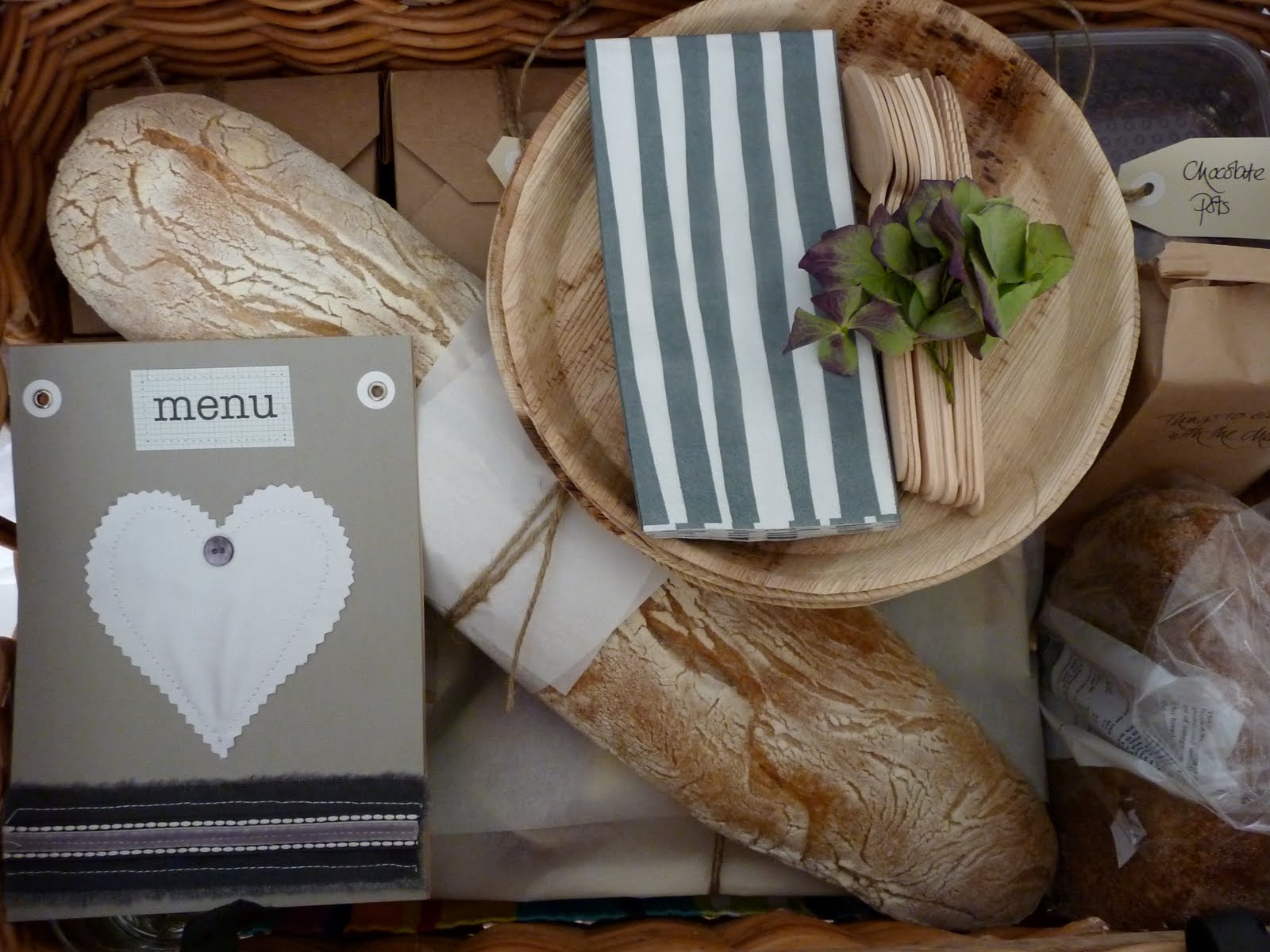
And now it has become their shared career too, starting a picnic catering business nearly two years ago. ‘We love having picnics in Sydney because when we arrived with not much money we would get a baguette, some cheese and a bottle of wine, find a spot by the harbour and eat looking at the amazing views feeling so lucky.’


A couple of friends asked Simon to create surprise picnics for them. Nat stitched personalised menus and looked after the presentation while Simon made the food. Their friends were amazed with the result. As Simon says, ‘Their enthusiasm rubbed off and made us think we could give it a go. It was something we could do that combined my love of food and Nat’s love of design.’


At the time Nat was stressed and unhappy working in the design field and they decided it was a now or never time to try working for themselves. It was a gamble that has paid off with the business continuing to grow steadily. They love being a part of other people’s special occasions and receive many emails and photos of their customers enjoying the picnics, so happy they are with the result.

Working together from home has not caused much of a problem either; Nat believes it was tricky at first: ‘a few times we had to say, “I’m just going for a long drive” and a few times we felt like killing each other’ but this is all said in jest and
Simon is quick to add that the transition was in fact quite easy.

What was hard was switching off from thinking about the business at the end of each day. ‘We had to make sure that at 6pm we tidied everything away and switched back to us. At the beginning we couldn’t stop thinking about work and the house stopped feeling like home which was a bit strange’, says Nat.

To rectify this, they converted their front entrance room into an office. ‘We really needed to separate the two spaces. I love doing the stitching and sewing of the menus and now feel I can make a huge mess whereas before it was all over the dining table. Without that separate space our lives became blurred.’


For Nat and Simon, home and food will always define them. ‘Home is such a sacred place,’ says Nat. ‘Every time I walk in here I think how much I love this house even though it’s tiny.’ As she walks me to the front door, she laughs, ‘but if we were somewhere larger I’d really miss not being able to talk to Si while he’s in the kitchen cooking and I’m in the bath a metre away.’

* All photos © Natalie & Simon Thomas

Thursday, July 1, 2010

At Home... with Artist Lizzie Buckmaster Dove


Artist Lizzie Buckmaster Dove is described in her most recent catalogue essay in the words of American writer and curator Lucy Lippard as ‘a nomad with a serially monogamous passion for place’. It is this juxtaposition between a desire to be home and a desire to be away that has fuelled her creative life.

‘I have always been a nomad – it was inflicted upon me as a child and then it must have gotten into my bones as I have continually chosen movement.’

Growing up in country Victoria and NSW, Lizzie has also lived in Sydney, London and Spain. ‘There is something in me that compels me to move. My husband and I describe ourselves as compulsive travellers. We will, at the drop of a hat be off. We have an enormous appetite for new experiences of people and place.’

After finishing art school, Lizzie worked in creative fields for a decade but not as an artist. In 2005, the couple was living in Spain with one son and another on the way. It was during this year that a couple of major life events occurred: a month before becoming a mother for the second time, her father died.

‘This really brought to the fore my own mortality and it gave me the opportunity to examine my creative life. I realized that although I defined myself as an artist I had never said it out loud and didn’t feel as though I had the right to because to the outside world there was no evidence of it. I was kidding myself.’

Soon after, planning to return to Australia to live, Lizzie’s husband Mike put voice to her thoughts, ‘he said to me that when we returned to Australia I shouldn’t get a job, I should make art. I was dumbfounded and overwhelmed and tearfully replied “… you really understand me”. He has continued to be an enormous support and champion of my practice.’

Living in three countries has had profound impact on Lizzie’s art: it defines it. Being away from her homeland gave her the opportunity to see the Australian identity, as a culture and as an individual, in a different light.

Cacophony: Rip Rack Roar Rumble

‘When we returned to Australia it was as if I had never taken notice of my natural surroundings before – the flora and fauna appeared so harsh and aggressive. I had empathy for how hard it must have been for the early colonialists to settle here as well as how inappropriate it was for them to impose their culture upon this wild dry continent.’

The Shape of Things

Following her return, she created her first show based on this premise. Exhibited with NG Art Gallery in Sydney, it was named Into the Woods; an inversion of out of the woods and it was all about coming home. ‘I literally felt as though I was diving into a knowing of this land, and through that a knowing of myself. It was my first solo show since having enacted a professional practice so it was also the action of going deep into the unconscious of my own creativity. (And I was not afraid!).’

Cacophony: Toot Tweet Twitter Trill

Since that first show Lizzie has gone on to create many others, all focussing on work that explores identity, connection and place with direct reference to Britain, Spain and Australia; those countries which have shaped her and her family. ‘I think I have always desired to belong to a ‘place’. I think it is a very human desire.’

Lizzie’s early years were spent on a cherry orchard farm in Gruyere, at the foothills of the Dandenongs in Victoria. With grandparents living on one side and her aunt and uncle on the other, Lizzie wonders whether being surrounded by family fuelled this ‘passion for place’.

Being a ‘country girl at heart’ and after a long stint in London, Lizzie and her husband felt ready to live out of a city on their return to Australia. Lizzie had always loved the Illawarra escarpment in NSW and after a drive through it one weekend, her husband was equally impressed. They now live in this area, surrounded by nature. ‘We have the escarpment, bush and sea at our feet. It is very grounding to be locating our family in this setting. After many years of travelling, we are putting down roots. From this grounded place, I feel as though we can continue to explore other places but that we have a real sense of place to return to, a place in which we belong.’


Lizzie’s latest body of work focuses on this connection to place. An interactive project, Tide Project, Things to be Forgotten, is about identity, connection and place. It sprung as an idea after a trip to Mexico in 2008, ‘While in a supermarket I stumbled upon a stand of paint swatch cards coloured a most extraordinary range, which seemed to encapsulate the Mexican identity. I became intrigued by the concept that the range of colours available in paint could represent the identity of a culture.’

Towards the end of 2009, Lizzie travelled back to Britain, where her first son was born and Spain, the birthplace of her second, looking for swatch cards. ‘In Britain I found Farrow & Ball where the colours are demure and subtly graded, in Spain, Arts & Claus that are bold and strong and in Australia, (where her third child will soon be born) Taubmans where the colours encompass an entire spectrum from pastel to bold.’ All coincidentally colours which seemed to define each country’s identity.

For one lunar month, beginning with the new moon on January 15 and ending on February 13 2010, Lizzie’s friends Anna in London and Chris in Barcelona emailed daily a photograph of a piece of ‘flotsam or jetsam along a daily route’. From these images Lizzie cut a silhouette through each of the three sets of swatch cards. ‘The backbone to the project was about connection and place. Perhaps the biggest connection experienced by all of us was a connection to place. The project insisted we interact with the place we were in. For Anna and Chris this was the city, for me, it was predominantly the beach and nature.’

Tide Project, Things to be Forgotten, Australia ii

Tide Project, Things to be Forgotten, Britain ii

Tide Project, Things to be Forgotten, Spain ii

While a connection to many places fuels Lizzie’s work, she also says, ‘I have always loved being at ‘home’ and long to be settled and in a routine. As an artist, ‘home’ is the solid base from which I can create. It is by having the support of a loving family that I am able to and have the confidence to make art.’


Speaking as a wife and mother, ‘home is a place of refuge. It is a place from where my children garner their values and morals and from where I hope they have the confidence to be truly themselves.’ When asked which area of her house most says ‘home’ to Lizzie, she answers that it would have to be her sons’ bedrooms, ‘If they are not happy, I can’t be happy.’


But it’s belonging to a ‘place’ that is more complicated for Lizzie, ‘I think you can create a ‘home’ anywhere. ‘Home’ is something that is transportable as long as you have the right ingredients. I found I could be away for a while but eventually I grew tired of always longing and thinking back to Australia. I felt divided. Our existence in the UK and Spain could sometimes feel as though it didn’t penetrate the surface; that our lives were on hold. It could only be remedied by returning here.’

Given the need to be away from her homeland to create it is no surprise that Lizzie is quick to add ‘This isn’t to say we will not leave again! Though I suspect we would never give up our base here. We would make it very easy to step back into.’

*Photo of Lizzie taken by Miho Watanabe for NG Art Gallery; all other photos © Lizzie Buckmaster Dove

For more information about Lizzie's art, visit

http://www.ngart.com.au/

http://www.flg.com.au/

LinkWithin

Related Posts with Thumbnails