Tuesday, January 3, 2012

Up and down the garden path


The 18th century architect William Kent once said that ‘a garden is a world unto itself, it had better make room for the darker shades of feeling as well as the sunny ones.’ This quote eloquently sums up my struggle with gardening my entire adult life – the emotional struggle. I couldn’t see past the ‘darker shades’, so much so that I stayed well away from getting my hands dirty lest nothing grew or worse, died.

I always loved flowers and appreciated beautiful gardens, I just never felt capable of growing my own. My mother is a gardener and over the years has grown gardens from scratch and tended established ones. The only time I remember her feeling stressed about gardening was when looking after her aunt’s orchids. She lived in fear for the four weeks her aunt was on holiday that she would do something that would inadvertently kill them.

It was how I felt about any sort of plant.

After getting married I realised I had found a man who loved gardening as much as my mother. I quickly took on the role of executive gardener; ‘Let’s grow a wisteria over the pergola’; ‘gardenias would look good near the back door and will make the house smell lovely’, ‘I really want hydrangeas along the back fence’, ‘what about lavender in the window boxes?’

And my wishes were granted. He was happy to be led and I was happy to let him do the digging, planting, watering, fertilising, composting. He would read the gardening pages in the weekend papers with the same enthusiasm I would read the book reviews. Sharing a cup of tea in the garden would involve me sitting on the deck while he walked around checking for aphids, black spot, stink bugs and other undesirables.

‘Why can’t you just sit down and enjoy the garden?’ I would ask.

‘But I do,’ he insisted, ‘I just enjoy working in it rather than admiring it from afar.’

A gardener’s work is never done, is it? Once you get rid of one lot of stink bugs, another lot fly in. Once you think you’ve solved the nutrient deficiency with the gardenias, the leaves turn yellow again. How is that enjoyable?

After Lily was born, mum would suggest ‘getting out in the garden’ while my daughter slept.

‘I always sit in the garden and have a cup of tea’, I told her.

‘No, I mean, why not water the garden? It’s a great stress reliever,’ she evangelised. ‘I couldn’t wait to get out in the garden and water it when you girls were little. It’s like meditating.’

No, I thought, it’s like another chore to add to the list of loading the washing machine and hanging clothes on the line.

But then something happened. As my children grew and the house became noisier, the garden and the gentle sound of the water trickling from the hose offered calm; even more so with a glass of wine in hand at dusk while Stuart took over the dinner battle inside.

And then on our trip to England, we spent time in Cotswold villages surrounded by cottages hundreds of years old. There were espaliered pear trees growing around front doors. And roses. Climbing, rambling roses everywhere. The gardening bug suddenly bit me hard.


‘I want to grow a climbing rose in our front courtyard’, I told Stuart during the flight home.

‘Okay’, he said slowly, unsure of why this thought had hit me somewhere over Russia in the middle of the night.

‘Roses can be hard to grow,’ he warned. I knew that already. He had been trying to grow a banksia rose for years but all it seemed to do successfully was grow some sort of mould.

I got home and started researching varieties of roses on the internet. How many could there be? Hundreds it turns out. Accepting my lack of even basic garden knowledge, I took mum and ventured to a nursery specialising in roses an hour’s drive away.

Cornering one of the gardeners as he watered the pots and pots of roses, I asked his advice.

‘You’ll need the Climbing Pinkie,’ he said pointing to a column with roses cascading all over it.


‘Is that what it will look like?’ I replied, awed at the sight of so many roses.

‘Yes, just water them every day, make sure the pots drain well, feed them with rose food every six weeks and after two or three years that’s what it should look like.’

For the first time I wanted to be the one responsible for making a plant grow.

‘Could you just tell me again how to look after them?’ I said while searching through my handbag for a scrap of paper and pen.

‘Just water every day and feed them six weekly.’

‘That’s it? Every six weeks, all year long? How do I know when I’ve given them enough water? How much soil did you say the pots would need again? Is there anything else I should know?’ I asked while writing down every word he said.

The gardener and my mother exchanged glances.

‘This is her first rose,’ she said.

‘Oh,’ came the reply. ‘You know, everyone thinks it’s really hard to grow roses but it’s not.’

As we spent the afternoon planting I mentioned that I could never lose the bit of paper I’d written the gardener’s advice on.

‘It’s funny,’ began mum, ‘but in old gardens that have been neglected you often find that a rambling rose is the only plant to have survived.’


A couple of weeks later, I walked past my old Italian neighbour working in his tiny front garden. The narrow patch of soil between the brick fence and pebbledash is home to three or four abundant roses, all in flower at the moment.

‘Morning, how are you’, he smiled as he does every day.

‘Morning,’ I replied. ‘Your roses are lovely.’

‘Ah yes, beautiful.’

‘How do you look after them?’ I asked. ‘Do you feed them?’

‘I do nothing but this,’ he said wobbling his watering can at me and laughing.

He shook his head with a look that seemed to say, ‘you young people worry too much’.

Maybe he’s right. Today my rose is growing, before my eyes. The kids and I water it each morning and count the buds appearing. I started counting caterpillars last weekend and even that didn’t stress me too much, because like with life, you take the good with the bad. For all the beautiful flowers that will bloom, there will be just as many bugs and caterpillars.


As the French author Antoine de Saint-Exupery once wrote ‘You are responsible, forever, for what you have tamed. You are responsible for your rose.’

Yes, I think I finally am.

Tuesday, December 27, 2011

Sharing a home: The Life of a Biographer


Ah, the break between Christmas and New Year. A perfect time to sit down - regularly - with a good book. For this book it would make sense to enjoy it with a good wine... and a good meal to follow.

What’s it like to inhabit the home of another person? A person you have never met and has already died? This is the parallel universe biographers have to absorb themselves into, but what happens when they return to their own homes? Do their subjects travel with them?

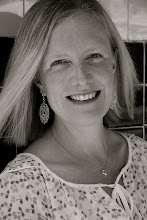
Anne Zimmerman recently published a biography about the great American food writer, M.F.K. Fisher titled An Extravagant Hunger: The passionate years of M.F.K. Fisher. She never set out to write a biography. Instead, while looking for a subject for her thesis, she stumbled upon one M.F.K. Fisher book in the library and was fascinated.

‘First, I fell in love with old black and white photos of her. I remember shots of her lounging in a hammock by Lake Geneva, at the World's Fair in Paris, or travelling through Italy. Very soon after I discovered that her writing was even more evocative than those beguiling photos. I quickly realized that I wanted to know everything about her and her life. Needless to say, what I found in her life and her work was so inspiring, I wanted to share it.’

‘M.F.K. Fisher led me to a love for food and wine -- sort of! I grew up in a family that valued food. My mother is an amazing cook and we sat down to dinner together every night. But I was a picky eater until I studied abroad in my early twenties. I was just discovering food and wine when I moved from Portland, Oregon to San Diego, California for graduate school. I was very lonely in San Diego and missed my friends. Fisher's work inspired me to take care of myself. I'd cook elaborate meals each week even if I had no one to share them with. It really made me understand that food is love, and that it's possible (and advisable!) to nourish yourself if you are lonely.’


Before realising she would write a book, M.F.K. Fisher already had a strong influence on Anne.

‘I used Fisher as a writing tutor of sorts. I would come home from a long day and write food focused mini-essays. I wrote about peaches, about making an onion pie, about eating alone. I think I was vaguely lonely and unsatisfied at that time, and writing helped. It also helped me realize that the dramatic events of M.F.K. Fisher's life definitely inspired her prose.’

Anne says that working on the biography only made her feelings about how much she loved food and wine, ‘and the conviviality that comes from sharing meals with people’ stronger.

‘Cooking is my daily hobby -- finishing up with work and walking into the kitchen at the end of the day is one of my favorite things. And of course, food and wine are a magic pairing. Nothing makes me happier than to sit down to a home cooked meal and open bottle of wine. It doesn't matter if it is a Tuesday or a Saturday, this is always a great ending to the day.’


‘The other day someone asked me which room we spent the most time in (aside from sleeping!). When I said the kitchen, the person looked surprised. But I'm surprised by people who don't spend time in the kitchen! It is undoubtedly my favorite room in the house. I like cooking and [husband] Sean does too. At the end of the day you'll usually find one of us prepping dinner while the other one sits and watches (or helps). Next we're in the dining room eating and then it's back to the kitchen to clean up. It's an essential part of our home and married life.’

But what was it really like for Anne to inhabit the world of someone she had never met so intimately? Did Fisher’s world ever filter into Anne’s?

‘It was a great gift to be able to spend 18 months writing about M.F.K. Fisher almost every single day. And it's funny -- I don't ever think that her life encroached on mine, but I will say that I went through a very major heartbreak when I was mid-way through the book. Many people close to me have commented that my own writing became richer and better afterwards, and I was definitely able to "tap" some of that emotion when writing about the end of M.F.K. and Al Fisher's marriage.’

‘I've heard that a lot of biographers end up hating their subjects by the end of their books and I feel very lucky that this did not happen to me. The best part of book writing was writing. I loved waking up early and working hard till midday. Even when I was exhausted, hungry, and in my pjs in mid-afternoon, I was still insanely happy to be doing the work.’

‘Surprises only added to the fun. I'd done so much research prior to starting the book that there weren't any big surprises about M.F.'s life -- the big surprise came when I traveled to Smith College to do more research on Al Fisher. It turns out that after the two divorced he became quite a lothario. This image of Al as a sexual beast was quite different from the pensive poet I'd grown accustomed to -- and the book is richer and more dynamic because of it.’

‘Writing a book is hard, much harder than I ever thought. I'd argue that writing a biography was "easier" -- only because I knew what would happen next! Still, as challenging as it was, it was such an amazing time. I was totally focused on one thing -- my writing, my book -- and got to be very selfish. Even if I write another book I am not sure it will ever be quite like it was that first time.’

So how did it feel when it was all over and Anne had to completely slip back into her own life without sharing it with her subject?

‘Ha! I carefully timed my wedding to coincide with the end of my book tour. Thus, when book events started to putter out, I immediately had a new creative project to focus on. It was nice to have something to work on that wasn't related to books or to writing -- it took some of the pressure off. When people would ask me about my next book I could always say, "First, I have to get married...!"

‘Looking back at my wedding photos it is easy to tell that Fisher inspired my day. We had a small wedding with a long, luxurious lunch. There was lots of wine and amazing food. My dress and other details were inspired by the 1930s. It was a beautiful day.’

While Anne felt it very ‘bittersweet’ to finish the book, she has managed to continue her relationship with M.F.K. Fisher.

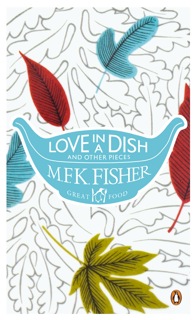
‘I selected some lesser known Fisher essays to be included in a book called Love in a Dish... And Other Culinary Delights. This Spring, I have another book coming out: M.F.K. Fisher's Musings on Wine and Other Libations (Sterling Epicure). M.F.K. Fisher is an amazing subject -- I think she is sort of like a first love. It will be hard to find someone to top her!’


For more information about Anne Zimmerman and her writing, visit her blog
Poetic Appetite or her author website, here.

All photos © Anne Zimmerman

Thursday, December 22, 2011

Merry Christmas... & Luck?!


One recent midweek night, while making spinach pie for dinner and compiling boring lists in my head – check if there are clean school uniforms; don’t forget to put the bins out – I mindlessly started cracking eggs into a bowl.

And suddenly, not so mindlessly, I noticed a double yolker. Not one double yolker but three. Three double yolkers in a row. I stupidly decided to Google what such a finding could mean. Great luck or dreadful luck it seems, depending on which ‘yolk-lore’ you choose to follow.

I hope it’s a sign of luck and good things to come. With that in mind, I’d like to wish you all a very Merry Christmas and a lucky 2012. Thanks for continuing to read my slightly sporadic 2011 thoughts!

Wednesday, December 7, 2011

How organised are you?


Have you ordered the turkey yet? Written the Christmas cards? Bought the presents? I haven’t. It just doesn’t feel Christmassy yet. Perhaps that is due to the unseasonably cold weather in Sydney at the moment but then I look at the calendar and realise we are hurtling towards the middle of December! School breaks up next week!

Instead of writing lists, ordering the turkey, braving the shops or buying those cards I recently chose another way of getting into the Christmas spirit. Sitting – alone – in my favourite bookshop / cafe I picked up a copy of the newish book Cooking for Claudine by John Baxter.

For anyone who loves food, wine and armchair travel, this is the book for your Christmas stocking. John Baxter is the acclaimed Australian film critic who, many years ago while living in America, fell in love with a French woman and followed her to Paris.

For the last 18 or so years, he has also cooked Christmas lunch for his French in-laws, a French family ‘with roots so deep in the soil of medieval France’, living in a ‘country house dating from before Australia was even discovered’.

This memoir collects vignettes from previous Christmas lunches and journeys around France to source ingredients for the big day. Throughout are wonderful observations of this family’s love affair with food:

“ ‘We could pick up the cheese.’ Even as I said it, I recognised I’d made an error. The French approach cheese with the reverence the Spanish accord the corrida, Americans baseball and the English their tea. It is not to be ‘picked up’, or grabbed, snatched, or scored, nibbled, scarfed, or snacked on...”

In fact, Baxter has a whole chapter devoted to cheese, including this piece of trivia:

“To Charles de Gaulle, the diversity of French cheese was evidence that France was in robust political health and in no danger of becoming, as some people feared after World War II, a Communist nation. ‘How can one conceive of a one-party system,’ he asked, ‘in a country that has over two hundred varieties of cheese?”

And what happens if the piglet you decide to roast for Christmas lunch is too big to fit in your oven?

“No meal of this magnitude would fail over a few centimetres of snout.” Baxter says. But does it?

Family heirlooms are brought out for the day – the generations old silverware, the linen tablecloth bought at a market for 10 euros – the ceremony and ritual that preparing the Christmas meal brings that every reader will relate to.

As Baxter writes, “Proust was right. Any house or garden or town existed only as the sum of the feelings experienced there. It was remembering history and maintaining tradition that kept the material world alive.”

An enjoyable, tasty read. Enough to get me to the butcher to place that turkey order.

Cooking for Claudine
by John Baxter
Faber, $22.99

Wednesday, November 23, 2011

Was a Casserole enough?


Ah, it seems Matthew Evans and my chicken & sage casserole has finally broken the curse of the infamous duck risotto.

Not only did my sister's date love it, he asked her for the recipe.

I like the sound of him even more.

Monday, November 21, 2011

A Reliable Recipe – I hope


My sister has been single for a couple of years now and a whole new world of dating has opened up for her (and me, vicariously). At different times she has met very different men, gone on a few dates, cooked a meal for them and – despite how different these men have been from each other – all dates have ended after this meal. The same meal she has cooked each time – once her signature dish, one could say – until she saw the pattern emerge.

‘I can never cook it again,’ she laughed, ‘unless I want to get rid of someone.’

What is it, you are probably wondering?

Duck risotto. A very rich, very tasty duck risotto that she has even cooked me. Restaurant quality I thought. It didn’t ruin our relationship (and hopefully this post won’t either).

She’s a great cook and it’s an impressive meal so we have decided it must just be a funny coincidence... but as superstitious as our family is I know she will never cook that duck risotto for a man again.

That has been fine the last few months, but not now. She has met someone; someone who (big sister thinks) sounds better than all the others put together.

There have been numerous dates and now we have reached the home-cooked meal one. I say ‘we’ because I have never really been in this position. When Stuart and I started ‘dating’ my mum cooked him dinner. That’s how young we were.

Late yesterday, I received a text from her asking for my chicken and sage casserole recipe. Perhaps you could call it my signature dish. I’ve cooked it so many times that Stuart is over it. That minor point aside, it’s a really easy, simple dish that does looks impressive.

I had given my sister the recipe a few years ago but she couldn’t find it anywhere.

‘Maybe it’s a sign you shouldn’t cook it for him?’ I text back.

‘Don’t say that?!?!?!’ came the swift reply.

Fair enough. I went to find it in my recipe scrapbook. I tore it out of Good Weekend magazine years ago when Matthew Evans had the ‘Weekend Fare’ column. I hadn’t looked at the recipe for a while either, given it’s one of only a handful I know by heart.

As I started typing the method out, I noticed the introductory paragraph he’s written above it.


“Love. As fragile as meringue. Women. As tender as slow-cooked chicken thigh. Feelings. As easily bruised as fresh herbs. Memories. Lightly salty, like tears. A good casserole. As reliable as an old friend and as warming as a hand on your shoulder.”

It has to be a sign...

This and the fact that on their first date he mentioned a strong dislike of risotto.

Only time will tell.

Chicken casserole with mushrooms and sage
(serves 3-4)
25g butter
8 chicken thighs
Flour for dusting
1 leek chopped
1 cup white wine
200g button mushrooms
15 or so big sage leaves
Salt and pepper

Method
Preheat oven to 150°C
Dust chicken with flour.
Melt butter and brown chicken in an oven proof dish.
Remove chicken and fry leek until it’s softened.
Return chicken, add wine to deglaze bottom of pan and simmer for a minute or two.
Toss in mushrooms and 10 sage leaves, salt and pepper.
Cover and put in oven for an hour or so.
Add remaining sage leaves and serve.

*Recipe by Matthew Evans, torn from Good Weekend circa 2004

Tuesday, November 8, 2011

Writing


Before we went away I was busy reading. Reading some of the best books I’ve read this year and two were the work of first-time authors. Their stories filled my creative needs and I realised a pattern – when reading takes over I just don’t feel like writing. Does this make me a fair-weather writer? Sometimes I wonder.

On previous family holidays I stole time away from everyone to write and think; walks alone along the beach, jottings in cafes and many sentences composed in my head. The urge didn’t appear this time. Five weeks, two countries, countless new experiences, conversations, observations and not one moment of wishing to jot it all down.

Anaïs Nin once said “We write to taste life twice, in the moment and in retrospect.” But sometimes I find that writing in the moment takes me away from living it.

For the last few months not writing has allowed me to taste life more fully.

Reading has allowed me to taste other lives more fully.

Wind in the Willows took on a whole new dimension when read overlooking the willow trees on the banks of the Thames.

Beginning The Diary of Anne Frank while flying between London and Amsterdam and finishing it the night before visiting the Anne Frank Museum made Anne’s presence even stronger as I walked through every room of that secret annexe.

The chiming of the Westertoren clock as I arrived at the museum at 9am took my mind straight back to the pages of her diary written nearly 70 years ago:

‘Father, Mother and Margot still can’t get used to the chiming of the Westertoren clock, which tells us the time every quarter of an hour. Not me, I liked it from the start; it sounds so reassuring especially at night.’

And all this time later I found that chime, loud and resonant, just as reassuring. The same clock bringing past and present together for a moment. A moment I was fully part of. I walked around those rooms, now unfurnished, knowing exactly where each piece of furniture would have sat. Her bedroom wall, still partially papered with postcards and film-star pictures, did look ‘much more cheerful’ as she wrote.

The museum was full of people yet no one spoke and we all seemed to tread lightly. Is that because tasting life in such a way is almost overwhelming?

Or perhaps it’s because we all need moments of stillness; time for experiences to settle, ideas to percolate and distance to experience life again in retrospect.

LinkWithin

Related Posts with Thumbnails