Showing posts with label Interview. Show all posts

Monday, January 16, 2012

Back to work but still time for a holiday read


I’ve mentioned earlier my love of Penny Vincenzi novels so you can imagine my excitement when, just before Christmas, I noticed she had a new book out. My idea of escapist reading has always been a 700-odd page saga with a cast of more than 20 characters that explores the huge, messy themes of life. My perfect holiday read.

To be honest, it’s my perfect-any-time-of-year read as her stories are so readable. Page-turning. As she said in a recent Sydney Morning Herald interview, “I write to entertain my readers and hopefully make their lives just a little better, not to win prizes. What I like best is when I get notes from readers who tell me they've had a long spell in hospital and my book has helped them get through it; that makes me very happy.''

I laughed. In the last few years, I have only been able to convert a few friends to becoming Vincenzi fans during enforced rest time: late-stages of pregnancy, or looking for something ‘easy’ to read during all the hours spent breast-feeding and most recently, a friend who spent a spell in hospital.

While pregnant with Ned, I had the opportunity to interview Penny for Good Reading magazine and leapt at it. Despite her success – 16 bestsellers and seven million books sold to date – she is extremely modest, spending much of our interview time asking me questions about my pregnancy and telling me stories about her own four children and grandchildren.

But, about her career and her writing, here is what she had to say...

First published in Good Reading magazine October 2005

Penny For Her Thoughts

Watching Penny Vincenzi pour our tea from across the table, I am struck by how unaffected she is. Despite having sold over five million books worldwide, she is more interested in my pregnancy and chatting about her husband and four daughters, than promoting her latest novel, Sheer Abandon. Settling back into our armchairs, the pregnancy conversation segues towards the idea for her latest novel.

Sheer Abandon follows the lives of three women who meet aged 18 on their way to Thailand. Nine months later, one of them returns to London, giving birth at Heathrow Airport and abandoning the baby. The book moves forward 16 years, when the women are reunited and the now-teenager begins the search for her natural mother.

“The original idea came from a story in the paper. I thought it was an irresistible idea for a book but there needed to be more. Then I thought of the three girls, not knowing who the mother was and the story slowly unravelling. I also realised that the emotional fallout of everyone finding out years later would be as hard to cope with as the discovery.”

As with all Penny’s books, she doesn’t know how her stories will end: “I start with the idea, marshal a few of my characters…it’s a bit like going to a party and thinking ‘He looks interesting’, ‘she looks smart’ and I gradually get to know them. Then I wind them up, off they go and I follow them. They very much shape the plot as they take on a will of their own.”

Indeed, she is often as shocked as the reader with plot twists: “I remember with one book, after writing all day I went for an evening walk with my husband. I was telling him about the terrible day I’d had with one of the characters and then I realised, oh my God, she’s died! And it really was a shock. The minute I said it, I knew it had to happen for the story to work.”

Any fan of Vincenzi’s work will know that all her books are at least 500 pages — and you still don’t want them to end — packed with extraordinary detail of the characters, their careers, and the era and society they live in. Unsurprisingly, research is one of the things Penny loves most about writing:

“I used to be a journalist and it was such a lovely, chatty job; whereas fiction is incredibly isolating. Doing research is like being a journalist again.” Politics plays a major role in Sheer Abandon; a world she knew little about: “I spent a lot of time at the House of Commons talking to MPs and political journalists, going to their restaurants and bars…soaking up the atmosphere. You have to get the tone of voice right, so I spent a lot of time listening and immersing myself in their world.”

With Penny’s natural flair for creating such readable escapist fiction, it is a shock to discover she never intended to write a book, or that even after writing the first one she would become a novelist:

“I was approached to write a novel and I had an idea so thought I’d do it and then go back to being a journalist. It was a complete surprise to me how much I loved it and how it has turned into something really wonderful. I’m amazed that I have all these plots and sub-plots in my head!”

After writing a book nearly every year, and Sheer Abandon being her 12th novel, it does seem the ideas have never stopped flowing: “I’m very workman like about what I do. While I have days when I can’t write, I just sit there and sweat it out. I think it’s a bit of a luxury to get writer’s block. I’ve always got a deadline, so have to keep going.”

Up at 6am every morning, Penny walks her dog and during this time does her plotting. She is at her desk and writing by 9am. “I work office hours really but as a deadline gets nearer, I’ll do six days a week, then sometimes seven.”

She is also very aware of balancing her life: “I have a family and it’s not fair to them so I do stop work in the evenings and cook my husband supper. I’m a good 50s housewife: I cook, shop and keep house for him because that’s how I was brought up and I can’t change it! My children and grandchildren take up a lot of time too…they’re the only ones I will stop work for.”

As we sit with our second cup of tea, analysing her characters as if they were real friends, it is evident that Penny is a long way from running out of fresh ideas. “I love finding these people, seeing their foibles and strengths. It’s my favourite part and it’s a hideous blank when you finish.”

As it is for her readers.

Tuesday, December 27, 2011

Sharing a home: The Life of a Biographer


Ah, the break between Christmas and New Year. A perfect time to sit down - regularly - with a good book. For this book it would make sense to enjoy it with a good wine... and a good meal to follow.

What’s it like to inhabit the home of another person? A person you have never met and has already died? This is the parallel universe biographers have to absorb themselves into, but what happens when they return to their own homes? Do their subjects travel with them?

Anne Zimmerman recently published a biography about the great American food writer, M.F.K. Fisher titled An Extravagant Hunger: The passionate years of M.F.K. Fisher. She never set out to write a biography. Instead, while looking for a subject for her thesis, she stumbled upon one M.F.K. Fisher book in the library and was fascinated.

‘First, I fell in love with old black and white photos of her. I remember shots of her lounging in a hammock by Lake Geneva, at the World's Fair in Paris, or travelling through Italy. Very soon after I discovered that her writing was even more evocative than those beguiling photos. I quickly realized that I wanted to know everything about her and her life. Needless to say, what I found in her life and her work was so inspiring, I wanted to share it.’

‘M.F.K. Fisher led me to a love for food and wine -- sort of! I grew up in a family that valued food. My mother is an amazing cook and we sat down to dinner together every night. But I was a picky eater until I studied abroad in my early twenties. I was just discovering food and wine when I moved from Portland, Oregon to San Diego, California for graduate school. I was very lonely in San Diego and missed my friends. Fisher's work inspired me to take care of myself. I'd cook elaborate meals each week even if I had no one to share them with. It really made me understand that food is love, and that it's possible (and advisable!) to nourish yourself if you are lonely.’


Before realising she would write a book, M.F.K. Fisher already had a strong influence on Anne.

‘I used Fisher as a writing tutor of sorts. I would come home from a long day and write food focused mini-essays. I wrote about peaches, about making an onion pie, about eating alone. I think I was vaguely lonely and unsatisfied at that time, and writing helped. It also helped me realize that the dramatic events of M.F.K. Fisher's life definitely inspired her prose.’

Anne says that working on the biography only made her feelings about how much she loved food and wine, ‘and the conviviality that comes from sharing meals with people’ stronger.

‘Cooking is my daily hobby -- finishing up with work and walking into the kitchen at the end of the day is one of my favorite things. And of course, food and wine are a magic pairing. Nothing makes me happier than to sit down to a home cooked meal and open bottle of wine. It doesn't matter if it is a Tuesday or a Saturday, this is always a great ending to the day.’


‘The other day someone asked me which room we spent the most time in (aside from sleeping!). When I said the kitchen, the person looked surprised. But I'm surprised by people who don't spend time in the kitchen! It is undoubtedly my favorite room in the house. I like cooking and [husband] Sean does too. At the end of the day you'll usually find one of us prepping dinner while the other one sits and watches (or helps). Next we're in the dining room eating and then it's back to the kitchen to clean up. It's an essential part of our home and married life.’

But what was it really like for Anne to inhabit the world of someone she had never met so intimately? Did Fisher’s world ever filter into Anne’s?

‘It was a great gift to be able to spend 18 months writing about M.F.K. Fisher almost every single day. And it's funny -- I don't ever think that her life encroached on mine, but I will say that I went through a very major heartbreak when I was mid-way through the book. Many people close to me have commented that my own writing became richer and better afterwards, and I was definitely able to "tap" some of that emotion when writing about the end of M.F.K. and Al Fisher's marriage.’

‘I've heard that a lot of biographers end up hating their subjects by the end of their books and I feel very lucky that this did not happen to me. The best part of book writing was writing. I loved waking up early and working hard till midday. Even when I was exhausted, hungry, and in my pjs in mid-afternoon, I was still insanely happy to be doing the work.’

‘Surprises only added to the fun. I'd done so much research prior to starting the book that there weren't any big surprises about M.F.'s life -- the big surprise came when I traveled to Smith College to do more research on Al Fisher. It turns out that after the two divorced he became quite a lothario. This image of Al as a sexual beast was quite different from the pensive poet I'd grown accustomed to -- and the book is richer and more dynamic because of it.’

‘Writing a book is hard, much harder than I ever thought. I'd argue that writing a biography was "easier" -- only because I knew what would happen next! Still, as challenging as it was, it was such an amazing time. I was totally focused on one thing -- my writing, my book -- and got to be very selfish. Even if I write another book I am not sure it will ever be quite like it was that first time.’

So how did it feel when it was all over and Anne had to completely slip back into her own life without sharing it with her subject?

‘Ha! I carefully timed my wedding to coincide with the end of my book tour. Thus, when book events started to putter out, I immediately had a new creative project to focus on. It was nice to have something to work on that wasn't related to books or to writing -- it took some of the pressure off. When people would ask me about my next book I could always say, "First, I have to get married...!"

‘Looking back at my wedding photos it is easy to tell that Fisher inspired my day. We had a small wedding with a long, luxurious lunch. There was lots of wine and amazing food. My dress and other details were inspired by the 1930s. It was a beautiful day.’

While Anne felt it very ‘bittersweet’ to finish the book, she has managed to continue her relationship with M.F.K. Fisher.

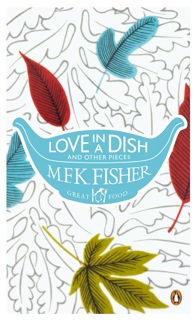
‘I selected some lesser known Fisher essays to be included in a book called Love in a Dish... And Other Culinary Delights. This Spring, I have another book coming out: M.F.K. Fisher's Musings on Wine and Other Libations (Sterling Epicure). M.F.K. Fisher is an amazing subject -- I think she is sort of like a first love. It will be hard to find someone to top her!’


For more information about Anne Zimmerman and her writing, visit her blog
Poetic Appetite or her author website, here.

All photos © Anne Zimmerman

Friday, July 29, 2011

When Home is... Eating Well. An Interview with Cookbook Author Kathleen Gandy


It’s Sunday morning, you’re about to face the weekly grocery shop but you are 10 weeks pregnant, feeling sick and tired. You love cooking and food but you can’t bear the thought of meat or standing over the stove for hours preparing meals. You barely have the energy to make it through a week of work, let alone a week of cooking dinner.

Or, it’s Sunday morning and you have to somehow squeeze in the grocery shop between kids soccer games, ballet classes and birthday parties. You remember the days when you spent weekends reading through cookbooks, preparing dinner parties and meandering through farmers markets with a coffee in one hand and a bunch of flowers in the other. Now you are struggling to think of meal ideas beyond spaghetti bolognaise. Anyway, who has the time?

It’s a dilemma everyone faces during the years of pregnancy and raising a young family; even cookbook editor and author Kathleen Gandy who has always loved cooking and turned her passion into a career.

‘I always loved reading as a child, applying for my first library card when I was five and I always loved food. My mother is Cantonese and I grew up surrounded by that food culture. Later when I went to boarding school the food was awful: boiled chicken, boiled potatoes, boiled cabbage. I’d look at it and cry. When I’d go home in the holidays, mum and I would plan our days around meals rather than activities.’

After working as a recipe developer and food writer, Kathleen joined Gourmet Traveller’s food team. Then she fell pregnant with her first child. While researching what she couldn’t eat she decided to focus instead on all the foods she could eat.

‘There were so many different cuisines. I had never been a “food is fuel” person and even though I suffered morning sickness I still looked for pleasure in my cooking. As Nigella Lawson once said “there is no excuse to eat a bad meal”. I kept a food diary of all the meals I ate and felt like during the different trimesters of pregnancy and realised, while looking for different recipe ideas, that I wanted a book that celebrated all you could eat during this joyful time. I was completely overwhelmed by the What to Eat When You’re Expecting-style regimen of calculating and combining units of food groups.’

So the idea for a foodlover’s guide to pregnancy developed. Kathleen’s first book, Eating for Two, was published last year in Australia and will be published later this year in Germany.


‘The recipes were developed from the perspective of flavour first. All are simple and quick to cook as I found cooking smells difficult to deal with during both my pregnancies. I wanted the book to speak from a shopping list point of view rather than units of food, so at the beginning there is a list of pregnancy superfoods that form the basis of the recipes. They are the superfoods I still buy weekly.’

While all the recipes and information were checked by an accredited practising dietitian and written within the Australian food safety authority pregnancy guidelines, Kathleen emphasises that this is not a ‘health’ book as such.

‘It’s more a celebration of that exciting time in your life by highlighting all the fabulous things you can still eat. I approached my dietary needs of pregnancy through the eyes of a guts. I love eating; why should pregnancy be any different?’

And why should mealtimes with a young family be any different as well?

‘The recipes are very "family friendly" and have come to form the basis of my ongoing weeknight repertoire, as they are healthy and generally fast to prepare. My kids have particular favourites (I guess they got a taste for some of the flavours during pregnancy).'

Pregnant or not, particularly helpful are pages such as ‘Ten things to do with a packet of pasta’ or ‘Ten things to do with a can of tuna.’ Who has ever stood in front of their pantry wondering what to do with a lone can of tuna or realised that the pantry is bare aside from a packet of penne?

But if you are pregnant, it’s hard not to go past the ‘Ten quick fixes for morning sickness’ page.

‘The book is authentic to my food experience of my two pregnancies – I kept notes of recipes I created to deal with the different phases such as morning sickness, carpal tunnel syndrome, heightened sense of smell; and cravings (citrus was big, hence the citrusy salads). I also went through a protein phase, where I just wanted to eat loads of meat.’

After the book was published, Kathleen began a blog titled Next Week’s Dinner which tackles the stresses of menu planning. Working fulltime as a senior cookbook editor with a six-year-old and four-year-old who need to eat by 6pm, Kathleen quickly realised how organised she would have to be to get dinner on the table every night.

‘The blog came about as an extension of my life now,’ says Kathleen. ‘I am lucky to have 45 minutes to prepare dinner. There are no shops on my way home, so I have to know what I’m cooking beforehand.’

As she writes on the blog’s ‘About’ page, ‘On the spontaneity–stress-relief continuum, meal planning literally saves my bacon every week.’ The blog acts as a food diary, recounting the family dinners eaten each day and also how sometimes the plan goes straight out the window.

‘Rules are made to be broken – if my train is cancelled it might just be that we eat pasta on Thursday night instead of Friday, or say there’s a school event in the middle of the week, I may just dish up the re-purposed Sunday night leftovers then instead of on Monday.’

The blog is a great read for anyone who is sick of worrying about what to cook for dinner or has stood in front of a full fridge or pantry and feels like there is nothing to eat...

‘What is most important to me about the book and now the blog is that they are authentic and capture my everyday experience; how the daily act of nourishment and a love of good food intersects with family life,’ says Kathleen. ‘The two are not mutually exclusive.’

For more information about Kathleen’s book, Eating for Two, click here.
To read Kathleen’s blog, Next Week’s Dinner, click
here.

Author Image by Richard Birch
Cover image, Eating for Two by Kathleen Gandy, photography by Mark O'Meara, published by Viking, RRP $35


Monday, July 11, 2011

When Home is... Boarding School. An Interview with Author Jacqueline Harvey


I think I have reached my favourite moment of motherhood so far... Lily and I reading the same book and both of us loving it. After reading at bedtime, Lily has started bringing the book downstairs so I can continue reading it while she’s asleep.

‘But don’t go past Chapter 29,’ Lily cautions, ‘because I don’t want you to find out what happens before me.’

Secretly I do read past Chapter 29, not out of competitiveness but because I really do want to know what happens next and I can’t wait until tomorrow night. I write her a note and paperclip it to the front of the book, returning it under her pillow where she will find it in the morning.


‘I can’t believe what Miss Grimm said!’ one note may exclaim. Our notes continue to shuffle back and forth over the nights until we come to the end. But it’s not really the end as today we plan to walk to the bookshop together and buy the next instalment.

The Alice-Miranda series written by Jacqueline Harvey has been a delightful surprise for me; finally, a well-written and crafted story for parents and children alike. A chance for Lily and I to talk about the magic of books and reading; of characters feeling like friends and talking about them as though they really are. I don’t remember a time when I couldn’t get lost inside the pages of a book so it is extremely satisfying to see my daughter skipping off to bed because she can’t wait to keep reading.

But what is it about the first book in this series, Alice-Miranda at School, that has captured us both so?

Alice-Miranda Highton-Smith-Kennington-Jones is seven-and-a-quarter years old; a determined and optimistic little girl she has decided she’s ready for boarding school. All is not as it seems at the Winchesterfield-Downsfordvale-Academy for Proper Young Ladies and so begins Alice-Miranda’s adventures at her new home.


Throughout the generations, boarding school adventures for children have always seemed popular favourites. But why?

‘I think that’s probably because most people don’t attend boarding school so it does hold a degree of mystique and perhaps even romanticism,’ says Jacqueline. ‘I know whenever we were naughty my mother and father would threaten to send us to boarding school – so there is also that idea that it could be a rather nasty and foreboding place. I never actually went!’

Instead Jacqueline became a teacher and has always worked at schools with boarders, some with children as young as nine living there.

‘I always admired the courage of the little girls who were away from their families often as a result of difficult circumstances like parents working overseas or a family breakdown. I thought that the concept of boarding school would allow a lot of freedom to set up the characters and really show Alice-Miranda’s independence, her courage and generous spirit.’


The idea for Alice-Miranda first began as a concept for a picture book.

‘I had at the time recently won Honour Book in the Children’s Book Council Book of the Year Awards (2006) for my picture book, The Sound of the Sea and I remember thinking that maybe I was destined to be a writer of picture books. I’d also had another series of junior novels published earlier and was a little confused about my writing identity. So the idea of a little girl who takes herself off to boarding school was born.’

‘But the more I thought about it, the more obvious it became that this was longer than a picture book – and in fact had potential as a series. Initially I envisaged 4 books but now there will be at least 8 and possibly more.’


Setting the book inside a boarding school allowed Jacqueline more writing freedom.

‘I love the quirky characters. Writing about boarding school lets me invent a whole ‘family’ of people who look after the girls. There’s a certain freedom in not having the parents around all the time.’
Throughout Alice-Miranda at School, there is a strong feeling of home, belonging and family despite mean girls, a principal who hasn’t been seen in 10 years and a garden bereft of flowers. How did Jacqueline manage this?

‘I think the food is a big part of creating that feeling of home. The fact that poor long suffering Mrs Smith has now had a holiday and returned a new woman – and also become firm friends with the Highton-Smith-Kennington-Jones’s cook, Dolly Oliver who has superb culinary skills, means that the children look forward to their delicious meals together.’

‘Howie, the Housemistress is a very firm but lovable character and after Miss Grimm’s personal epiphany she too becomes very important in creating the homeliness of the place. The children have animals at school too (Alice-Miranda gets to take her pony Bonaparte in the third book) which creates a feeling of home.’

Perhaps it’s also because Alice-Miranda feels so at home at school.

‘I think Alice-Miranda loves being with her friends and she certainly adores her clever teachers and all of the things she gets to do. Right from the beginning she said that boarding school would be helpful to her parents as well because they are both busy people and they didn’t need to be running around after her all the time.’


Ultimately, Alice Miranda’s strength of character is such that she would make a home for herself no matter where Jacqueline decides she has to go.

‘Alice-Miranda is such a joy to write because she takes everything in her stride. She looks for and usually finds the good in everyone. There is nothing that’s too much trouble for her and she delights in helping people,’ says Jacqueline. ‘Of course she comes from a family with vast resources but she is in many ways blissfully unaware of her privilege but at the same time realises that not everyone lives the same life.’

‘I guess she really challenges the stereotype of a spoilt little rich girl.’

And thankfully ignites the imagination of my very own seven-year-old without a fairy, princess or ballerina in sight.

To read more about Jacqueline Harvey and her books, click here.
To read more about the Alice-Miranda series, click
here.

Author photo & book cover images © Random House Australia

Monday, July 4, 2011

When Home is... Living with Environmentally-Friendly Solutions


When Paula Cowan first started buying the Solution Living brand (environmentally-friendly household, personal care and baby products) four years ago, it wasn’t just about helping the environment.

‘I did like the fact I was buying an environmentally-friendly choice that worked, but more than that I liked the way the products looked and smelled!’


After her daughter arrived nearly two years ago, Paula realised how much more waste you can easily create having children and began to think of ways to reduce, recycle and reuse at home. Combined with the opportunity to buy the Solution Living business in December last year, she was forced to clarify even further her thoughts about consumerism.

‘Owning the business has made me research more environmentally-friendly ways to live and question the choices I make. What really are the benefits of using these household products? I needed to understand the science behind it which has led to a re-education.’


This re-education has also led to learning more about the manufacture of products before we even buy them.

‘I like to think of it as upstream and downstream,’ says Paula, ‘We’re all well-educated to what happens downstream; we know what certain chemicals do to our skin and we know how to recycle plastic and paper packaging, as well as the consequences of washing these products down the sink.’

‘Slowly we’re becoming better educated on what happens upstream: what actually goes into our products. We already understand more about what really happens to our food before we eat it and now we are learning about what goes into our laundry, dishwashing, cleaning and personal care products.’

What goes into the Solution Living products are plant extracts and renewable sources so the overall impact on the planet is small in manufacture, use and disposal.

Today, Paula thinks we are all on a path of understanding our environmental impact and is always interested in listening to the range of understanding her customers have. Some have specific reasons for wanting to buy the products – perhaps they have sensitive skin or have a family member with allergies – while other customers are actively looking for as many environmentally-friendly alternatives as they can find.

In her own house, aside from using any environmentally-friendly alternative for cleaning, personal hygiene and nappies, she and her husband have also made the choice to buy a diesel car. They compost and recycle and plan to get solar panels and a water tank installed.


They have recently moved to a larger fixer-upper house and these changes will all be made slowly. As Paula says, ‘trying to live completely environmentally-friendly is overwhelming whereas incremental changes are more sustainable.’

Paula and I both grew up during a time when environmentally-friendly products were expensive, didn’t work as well or smell as good. Recycling was only just starting to be considered important and I don’t even remember the word ‘organic’ being used in relation to food or cotton or anything.

Today our children are growing up with separate bins for waste, paper and glass at home as well as in their parks and other public spaces. They know which food scraps go into the compost bin and despite living in the middle of a city understand the concepts of worm farms and vege patches.

But, unlike Paula, I hadn’t really become a conscious consumer when it came to household products. Ned and I recently visited her Solution Living stall at Sunday’s Frenchs Forest Organic Market and he spotted the bubble bath. At home we were still using Johnson & Johnson soap free and I hadn’t really thought about changing over.


Ned insisted we try the lavender bubble bath and that night the kids enjoyed more bubbles from one squirt than I would have thought possible. They were happy, clean and smelled good too.

The J&J bottle still sits half full on the side of the bath because every night the children ask for the ‘really bubbly bubble bath’. No wonder it is Paula’s biggest seller.

Yes, incremental changes are happening in this house too... one bottle of bubble bath at a time.

For more information about Solution Living, visit the website here.

To read about how Paula and her family live in an environmentally-friendly way at home, visit her blog
here.

All photos © Paula Cowan

Wednesday, June 29, 2011

When Home is... Not an Old Desk


I spent half-an-hour fighting with a piece of furniture this morning. I never thought I could feel so angry with an inanimate object but when I stood with the intention of going to get a hammer to smash open the stuck drawer I realised the battle was over and I had to walk away.

This desk has been with Stuart and me throughout our entire relationship. It was his childhood desk and before that belonged to one of his uncles. It’s not an heirloom piece with the veneer increasingly chipping away, the ink stains and the many engravings Stuart made with a compass when he was 13. When both uncles visited a couple of years ago they spotted it.

‘What are you doing with that old thing?’ said one.

‘I can’t believe Germaine has let you keep it,’ said the other.

We laughed. It is awful but until now has been very practical.

It can fit into small spaces: hallways in previous apartments and a room barely two metres wide in this house. Fitting perfectly under the window in our study / laundry / utility room it has always been a piece of furniture we keep meaning to replace but never get around to.

Not any longer. The relationship is definitely over now. I could deal with the shabby appearance but I can’t deal with its unpredictability.

Last week I couldn’t find my Dictaphone even though I knew it was in the drawer. I had to leave the house with a notepad instead to interview Paula Cowan, the owner of environmentally-friendly cleaning and personal care products, Solution Living. She was very patient with my stilted questions as I wrote down everything she said.

The next day I found the Dictaphone, right at the back of the drawer, under crepe paper. I have no idea how crepe paper got in there and what it was ever used for.

Anyway, I had no such concerns this morning of finding my Dictaphone on my way out to interview author of Eating for Two and cookbook editor Kathleen Gandy. Sadly, the drawer had other ideas. It was completely jammed shut and no amount of pulling, rattling and screaming at the stupid thing would open it. It can’t be the crepe paper as I’ve thrown that away.

Just like I’m planning to throw away something else... I may miss the Smurf wrapping paper Stuart lined his drawers with when he was 10, but as I can’t open them anymore it doesn’t really matter.

****

On the upside, my note-taking skills are improving and I will be posting the interviews with Paula and Kathleen soon. Once I find a desk.

Tuesday, February 22, 2011

When Home is… A Mother’s Cooking. An interview with Food Blogger Jules Clancy


For Jules Clancy, food scientist, self-published cookbook author and creator of the minimalist home cooking blog Stonesoup, cooking has been a passion since childhood.

Little has changed during the intervening years; ‘It's how I relax and unwind but also how I earn my living these days. The thing is I never get sick of it. There are always so many new things to explore and perfect. Food and family are intimately linked for me. It's all about sharing. My boyfriend loves his food as well and we spend hours talking and planning what we're going to cook and eat.’

Growing up as the eldest of five children on a sheep farm, Jules says her mother was an ‘inspirational country cook’. ‘But it wasn’t until I went to boarding school and had to make do with convent food that I realised just how special my mum’s cooking was.’

Jules says that her mother was ‘a pretty classic country Australian cook’; one who created comforting, nurturing classics – roasts, steak, spaghetti bolognaise – that her family never tired of. ‘It was simple but she always used fresh, high quality ingredients. She was also a whizz when it came to cakes and sweet treats. She loved to spoil us!’

And it was ‘something sweet’, such as her pikelet or scone recipe, that Jules first learnt to cook as a small child.


When a little older and at boarding school, Jules and her mum had a ritual; ‘Mum would always make me a batch of lamingtons to take back to school with me after holidays. I used to help her. We'd sit at the kitchen bench and chat and just hang out. My contribution was rolling the lamingtons in the coconut. I still remember how good it tasted licking my chocolatey coconut fingers when we were done.’

Her mother’s kitchen was the centre of the family’s home. ‘It, like me, was a child of the 70s with green linoleum floors and bright yellow bench tops. It had big windows and was always where the action was happening. Everyone used to naturally gravitate to the kitchen. If someone popped in to visit we'd always sit in the kitchen drinking tea. It was rare that our formal lounge room got used.’

After Jules’ mother died suddenly in 2007, Jules decided to pull together a collection of her recipes for family and friends and with the help of her sisters she tested and photographed all the classic family dishes they had grown up with.

It was an easy task, says Jules; ‘My mum was very organised and kept her favourites in a little recipe book so they were all automatically included. It also helped that I have three sisters who also contributed their favourite things that mum had taught them - it was funny but we all remembered different things.’

Once finished, Jules realised she wanted to share her mother’s simple, no-fuss Australian recipes with a broader audience, so decided to self-publish the book to celebrate the ‘recipes that anyone can learn to cook and that everyone will love to eat.’

Titled and the love is free, the book has been well received. ‘I've had some really lovely emails and notes from people who used to eat the same things when they were kids. And some touching notes from people who have also lost their mums to cancer.’

So, was it cathartic to revist her mother’s kitchen without her mother? ‘It was super comforting and fun. I was especially happy when I followed the recipes exactly and they ended up tasting just like mum used to make.’

‘Normally I can’t help myself and tinker with a recipe so naturally things end up tasting different. I felt like mum was in the kitchen with me when I stuck to the recipe - a wonderful reward.’

For those times when Jules wants to feel closer to her mum, she simply cooks her mother’s tuna mornay. ‘We called it tuna dish and when I make it with processed cheese slices it makes me feel like mum made it especially for me.’

Cooking this meal always evokes strong memories such as; ‘Helping mum mash up the tuna with a fork. Sneaking bits of hot penne when mum wasn't looking and licking the bowl while we waited for it all to bake.’

While Jules has her eyes on her jam-making pot and the big ceramic mixing bowls her mother used for mixing the Christmas cake each year, she was lucky enough to inherit her sunbeam mix master. Originally belonging to her grandmother, it is stuck on high speed. ‘This is fine,’ says Jules, ‘because I mostly just use it for making pavlovas or whipping cream’.


As Jules writes in her book, ‘no family recipe book would be complete without a recipe for pavlova or ‘a pav’ as it was known in our house.’

So enjoy this classic Clancy family recipe, particularly as we near the end of summer…

‘The strawberries from Mum’s garden were always the fruit of choice when in season but mixed berries from the shop would also work when we didn’t have access to mum’s bursting-with-flavour fruit. In the height of summer sliced mango and passionfruit were also lovely.’

‘A word of warning. While it seems so easy to be able to leave the pav to cool and finish cooking in the oven, it can be dangerous. Especially if you have an electric oven like my Mum. I remember one time I’d made a pav and left it to cool and then came back a few hours later, completely forgetting what was in the oven and turned it on to preheat for dinner. Woops. Lets just say that burnt pavlova is not a pretty sight.’


2 egg whites
1 1/2C (330g or 12oz) caster sugar
pinch salt
dash vanilla extract
1t white vinegar
1t cornflour
3T boiling water
whipped cream, to serve
fresh fruit, to serve

Preheat oven to 150C (300F). Line a baking tray with baking paper and grease lightly in a circle about 20cm (8in) diameter. Place all ingredients in the bowl of an electric mixer and beat for 10 minutes or until the sugar has dissolved and the mixture is very stiff.

Spread mixture out on the tray to cover the greased circle. Place in the oven and decrease temperature to 120C (250F) and bake for 1 hour. Turn off oven and leave door ajar for pavlova to cool in the oven.

To serve, carefully peel foil from the base of the pavlova and place on a serving platter. Generously smother the top with cream and decorate prettily with fresh fruit.

The pavlova base will keep in an airtight container for a few days but once the cream has been added its best if served straight away.


To find out more about ‘And the love is free’, click here.
To read Jules’ blog, Stonesoup, click
here.

All photos © Jules Clancy

Monday, February 7, 2011

When Home is... the Art of Afternoon Tea


“No afternoon tea party is complete without a gorgeous teapot... I pounced on this divine silver-plated teapot in Venice and lugged it around for three months, much to my husband’s dismay...”


And so begins Alexandra Nea Graham’s personal journey into the world of afternoon tea. With her exquisite drawings, she captures a world that revisits the old tradition of taking the time over simple pleasures: cooking, brewing tea and sitting down to have a chat and enjoy homemade food with friends and family.

It’s also a world that encapsulates fashion designer Al’s lifelong passions: collecting, baking and drawing. And it’s a private world she has recently begun to share through her blog, The Art of Afternoon Tea.

So what came first? ‘I’ve been drawing for as long as I can remember and I started collecting china teacups when I was around 13’, Al tells me while pouring us tea in the sun-filled kitchen of the 1890s worker’s cottage she shares with her husband, Jim, in Sydney’s inner west.


‘Mum is a great cook and was always getting my sister and I to help her in the kitchen when we were very young. I don’t know why but I’ve always loved the baking side of cooking.’

As she slices the decadent looking raspberry and hazelnut cake, she continues, ‘I think it appeals to me because it’s so visually attractive.’

Holding a Mother-of-Pearl handled fork in one hand and a vintage, hand embroidered napkin in my other, I’m inclined to agree with her. The whole table is so visually attractive it deserves to be captured before our plates become filled with crumbs, cups tea-stained and saucers splattered with milk.


Thankfully, Al has already captured 62 such vignettes and still has many more recipes to bake, and china, cake stands, cutlery and napery to draw. Each week she posts a drawing, writes notes on the collectables, the origin of the recipe as well as the recipe in full.

Aside from her love of drawing, she has another incentive to keep her project going; ‘There is a ban on me adding to my teacup collection until I have drawn them all’, she laughs as we look at the dresser with its shelves of stacked teacups, plates, vintage tins and cut glass cake stands and silverware.


Al can’t remember how the idea for the blog came about, ‘About three years ago I was looking for a reason to draw. While I love fashion design, art is my other main passion and I had been thinking about ways to move towards an illustration career. One day I made a cake, pulled it out of the oven and decided to draw it. It worked out well and I thought I should keep doing it. Then I drew a stack of teacups and it went from there.’

Generally, Al will bake on a Saturday and set up the scene to draw on the Sunday. ‘I draw here,’ she says, pointing to the kitchen table we are sitting at, ‘because the light is so good.’

The illustrations are drawn with mix media; the main material used being coloured pencils and other medias often used are the pantone markers (as traditionally used in fashion illustrations) and graphite pencils.

Al will complete the picture in one sitting. ‘It takes about eight or nine hours to draw a full afternoon tea scene. Once I’m involved in drawing I don’t want to be doing anything else until I’ve finished.’

Realising she could have the makings of a visually different cookbook, she sent word out to friends and family asking for any afternoon tea recipes, particularly any involving family traditions. The response she got was ‘fantastic’.

Using the blog as a showcase for her work has given her a reason to draw and without purposefully setting out to do so, she has managed to create a project that ‘has all just come together. It’s a combination of all my loves through the years coming through really nicely.’


A culmination of her life experience so far too: five years ago, Al and Jim moved to London and spent two years living, working and travelling around. Weekends were filled with trawling through markets, hunting out antique stores and unearthing more pieces for her collections.

If forced to pick a favourite cup and saucer, it would be a Shelley one her husband gave her, ‘Jim found it in a shop I always visited. Bizarrely I had already seen it, loved it but not told him about it and then on my birthday I discovered he’d found it anyway.’


Having bought their house three years ago, it’s only since moving her 'drawing things’ from her childhood home and creating artwork here that this house has really felt like home. It also helps having all her collections around, ‘Everything I’ve collected overseas was bought with the intention it would have its place. I always knew that one day we would have our own home and they would have their own place on my dresser in my own kitchen.’


'Every piece we have here has a story attached to it. Every object was loved and wanted and has helped create our home. I can look around and remember that I lugged that teapot around in a suitcase or I found those cups at a flea market in Paris.’

Al points to the old meatsafe in the kitchen now home to her pantry, ‘I like remembering that we bought this while on a trip to Adelaide for a friend’s engagement party and we organised for it to be brought back to Sydney on the back of a truck.’


Our afternoon tea is nearly finished when she picks up the old lace placement underneath the cut glass vase of roses, ‘I like the story of old things and the intricate nature of them. Look at this piece of lace. Someone spent a long time hand-sewing this and all these years later I appreciate all the work that has gone into it.’

This small and delicate piece of material encapsulates Al’s feelings about home and life perfectly; ‘I don’t like cutting corners with anything, I like to take the time and maybe ultimately that is what appeals to me.’

To see more of Al’s work, visit The Art of Afternoon Tea here.

Artwork ©Alexandra Nea
Photography ©Sophie Leece

Tuesday, February 1, 2011

When Home is... an Apron


Do you wear an apron these days? Occasionally I remember to when I’m cooking but that’s usually after I’ve ended up with tomatoes splattering onto my white top or flour over a black top. It’s a bit like my reading glasses. They don’t help when I don’t use them.

There are quite a few elderly European women who live in my street and whenever I see them outside their houses – sweeping, chatting, gardening – they are always wearing an apron. I had never really thought much about why until I recently read this chain email about aprons. Or more specifically, the multifarious uses of aprons of another time...

“The principal use of Grandma's apron was to protect the dress underneath because she only had a few. It was also because it was easier to wash aprons than dresses and aprons used less material.

But along with that, it served as a potholder for removing hot pans from the oven.

It was wonderful for drying children's tears, and on occasion was even used for cleaning out dirty ears.


From the chicken coop, the apron was used for carrying eggs, fussy chicks, and sometimes half-hatched eggs to be finished in the warming oven.

When company came, those aprons were ideal hiding places for shy kids.

And when the weather was cold grandma wrapped it around her arms.


Those big old aprons wiped many a perspiring brow, bent over the hot wood stove.

Chips and kindling wood were brought into the kitchen in that apron.

From the garden, it carried all sorts of vegetables. After the peas had been shelled, it carried out the hulls.

In the fall, the apron was used to bring in apples that had fallen from the trees.

When unexpected company drove up the road, it was surprising how much furniture that old apron could dust in a matter of seconds.”


In those days – and for those women living in my street today – the apron represents nearly every facet of home: cooking, cleaning, caring for children, creating a welcoming environment. But what about aprons today?

Elke Ricks, who designs and sews kitchen aprons for her label Wonderland Avenue, says ‘I love how aprons make you feel feminine when you have one on.’

As a stay-at-home mother of an 18-month-old son, Elke felt the need to do something creative. ‘I've always been into fashion and started sewing when I was nine. With a love of different fabrics, aprons were so easy; I could have just a few styles and a huge assortment of fabrics.


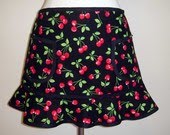
Elke wanted to create an apron that would both fit a woman’s figure and be flattering so her customers would feel good every time they wore it. ‘The first two aprons I made were the classic apron and the half-waisted apron with a frill on the bottom. I was giving one to my mum for Christmas and she wanted to pick the fabrics herself. She said she really wanted a full apron with a frill on the bottom so I decided to make a few more of them and now that style apron is my best seller!’


‘When I choose my fabrics I think of what would look good in a kitchen and the different tastes people have. Some people love the classy, sophisticated looks, so damask prints and classic colours like black, white and reds seem popular. Others like to have fun and wear the cupcakes or brightly coloured fruits. I like to have something for everyone.’


Unlike the aprons and housecoats of old, Elke is hoping her customers have ‘a bit of fun’ with their aprons; ‘It doesn't have to be all too serious. Put it on when you have some guests over, or surprise your husband one night. Even my three-year-old loves it when I wear an apron!’


But most of all, Elke loves it when customers buy and apron and say; ‘ "wow that is so Jenny" or "that is so Lizzy". It’s like the aprons resemble the personalities of people we know.’

And I think that is probably something those women from another time would agree with.

To see Elke’s range of aprons, visit her Etsy site here or her Made It site here.

Photos © Elke Ricks

Saturday, January 15, 2011

When Home is left... then returned to. An Interview with Author Kylie Ladd


Australian author Kylie Ladd published her first novel, After The Fall, two years ago. Focussed on the impact of an affair for two couples, her novel explores much of what ‘home’ means in the context of a marriage and how ‘homeless’ these characters feel once they are all, in their own way, betrayed.

When I approached Kylie to discuss her thoughts about home and relationships, she and her family had only just returned to Melbourne after being away for a year. For now, thoughts about home are closely tied to her personal experience of travel and very soon our conversation moved completely away from her fiction.

With her second novel out in June, we will have another opportunity to return to the world of make believe. For now, Kylie is firmly grounded in reality...

************************


Having lived in her home, located in the inner north-eastern suburbs of Melbourne, for the last 17 years, both Kylie and her husband Craig loved the house as soon as they saw it; ‘It’s an Edwardian/Federation mix, with lots of lovely Edwardian detail (eighteen foot ceilings, fretwork, leadlight) but also the odd quirky Federation touch, such as the art deco ceiling roses. I loved it at first sight.’


‘My then-boyfriend Craig and I had only been house hunting for six days when I saw it. Though it was out of our prescribed area and a whopping $40,000 over our price range - an enormous sum in 1994 - he agreed to look at it, did so without me, made a lower offer to the agent half in jest, and an hour later we owned it.’

I remember us lying in bed that night, unable to sleep – he hadn’t checked the stumps and I had no idea how I was going to cope with a laundry situated in the old stables at the rear (the trough was the one the horses used to drink from). But to our great relief the house was in fact sound, and has been a big part of our life together... Craig proposed to me on the day we moved in.’


Today it is also home to their two children, a son aged 11 and a daughter aged eight. Apart from a five year stint overseas when their children were babies, the family have happily lived in and loved this house. Until last year. With a desire to see more of Australia with his children before it got too difficult to pull them out of school, Craig suggested a move to Broome for a year.

As Kylie explains, ‘We’d been to Broome on holidays in 2006 as a couple and loved it, plus I knew he was restless... nonetheless it was a bit of a surprise in November 2009 when Craig emailed me from work to ask me if wanted to go live there for a stint, then two days later, after my tentative yes, sent me the link to the house he’d just bought in the town.’


Having already experienced leaving their home and Melbourne once before, Kylie wasn’t concerned about the move, ‘We love our home city, but we both knew that nothing much would change in our absence. I’m sure that earlier, longer stint made it easy to pack up and go. Lots of people couldn’t believe that we decided and left so relatively quickly, but the timing was right with work and school, and it just seemed a great opportunity for a little adventure.’

Their home in Broome was completely different to the one they had left behind. ‘It was an apartment/townhouse at a small resort in old Broome, near the famous Cable House (now the town’s courthouse). 'There were a lot of advantages to buying in a resort: our 2.5 bedroom apartment came fully furnished and well maintained (lucky, really, given we didn’t lay eyes on it until the day we moved in), and with access to a beautiful pool and gorgeous tropical gardens.’


At first it didn’t feel like home, but a long holiday. ‘It was so HOT for a start and we ate all our meals out of doors, under the fan on the balcony.’


‘The kids shared a room, which they’d never done, and took a while to adjust to this rather than just regarding it as a slumber party every night; Craig and I kept banging into each other in the kitchen (tiny compared to our one at home, which is built around a central Aga - an influence of our Edinburgh days) until we agreed he should just do all the cooking.’

For Kylie, once she started writing again, Broome finally felt like home, ‘I remember sitting down at my desk the first morning the kids had started at Broome Primary, hearing the birds and the geckos and the wind in the palm trees, feeling the sweat already on the back of my neck at 8am and wondering if I would ever be able to write in such a bright, busy environment. But I could, and once I knew that, Broome wasn’t just a holiday – it was where I lived.’

It was still hard being away from their Melbourne home, which Kylie describes as ‘a fifth member of the family’ but ironically, the novel she was working on meant she was never that far away, ‘I missed my books; we have a floor to ceiling wall of bookshelves in the study, and I never tire of feeling these watching over me as I write. In a strange way though, I still felt very connected to Melbourne as the novel I was working on is set there, around my home, and thus the area was always in my mind’s eye.’


When it came time to say goodbye, leaving was difficult for the whole family, ‘We always knew we’d return, and we do love Melbourne, but it was hard to leave the fabulous lifestyle and a year that had seen us enjoying lots of travel and the beach most days after school, which finishes at 2:10pm up there. My son in particular absolutely hated leaving all the wildlife and his pet geckos, my daughter hated leaving the surf club, where she’d had a great time at Nippers, and my husband just hated the idea of leaving and going back to work full stop.’

It wasn’t so much leaving the house behind but the relationships they had discovered and created during this year away, ‘We made some great friends in Broome, and we’d also become much closer as a family, having to rely on each other far more initially, and spending lots more time together. All that was as hard to leave behind as the place itself.’


Arriving home on an overcast summer’s evening was felt with mixed emotions, ‘The house had had someone else living in it, and while nothing was wrong it simply didn’t smell right to me; didn‘t smell like us. I couldn’t find anything in the kitchen, and the garden – after months of drought-breaking rain – was almost unrecognisable.’

‘I think my daughter summed it up best of all; after an hour, Cameron came to me in tears. “I’m glad to be home, but it all feels strange,” she wailed. “I can’t tell if I’m happy or sad.” I knew exactly how she felt: happy, sad and disoriented.’

The best aspects of returning to their long term home include ‘seeing friends and family, seeing Melbourne, being back in our beautiful house... being reunited with our toys, books, pictures and clothes is still a novelty- I’d completely forgotten I owned six pairs of boots. I only wore thongs in Broome.’


But, as Kylie says, ‘The hardest is harder to quantify – an ongoing sense of loss and dislocation, I guess. Craig and I have been through this before, and we know it passes, but while it lasts it’s a form of mourning. I wake up and am surprised to see roses through the window, not frangipani: I reach for the paper towel and suddenly realise no, that’s where it would be in my other kitchen. Every little jolt is a reminder that you have moved, that your head and your heart haven’t quite yet aligned.’

The experience of moving from one home and returning to it after a period of time away has changed what ‘home’ means to Kylie; ‘Years ago my sister was an exchange student to the USA. During her time there, the organisation who had arranged her stay put on a month-long tour of the country for all their current students. While they were away, she later told me, they devised nomenclature to refer to where they were staying: “home” was the hotel, motel or inn they were at that evening; “homehome” was where their host family was located, and “homehomehome” was where they had come from originally.’

‘I still think about that idea. Melbourne is homehomehome to me, but Broome and Edinburgh (where my son was born) are homehome; places in my heart, places that have been home and hearth to me for a significant time too, in terms of both months and experiences.’

‘Home is my family, of course. No matter how magnificent, nothing would be home without them. But home, I’ve found, is also my writing, that place inside my head where I am most myself, that I just can’t live without. And home, physically, is now mostly Melbourne, but we’ve kept our house in Broome and I know we’ll return there.’

‘Home is splintered for me at the moment, but that’s OK. It hurts a bit, but I’m much richer because of it.’


For more information about Kylie and her books, visit her website here or on Twitter here.

All photos © Kylie Ladd

LinkWithin

Related Posts with Thumbnails